


With the Rewilder Weekly I find, curate and highlight rewilding efforts from around the world. I have an excellent network, but I do realize that stories not written in English often pass me by. In Europe, where Rewilding is going strong, there’s a wealth of input from across the many countries. I also regularly report on projects and initiatives in South America and North America … but Asia? Not nearly enough! Is it a language issue? Surely there are a great many nature restoration and protection efforts going on in Asia, maybe they’re just not called rewilding … well, I thought I’d take a closer look and decided to start with Japan.
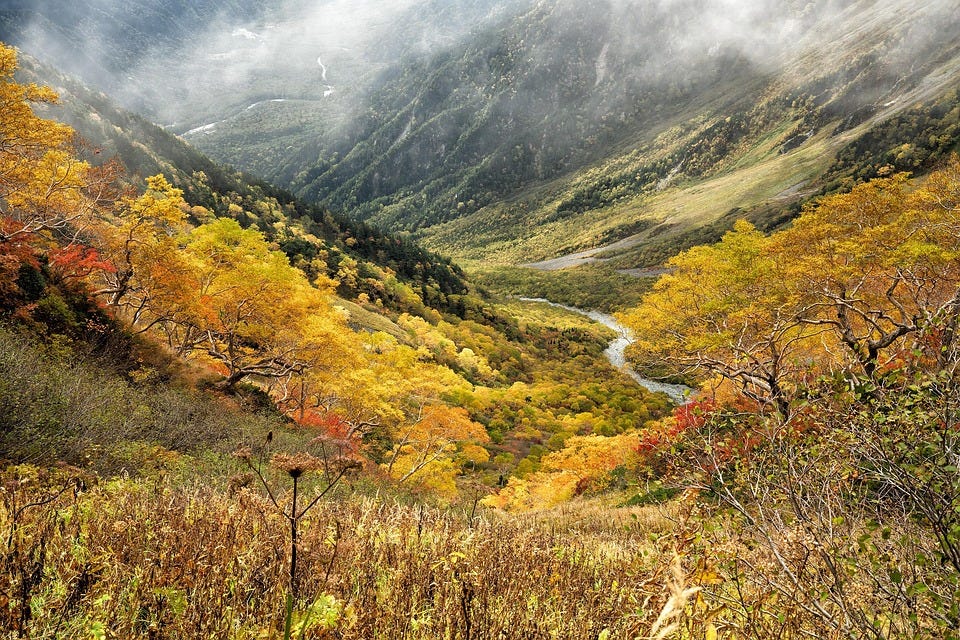
Japan, being archipelago (made up of over 14’000 islands!), is an especially interesting case in ecological terms. Any body of land surrounded by water means that ecosystems are more contained, that nature cannot travel as easily as it does in e.g. continental Europe where nature often flows freely across national borders. And in Japan, just as in the UK, if you exterminate a species, it cannot come back on its own. Case in point with bears and wolves and lynx in the UK.

Japan and large predators
There once were wolves in Japan, too, but they’ve been considered officially extinct since 1905. The Japan Wolf Association has been advocating for wolf reintroduction for years - to help downsize vast deer, boar and monkey populations responsible for costly forest and agricultural damages.
The organization says that public support for such reintroductions has been rising - but the government, for now, remains strongly opposed to the idea. If you’d like to know more about the wolf in Japan and it’s potential 👉 go here. So that particular rewilding effort won’t be happening anytime soon - but Japan is not without large carnivores - far from it!
There are tens of thousands of black bears on main Honshu island. And on northern Hokkaido you’ll find an additional twelve thousand of the very large brown bear.
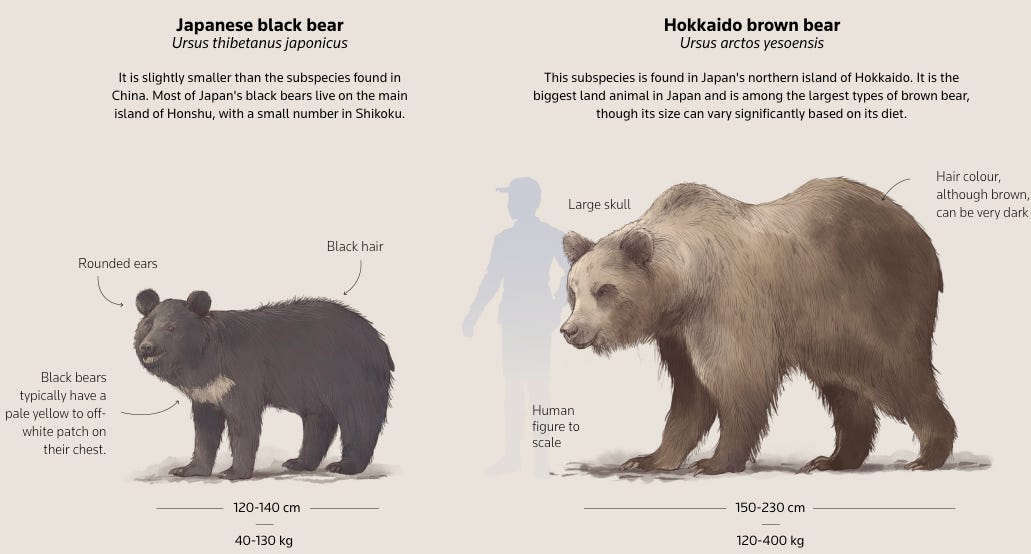
While both of these species are mainly vegetarian, they absolutely can and do pose a potential threat to humans. Bear attacks are uncommonly common in Japan! In its 2023 article, Reuters reports that there were 219 bear attacks, six of them deadly, in that year alone. Thousands of bears are killed every year.
The growth of bear populations is caused by a variety of factors - key among them is that more and more people move to cities, leaving farmlands abandoned. There are fewer professional bear hunters (compared to 1975, there are around 50% fewer hunting license holders - and more than half of those are over sixty years old) and so bears continue to spread out and make their ways toward villages and towns where, judging by the amount of incidents, bear-smart principles are at best patchily employed. I’ve read about one such positive bear-smart effort from the Gifu prefecture that “has been trying to create buffer zones between human and bear areas, encouraging residents to cut fruit trees, set up electric fences, and not leave out food and litter that may attract bears.”
From just glimpsing the whole bear challenge in Japan, one thing is clear: the challenge is bigger - and needs a more holistic approach - than the fix the electronic Monster Wolf provides.
Does the country have too many bears? Not necessarily, but either coexistence measures are adopted across the board and strictly adhered to, or a new generation of professional hunters needs to be taught and readied for the coming years. For now, old bear hunters say that the work is expensive, unappealing and exhausting and that Japan should create a system where hunters are paid enough to support a family. “Unless they’re paid properly, we can’t nurture the next generation of hunters.” To my mind, that is the right approach: no reliance on hobby hunters, but paying professionals a decent wage to do a professional’s job. These will then be key ecosystem stewards.
Depopulation dividend?
Once upon a time the big fear was the the human population would keep growing and growing. That’s been proven wrong. We now know that there will be a plateau (at around ten billion people before the end of this century), and that then humanity’s numbers will actually begin to slightly decline. In Japan, this decline already began a little less than twenty years ago. There’s something called the “depopulation dividend” - it is an assumption that seems entirely obvious at first glance, namely that nature will benefit from fewer people.
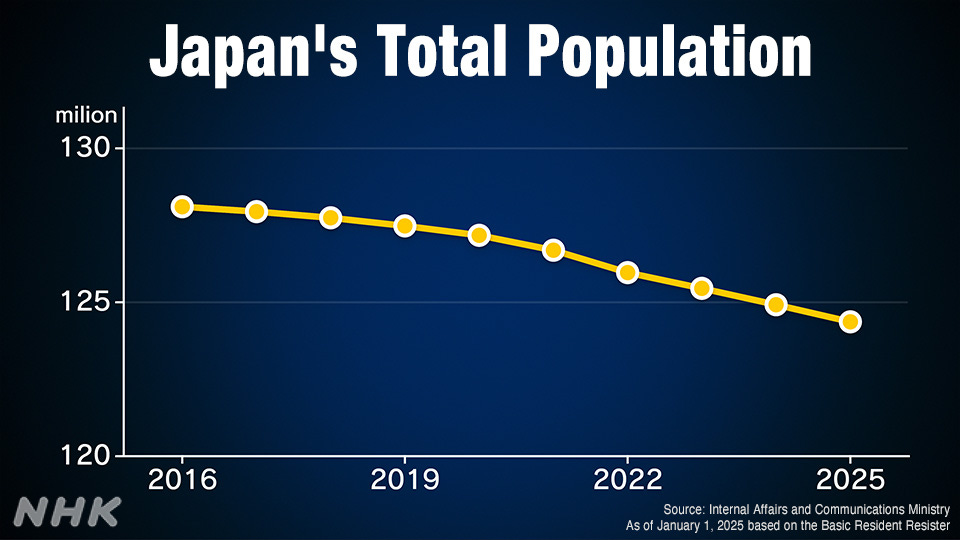
A massive new study has been collecting data in Japan since 2003, recording species at over 150 sites and comparing these with local population changes. They found that “biodiversity continued to decrease in most of the areas we studied, irrespective of population increase or decrease.” You find the reasons for it here and it might seem sobering at first glance. I don’t think so. Our human time isn’s nature’s time. Yes, biodiversity may continue to decrease because of patchy abandoned lands, because of missing farmers that thought and acted sustainably. I’d venture to say that, if depopulation of rural areas continues, then biodiversity will thrive there - in whichever way it chooses - in a hundred years’ time.
That’s essentially passive rewilding and our species has the hardest of times to just sit back and let things happen. Active rewilding is often at the forefront, active rewilding means reforesting, naturalizing rivers, reintroducing species, active rewilding means seeing nature-positive changes in our lifetime. The researchers of the above-mentioned study say something that caught my interest, of course: “Biodiversity recovery needs to be actively managed, especially in depopulating areas. Despite this there are only a few rewilding projects in Japan.”
Forests in Japan
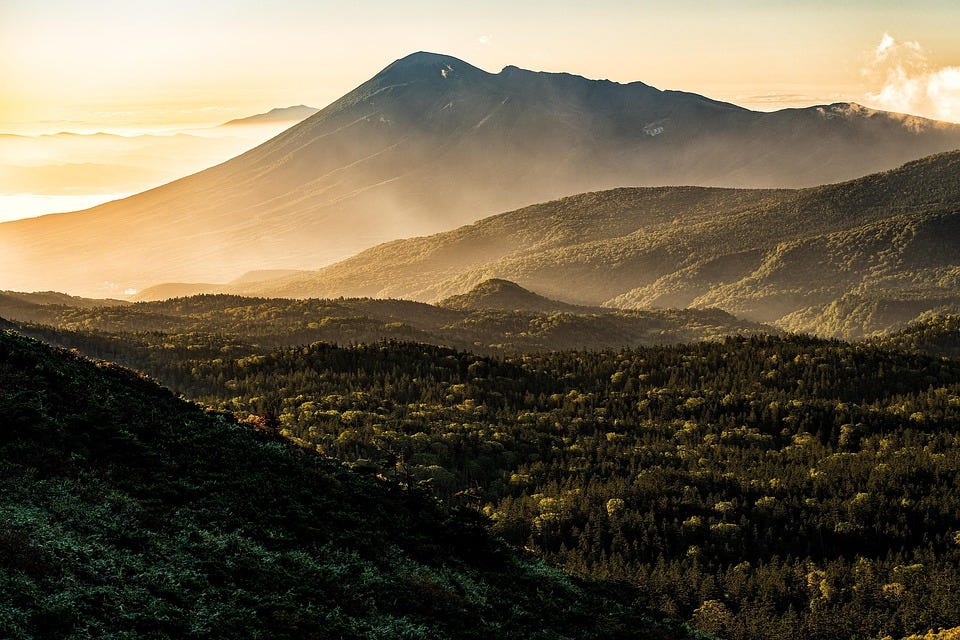
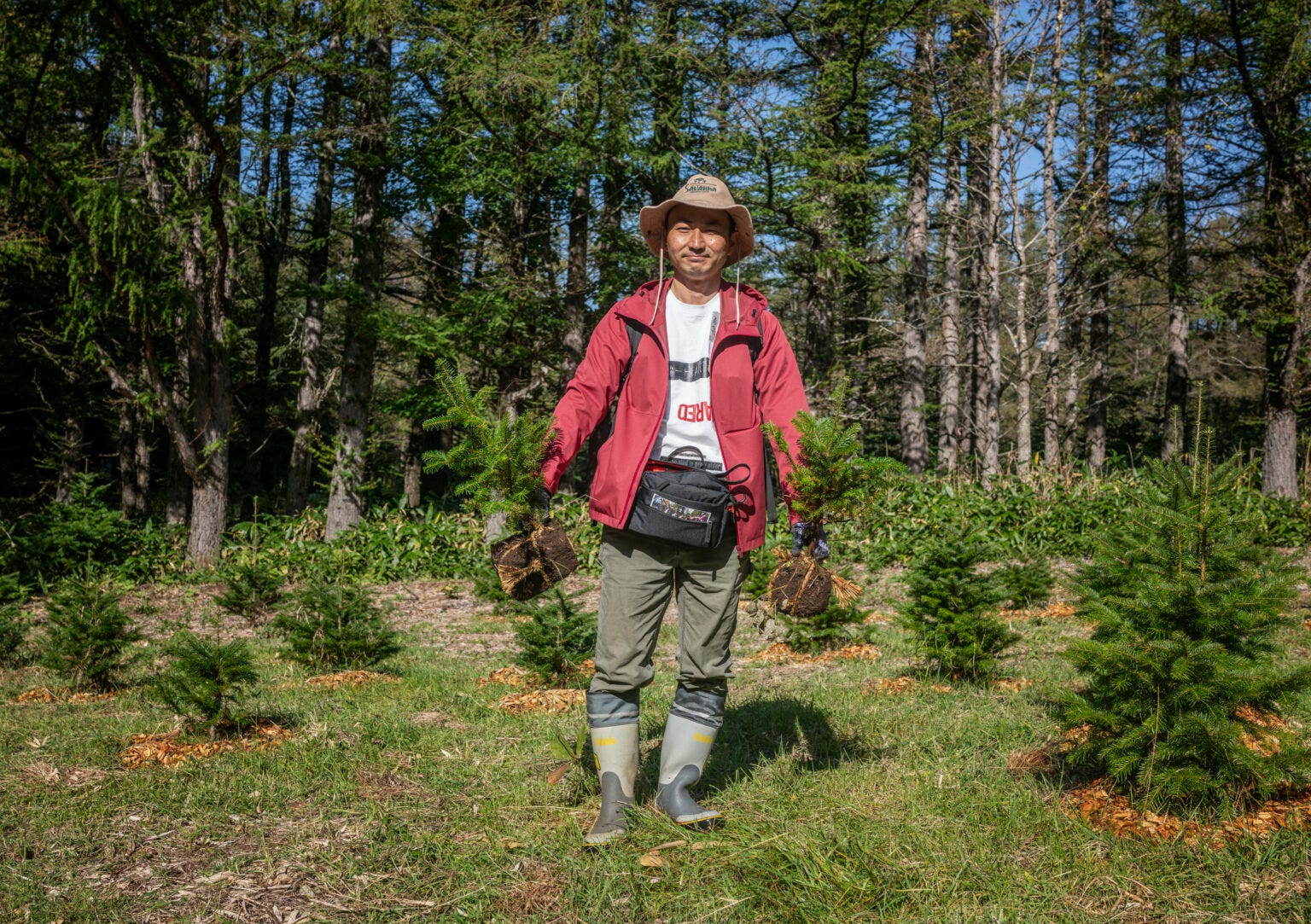
Nature Conservation Society of Japan is working on opening up meadows in monoculture conifer plantations, felling patches that will eventually regrow with a mix of deciduous trees. Such opening of forests is also good for raptors with their large wingspans. Monoculture plantations are a huge challenge in Japan. As this 2024 article reports, they make up 44% of Japan’s forests. As the population grew, Japan set up ever more tree plantations to meet the timber needs.
Today much of the needed timber is imported, because it’s cheaper. 57% of Japanese forests are privately owned (most are small plots of less than 1 hectare) and many of these densely packed plantations are no longer harvested, because of the price of timber, because it’s hard work, and because owners are simply getting to old to continue.
To rewild an area the size of Chichibu Tama Kai National Park, with its patchwork of privately-owned land, local government land and prefectural land presents greater hurdles to environmentalists. “That is why the rewilding movement here in Japan is progressing slowly” compared to many other developed nations. The biggest challenge, by far, is funding.” (Seiichi Dejima of the Nature Conservation Society of Japan)
The protection of national parks
There are 35 national parks in Japan, and 58 quasi-national parks. “Quasi-national”? - had to look it up, too! These are parks of national interest because of their beauty, but are often smaller in size and managed by local prefectures.
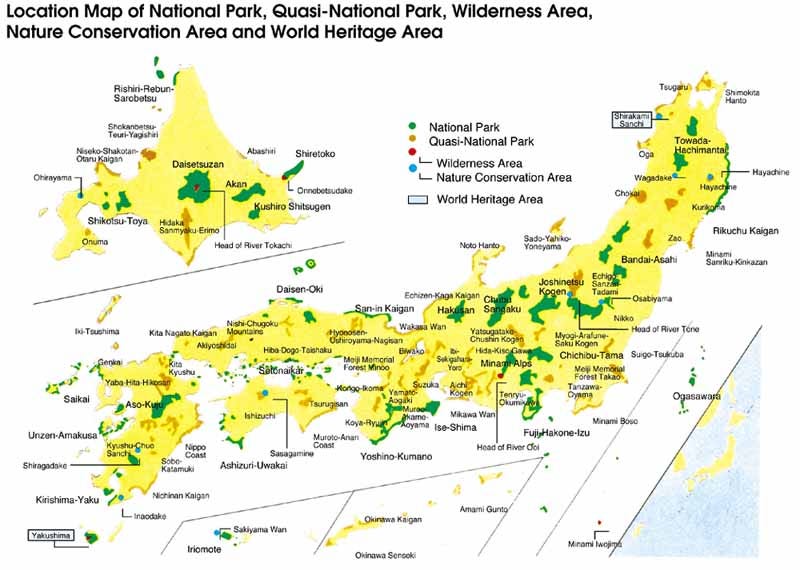
The national parks alone cover nearly 25’000 square kilometers of land, which represents 6.5% of Japan (adding the quasi-national parks, it comes to 10%). National parks are not necessarily state-owned. “It includes a mix of private land, prefectural land and local government land, and is inhabited by people. For instance, over 90% of Ise-Shima National Park is privately owned. The government decided to adopt this kind of regional natural park system because of the country’s limited land area and high population density. Many national parks include farmland and villages, giving visitors a look into local cultures and long-standing traditions.”
The above explanation suggested to me that Japan’s national parks have low protection, would be classified under the IUCN protected area categories as V or even VI - but oh, how wrong I was. I’ve checked all national parks and have seen that most of them are marked as category II. This is good news for nature, although, the definition category II and the above statement do seem to clash somewhat. Well, shall take a closer look at some point.
A fascinating Shiretoko National Park story: Way back when in 1977, a mayor in Hokkaido launched a campaign where Japanese people from all over Japan were asked to purchase 100 square meters of land (to prevent overdevelopment) - this was the Shiretoko 100 Square Meters movement. The plan was to purchase settler lands within the national park and then rewild it. Immediately, 25% of farmstead lands were bought. Just three years later 40% of the lands had been bought. By 2010 all those lands were bought (with donations from 50’000 people over the course of thirty years).
A few Japanese rewilding examples
Nature Conservation Society of Japan: a grant from SER in collaboration with Microsoft makes it possible for NCSJ to deliver on several objectives:
Mt. Mikusa: biodiversity safeguarding and restoration of forests - tree cutting, removal invasive species, deer exclusion fences, monitoring;
Ziou Marsh: wetland protection and restoration;
Mt. Myōken: tackling forest degradation because of increased sika deer populations (which, as the Japan Wolf Association would tell you, could be tackled naturally by bringing back wolves). There are roughly three million sika deer in Japan and while hundreds of thousands are killed annually, the overall numbers remain up there.


Part of NCSJ’s effort actually is in line with the above study I’ve mentioned, the study highlighting that the absence of people doesn’t stop biodiversity decrease. This initiative plans to reinvigorate satoyama sites, “where agricultural practices have historically maintained biodiversity and ecosystems. These landscapes consist of a mosaic of farmland, secondary forests, native grasslands, and wetlands, forming socio-ecological production areas where species interactions and human activities have shaped biodiversity over time.” Among other things, there’s actually rice planting happening as part of this restoration work.
Sustainable Daisen promotes sustainable practices and has a particular focus on rewilding forest land and protecting the Japanese giant salamander:
Daisen Forest rewilding: selective thinning of monoculture tree plantations, replanting a range of native tree species
Protecting the Japanese Giant Salamander: This amazing creature is under threat (human activities, of course). The organization campaigns to transform forests and farmland around the salamander’s home, thus creating a sanctuary.
WWF Japan works on various restoration projects - but strangely, from what I could see, only two of those are focused on Japan:
Restoring Nansei Islands, one of Japan’s ecologically important regions, while strengthening local communities’ ability to conserve the natural resources they depend on.
Protecting Japan’s endangered species and their habitats such as Asian bears while working with local communities and organizations.
There are more organizations, of course - such as Ecosystem Conservation Society Japan and Friends of Earth Japan - but as I browse these sites I see a lot of focus on promoting sustainable ways, on conducting research, on making recommendations, on monitoring, rights, advocacy … as for where and how they are actively engaged in nature restoration efforts (getting hands dirty, actual active rewilding work), I genuinely haven’t found much beyond what I’ve shared above.
Could it be that a lot of what’s happening is in Japanese only and thus eluding me? Or could it actually be a cultural challenge? I’d love to know more - but that’s where I am at this point in time. After publishing this essay, I’d love to be inundated by comments and emails about a slew of nature recovery/restoration/rewilding projects taking place across all of Japan.
Japan’s Ministry of the Environment
I found a hopeful looking document from 2007, entitled “Towards Living in Harmony with the Natural Environment. As the below image shows, this document highlights 24 nature restoration projects in Japan.
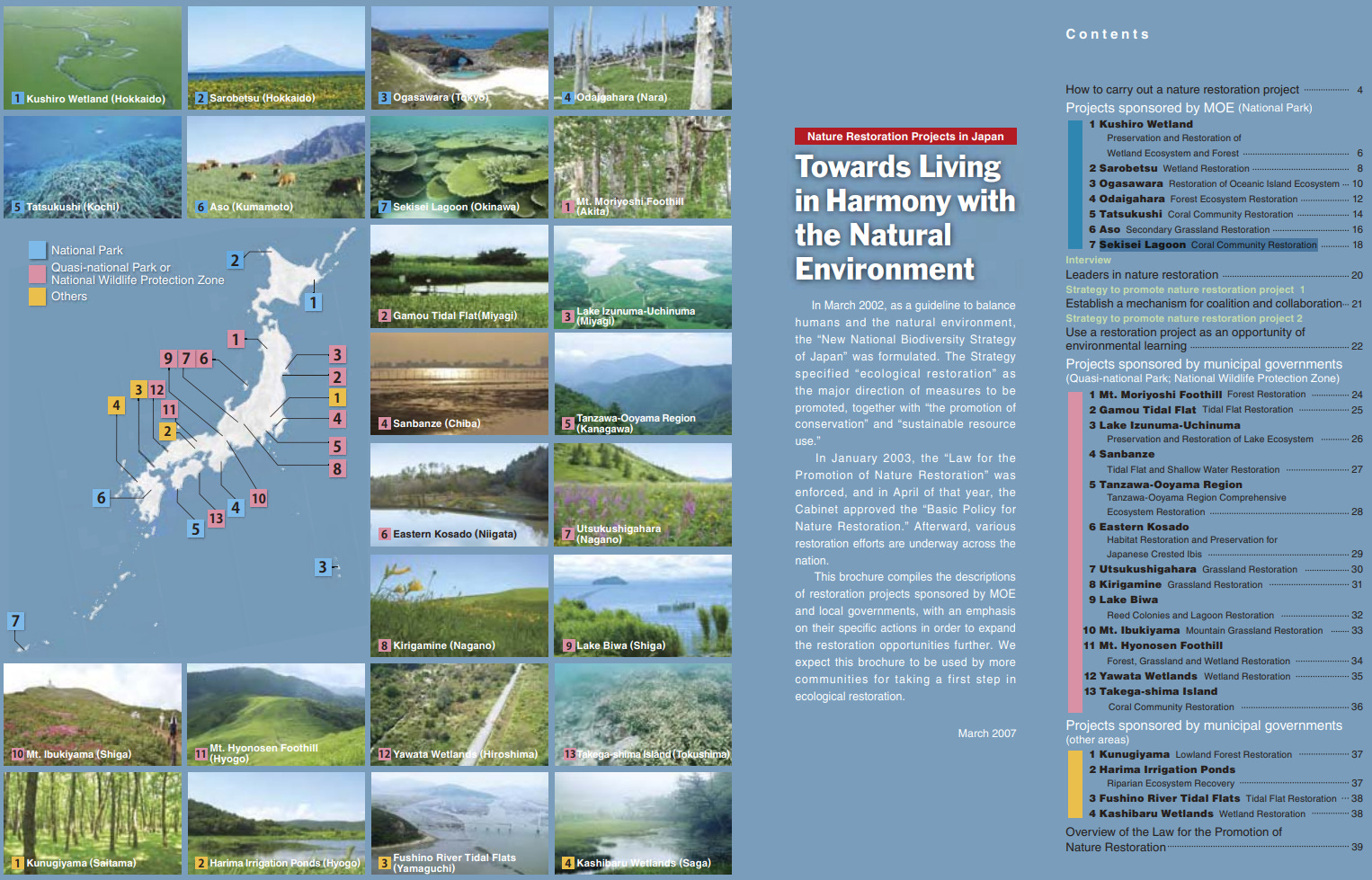
Looks good, doesn’t it? Alas, 2007 means that it was published nearly two decades ago … a great deal must have happened and been reported on, right? I haven’t come across an update (if you know of one, share it, please!).
When I look at Ministry of Environment’s just released 2025 Annual Report on the Environment in Japan, I see 36 pages focused on all manner of important things - just as in the 2024 report, it focuses on a circular economy, global warming and net-zero goals, a lifestyle shift and protecting human life and the environment …and it is practically devoid of focus on nature restoration.
They write that “The Sixth Basic Environment Plan, approved upon a cabinet decision in May 2024, sets out the building of a “circulation and symbiosis based society” as the type of society that environmental policy should aim for, and aims to achieve “new avenues for growth” that will bring about “Well-being/quality of life” not only in the present but also in the future.” They write that of the three global crises of climate change, biodiversity loss and pollution … and the report focuses to a great extent on humans acting more sustainably (circular economy is key) as the main solution.
All of everything the Japanese Ministry of Environment has in its plan is surely important, but the idea that all of everything can be “fixed” by creating a more sustainability-minded society and economy doesn’t fly. It is part of the picture, for sure. But another part is an equally urgent focus on restoring degraded ecosystems. This can and must happen at the same time.
Then I came across the government’s “National Biodiversity Strategy and Action plan 2023-2030” and was instantly hopeful. Published just two years ago and nearly 300 pages long. Alas, that’s really all it is, strategy and action plan, a whole lot of theory, a how lot of how-to … pages 77-116 focus on nature restoration, but again, this is all elucidating the path Japan takes, which sounds good - but I’d like to see the concrete examples - what is happening where and right now.
Japan’s 30by30 roadmap
With the Kunming-Montreal Global Biodiversity Framework, Japan also agreed to that well-known 30by30 target, the aim of protecting/restoring at least 30% of healthy land and sea ecosystems. The government states that, as of March last year, “more than 1000 organizations from various sectors (such as companies, local governments and NGOs) have joined the 30by30 Alliance for Biodiversity.”
According to the government’s 30by30 Roadmap (published in 2022), by 2020 Japan had already 20.5% of land and 13.3% of sea designated as protected areas (what that actually means in terms of the state of degradation of those areas, I do not know). Interestingly, Japan’s government sees the path to getting to 30% by a) protecting more areas and b) by creating OECMs (Other Effective area-based Conservation Measures).
“The 30by30 target, we believe, is not only about the expansion of areas to be protected. Nature contributes to solving social challenges such as climate change issues. Through the implementation of Nature-based Solutions, we aim to develop sustainable communities that properly utilizes local natural resources.” (from the government’s 2022 30by30 roadmap)
OECMs sound like a good idea: working with people and using nature-based solutions, regenerative farming, sustainable use of nature, etc. The challenge is in making it happen. As humans in a profit-driven world, it’s always enticing to go with the option that is faster and cheaper. Less effort means it’s more cost-effective. But a certification standard has been set and, as I’ve just read here, Japan already has 282 such OECMs.
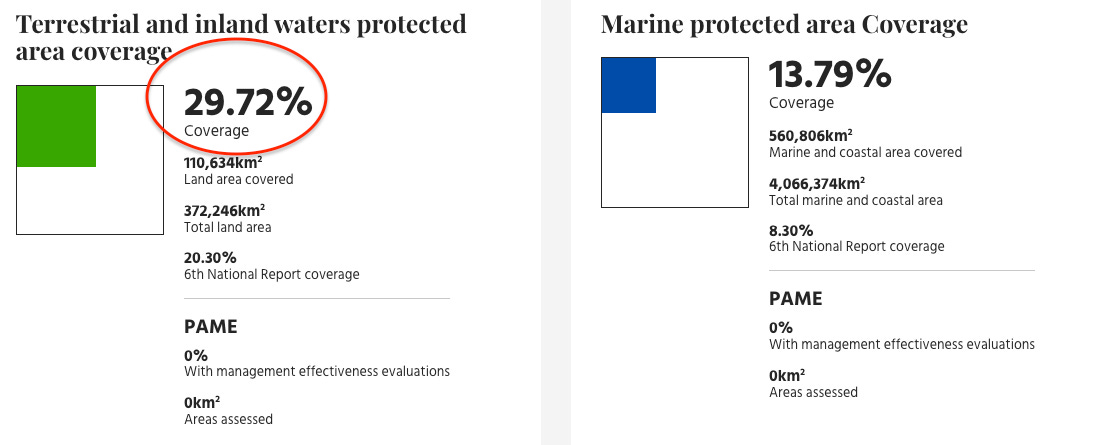
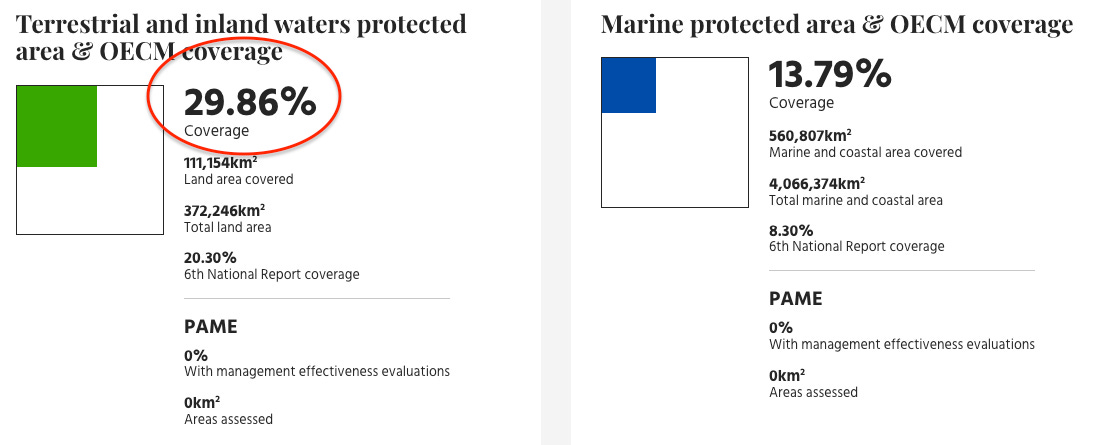
That’s surely a positive - especially when considering that all of these efforts are about nature AND people. The one sobering factor is, however, that these 282 OECMs don’t make much of a dent. According to Protected Planet, Japan currently protects 29.72% of its lands - and if you add those 282 OECMs, that percentage goes up by a mere 0.14%. Surely a great and meaningful effort - but it barely moves the needle.
Finally
We’re close to 2030. There’s that. One of the things that stands out in Japan’s 30by30 roadmap is the focus on “winning back a desirable human-nature relationship through conserving at least 30% of the land and sea by 2030.”
That’s a wonderful vision and may it happen!
Much of humanity, by the very design of the industrial revolution, has been moved away from nature. Today, billions of people around the world have little to no contact with nature on a daily basis. The Nature Pyramid should be a guide post for any nation. People need to be out there, in nature, far more often. By experiencing it, people begin to feel for it, begin to love it, for what it is and for how it makes them feel. And what you love you will want to care for and protect … that’s the right direction for humanity.
In 2014, Professor Futoshi Nakamura wrote an article about nature restoration in a depopulating society. Reading it, I found that he made good sense for Japan now and tomorrow:
“Through depopulation, we may be able to find new values and possibilities that were unseen when we only aimed at material richness during the high economic growth period. It is high time for us to examine the future of disaster prevention and nature restoration in Japan, focusing on great changes in natural and social systems.”
“The National Resilience Plan is a set of national disaster prevention plans decided by the cabinet after the Great East Japan Earthquake. Although the Japanese Government uses the word “resilience,” the reality is a set of disaster prevention plans for constructing hard, concrete structures aiming to protect human lives and properties, and very weak in considering and utilizing ecological resilience.”
“Should we chase for material richness as we have done so far? Or, should we chase for spiritual richness brought by natural capital (values inherent to the natural environment such as air, water, soil and living things)? Japan is standing at the crossroads.”
Wise words. We Japan’s focus on a sustainable circular economy, that surely goes in the right direction. In fact, much of what I read seems entirely sound. But with a country that vast I’d still think that I should see a wealth of current nature restoration projects and initiatives taking place right now … where are they?
If you’ve read all the way to the end of this article and know about nature restoration projects in Japan - please share them with me and I’ll be sure to do my bit to highlight the work done in Japan to restore and protect degraded ecosystems. In advance, a thousand thanks.
Cheers,

Glad you’re here, reading the Rewilder Weekly. Share the stories, write your own (and let me know about them), engage with others. Let’s continue to reach out, inspire and activate ever more people around the world. The rewilding movement is growing, and with all of us pitching in, it’ll grow a great deal more!
Eager to learn more about rewilding?
connect with these organizations - sign up for newsletters and support them in any way you can;
join these events - conferences, online seminars, rewilding days and weeks to immerse yourself and learn from the experts;
read these books - a selection from Foreman to Macdonald, and from Tree to Daltun, Hetherington and Bowser;
listen to these podcasts - it’s inevitably inspiring when the likes of James Shooter, Ben Goldsmith and Brooke Mitchell talk to the pros in the field;
and check out these resources - explore the principles, ways of funding, research publications and personal ways to start rewilding.
And, of course, connect with and follow the many passionately engaged rewilders. Let’s keep growing the movement! 🦬🌳🐺🌞🌍