


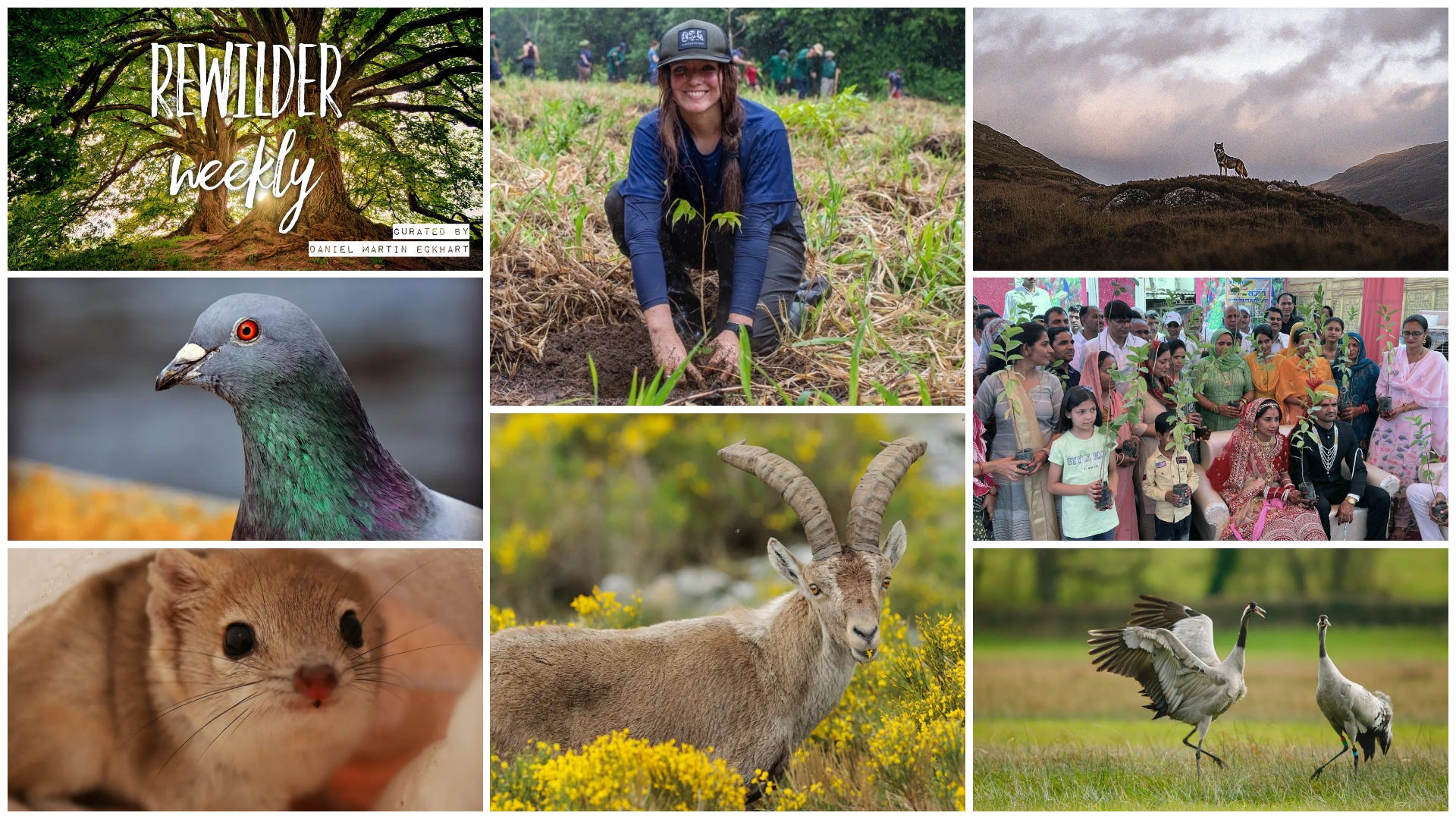
Welcome to the latest edition of the Rewilder Weekly. 🦬🌳🐺🌞🌍
This week with the latest rewilder portrait - featuring Argentinian rewilder Rocío Llamas, who helps drive rewilding tourism with Wilder Places - as well as inspiring and insightful stories from 🏴 Scotland, 🇵🇹 Portugal, 🇩🇰 Denmark, 🇮🇳 India and 🇦🇺 Australia.
Wishing you a good week!
Cheers,

👉 If you come across stories you’d like to see featured in a future edition of the Rewilder Weekly, send them to me and I’ll gladly do what I can.

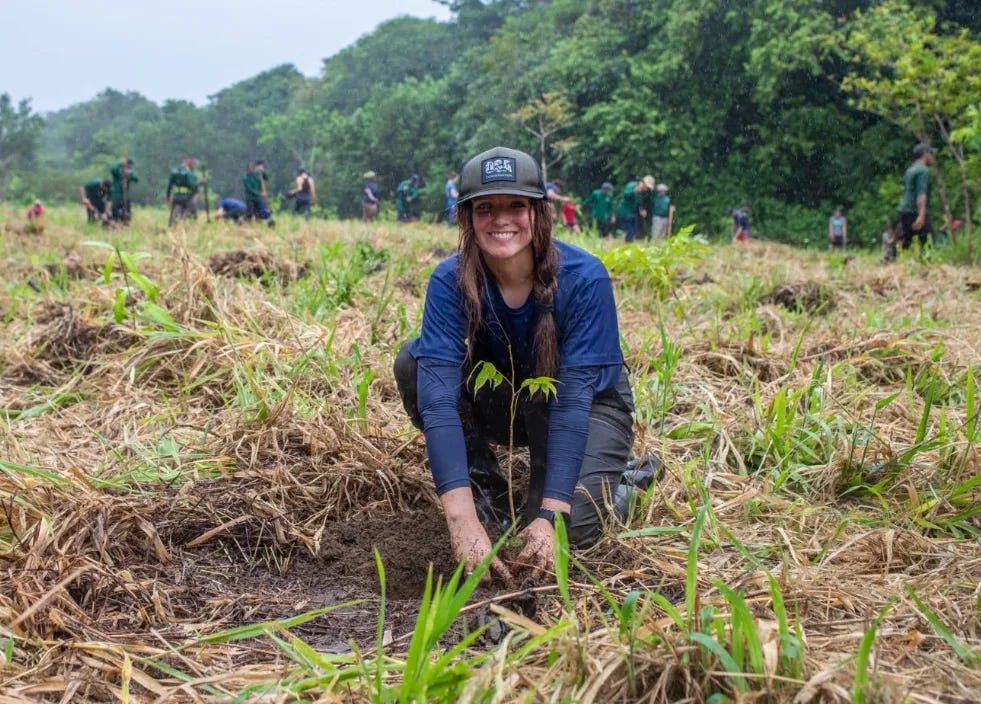
1) Meet the Rewilders: Rocío Llamas
Meet the Rewilders is a series that introduces you to people engaged in the rewilding movement across the globe. Today meet Argentinian rewilder Rocío Llamas. She is one of the fine people who lead Wilder Places, the new travel marketplace created by Rewilding Europe. Wilder Places is all about rewilding and nature-positive tourism, giving people the opportunity to discover Europe’s rewilding landscapes, local communities, and nature’s magnificent return.
Asked about sources of inspiration, her answer should resonate with all of us. Regardless of our backgrounds, our paths - we can all take action: “Throughout my (still short) career, I’ve met people without university degrees who inspire me more than anyone. People who act from where they are, their local community, their neighborhood, their school. People who don’t make excuses … To me, there are no excuses. You fight for this planet from wherever you stand.”

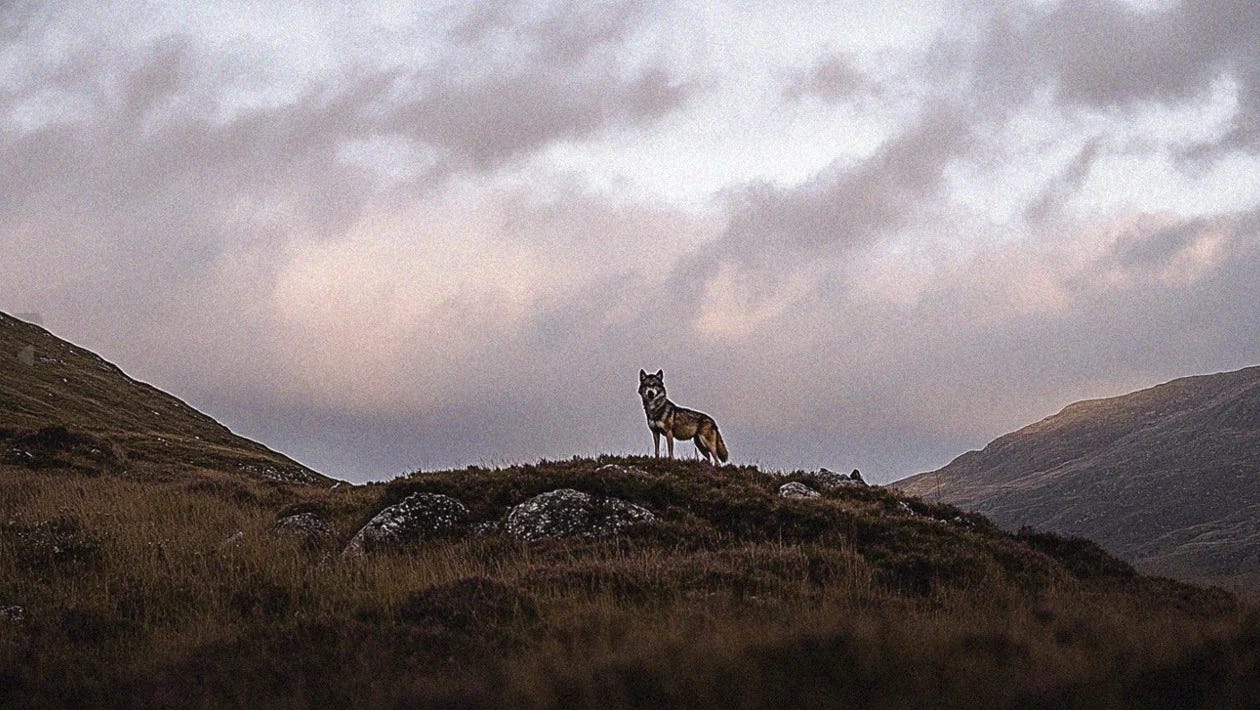
2) What you're looking at is a wolf ... in Scotland
Now don’t freak out! There’s no illegal reintroduction happening - what IS happening is a fantastic short film by Dan Pringle and Annie McBain. The Crowdfunder campaign was launched just last week - and of the £18'000 goal nearly 13’000 are already in the bag! I’ve joined in, too, of course. Just to be clear, this is NOT a documentary. It is fiction, it is creative storytelling at its best.
I read the script and love how it weaves Scotland and the wolf into a deeply emotional tale of nature lost and found, of life rediscovered and cherished as we step into the wild. Here’s how they describe it: “Inspired by George Monbiot's landmark book Feral, this is a poignant, cinematic exploration of a woman who catches a glimpse of something wild and finds she cannot go back to the life she had before. It is a story about the thin line between belief and obsession, and about a longing most of us feel but rarely name: the hunger to reconnect with the natural world.”
👉 Go here for more - and to support the film, of course!
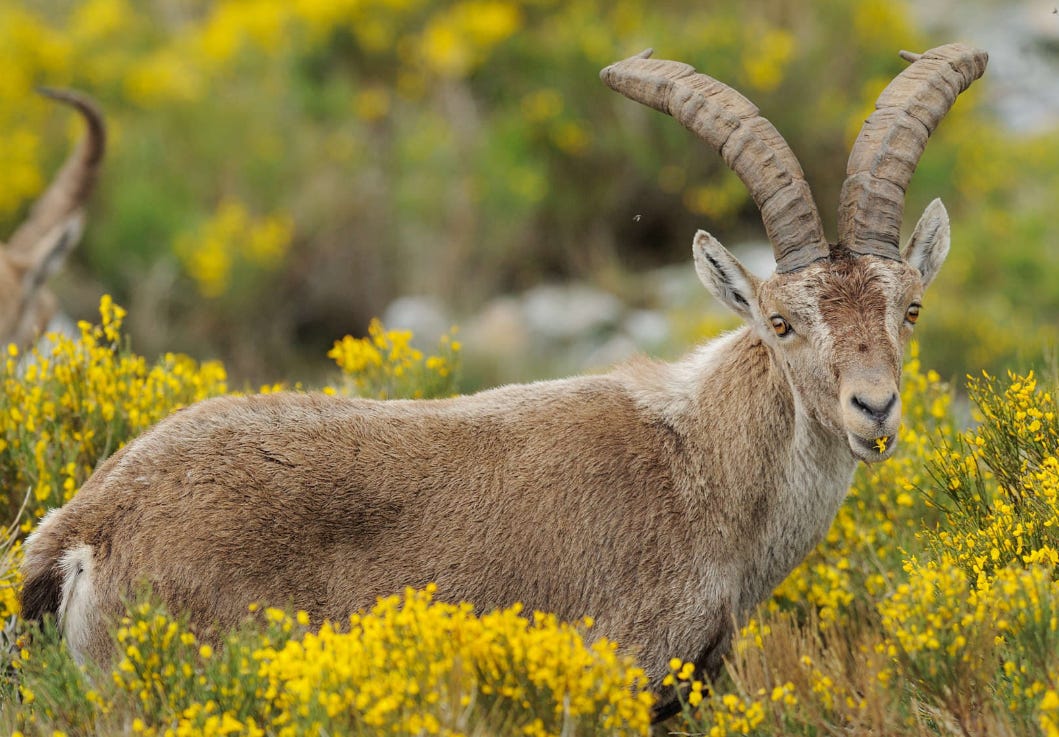
3) Rewilding Portugal reports on how rewilding boosts local economies
One of the things you get to discover when you travel to rewilding landscapes across Europe (go book yours at Wilder Places!) is that local communities are always at the heart of it. It is always about nature AND people - we are part of nature and rewilding actually boosts local businesses and, by making abandoned landscapes healthier and biodiversity-rich again, makes it more attractive for new families to move in and revitalize villages.
Case in point: One of Rewilding Europe’s rewilding landscapes is Portugal’s Greater Côa Valley. They report that, over the past three years, economic activity linked to rewilding brought over 1’000’000 Euro (across tourism, services and local businesses). Head of Rewilding Europe, Frans Schepers, says, “Wildlife watching and guiding, local services, products, and nature-based businesses all show how different parts of the local economy are engaging with the landscape in new ways. As a result, more people are working with wildlife, local services are supporting rewilding efforts, and new businesses are growing based on what the landscape provides. These shifts are part of how rewilding is becoming embedded in the landscape ecologically and economically.”
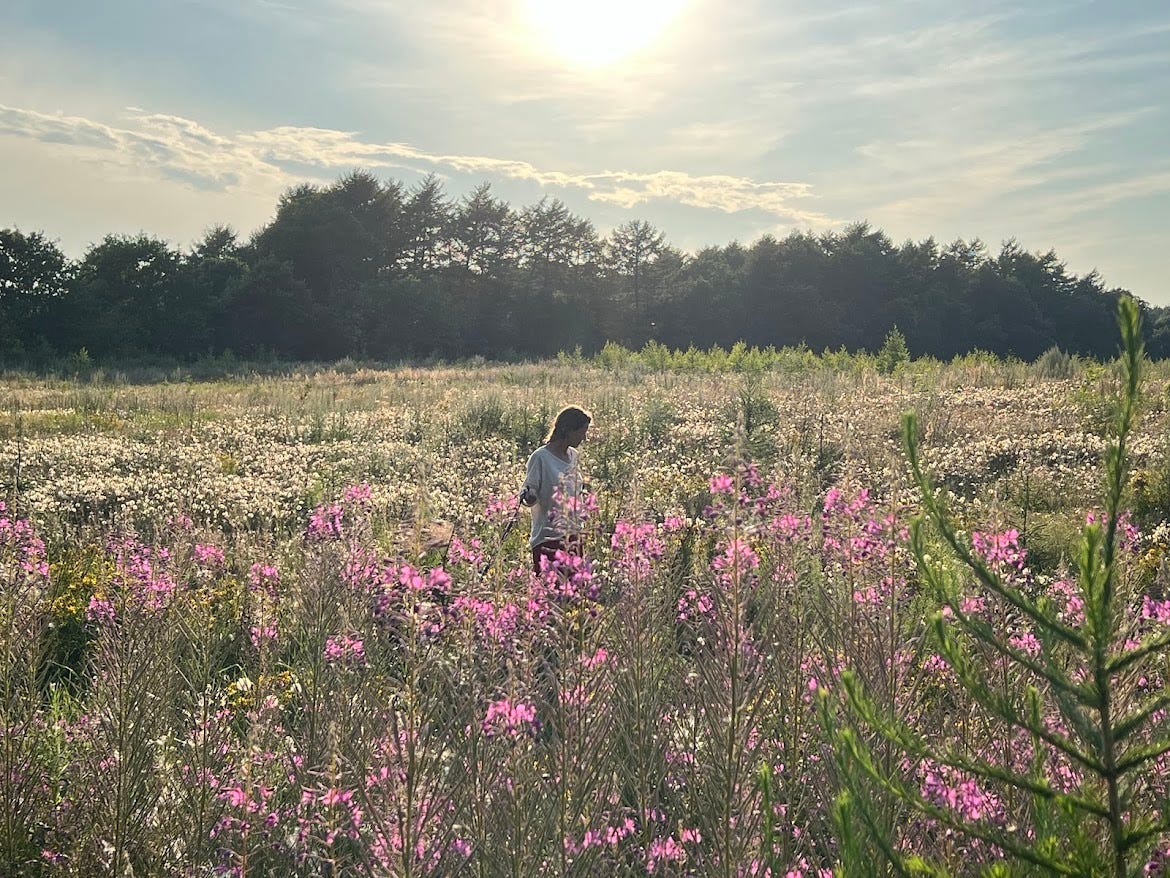
4) “Diversity begets resilience, resilience produces abundance”
In his 2025 book ‘Generation Restoration: How to Fix Our Relationship Crisis with Mother Nature’, Tim Christophersen urges for ecological literacy and explains how we can reset our relationship with nature. Filled with stories and studies environmental successes and failures, the book offers clarity on our role as part of nature and, in particular, what we can learn from Indigenous peoples around the world, who understand important and obvious lessons about nature that have escaped other societies.
I’ve only just come across the interview with Mongabay founder and CEO Rhett Ayers Butler and Tim Christophersen - it’s a good read. Discussing the book, of course, but also simply focusing on our (the human species) relationship with nature, what’s gone wrong, and what we can do to repair that relationship. Because, as he rightly puts it, “Repairing that relationship is not option. Unlike a failing marriage, humanity cannot simply walk away.”
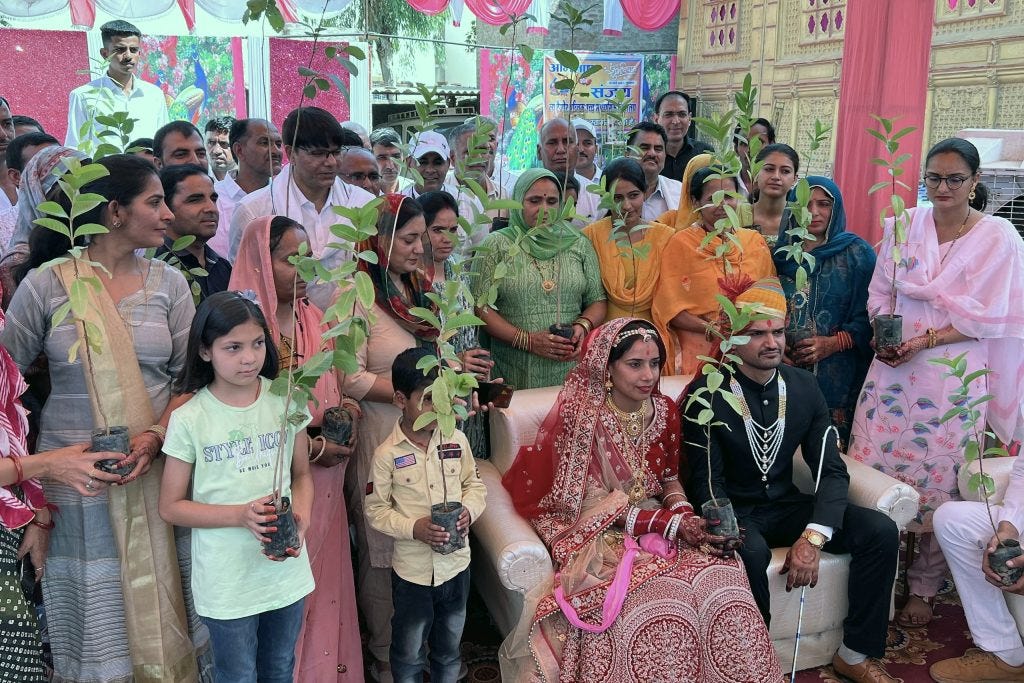
5) In India’s Thar Desert, the tree is part of your family
Nature recovery is a family matter! This story ties in perfectly with the aforementioned book by Tim Christophersen. He talks about relationship with nature - and in India Thar Desert, trees are considered, quite literally, part of the family. In the 2000s a professor was despondent by the apathy he saw around him when it came to a row of wilting neem trees on campus. “Instead of framing his interventions as conservation, he began characterizing them as familial. With students and villagers, Jyani created the first “green family”, linking saplings to households rather than to official programs. The shift was cultural before it was ecological.”
Now, two decades later, more than five million trees have been planted over 4’000 hectares and the concept of “familial forestry” has firmly taken hold. The article relates that, across 18,000 villages in the Thar, “close to two million families are now raising what they call their “green sons and daughters”. The idea is simple: if a tree is adopted as a family member, it will not be abandoned.” Beautiful, right? I like the “cultural before ecological” - it goes jives with “emotion before intellect.” Once it’s family, it is under your care, it is a part of you … exactly as we should always look at nature.

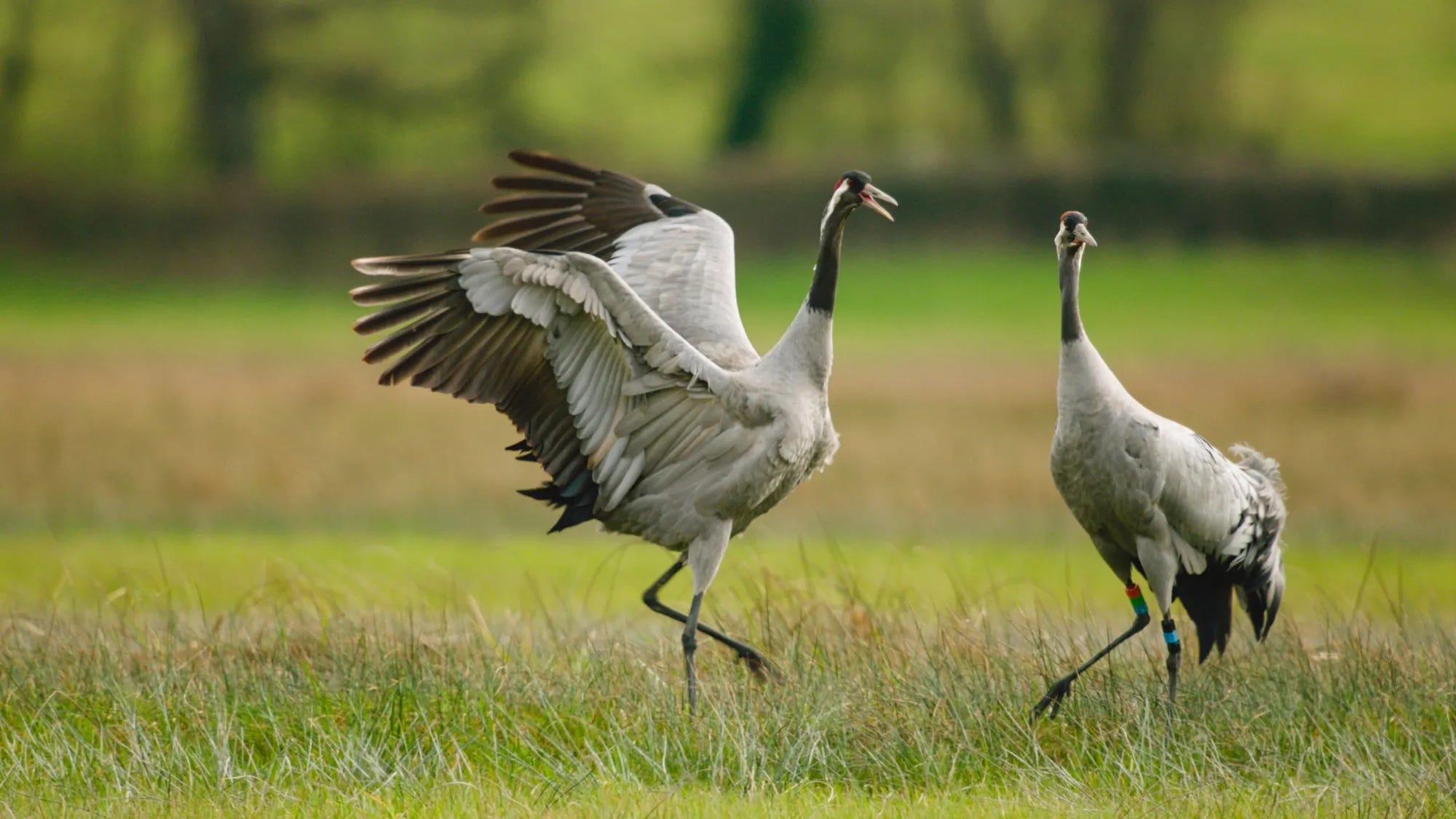
6) Cranes grow their numbers in the Scotland
They were driven to extinction in the 16th century for the usual reasons, you know, the ole’ habitat loss and hunting stuff we do so well. But after four hundred years, a pair bred again in Scotland - and 2025 marks a new record, with ten breeding pairs and nine chicks. Mind you, the RSPB says that the return is far from secure, there’s the Avian flu, and there’s the ever growing risk of extreme weather conditions that can disrupt the wetlands breeding grounds these birds need.
The RSPB writes that the return of the common crane also happens in England, and there in bigger numbers: “Cranes first recolonized the UK in 1979, when a small number of birds from mainland Europe were spotted in Norfolk. Since then, their numbers have increased with the birds also having a record-breaking year in the rest of the UK with a total of 87 pairs raising 37 chicks.”

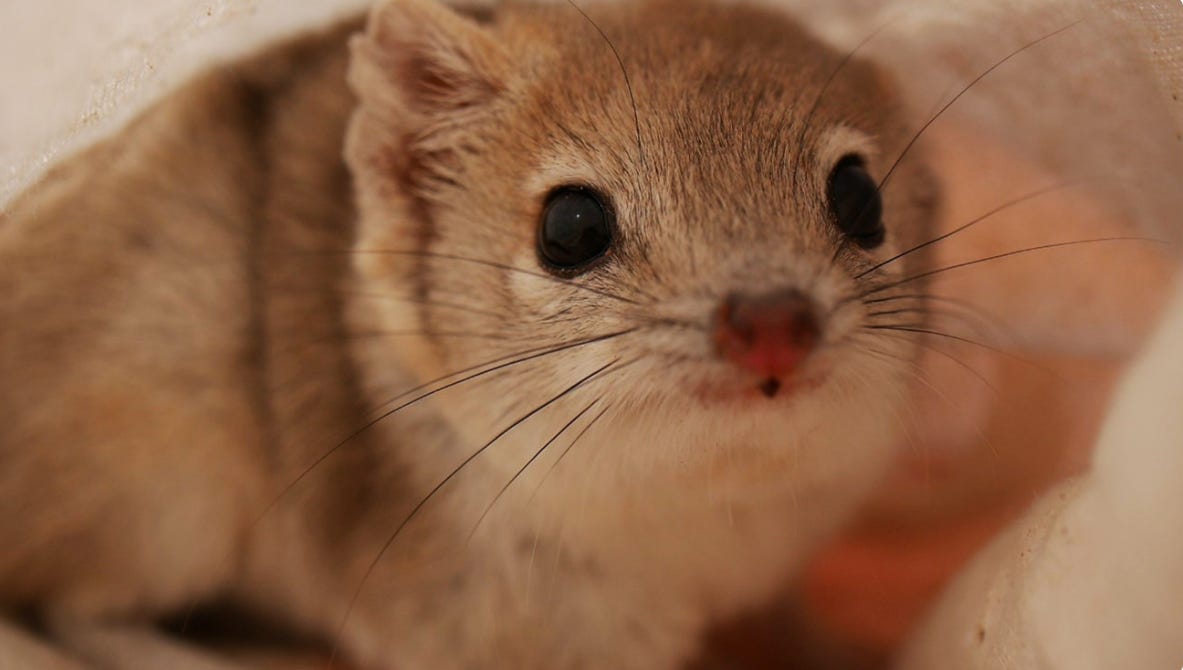
7) Micro-predator: The return of Australia’s ampurta
A cautionary curious tale of passive rewilding about a the introduction of invasive species … and dealing with a virus. You see, Small critters have had an increasingly rough time in Australia since domestic cats (that then went feral) were introduced in the late 18th century. The next century made matters even worse, when rabbits and foxes were brought in from Europe for the purpose of recreational hunting. Those three species pushed many others to the brink of extinction.
Now here comes … disease! A rabbit-killing disease had been brought to Australia to test it in 1991, but it got out of quarantine in 1995 and killed many millions of rabbits within a matter of months. Fewer rabbits, led to indirect suppression of cats and foxes and so, the tiny ampurta, highly adaptable to tough conditions, had the chance to make a return from near extinction - from 1995 to today, studies report that they’ve bounced back in many-fold numbers. A good news story for sure … unless, of course, you’re a rabbit.
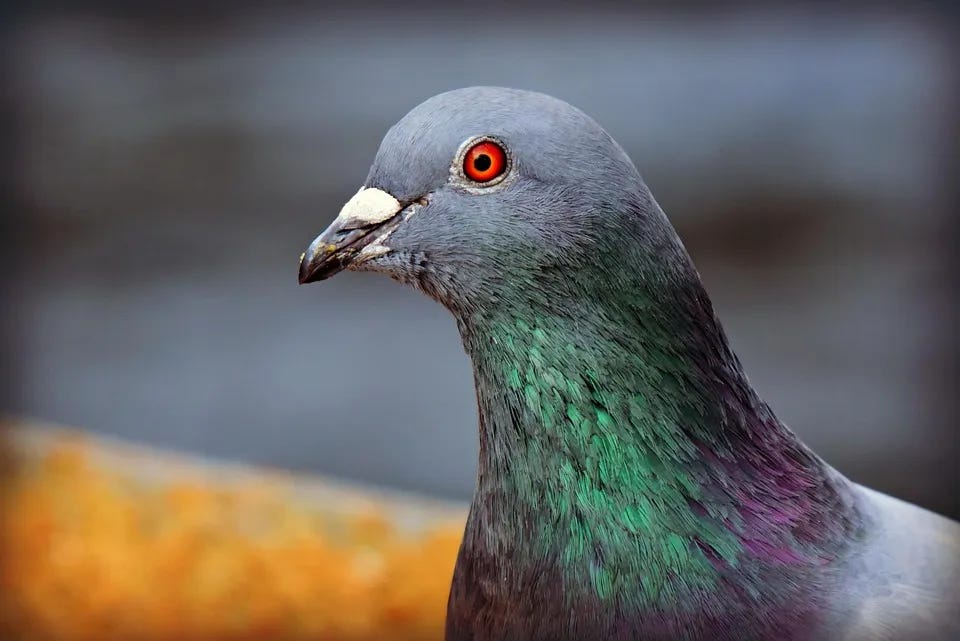
8) Neither pest nor rat with wings: the omnipresent and oft-maligned feral pigeon
There are many famous squares in many cities around the world - and the one thing they all have in common is what seem to be millions of pigeons. Do you know why? Because their ancient ancestors were rock doves (also known rock pigeons), nesting in a safe and cool place somewhere high up - cliff-like conditions that are perfectly replicated by modern cities. Somewhere around 5’000 years ago, domestication of rock doves began - and all of those countless feral pigeons you see in cities come from domesticated pigeons were bred for a variety of purposes for many ages.
Until we decided times had changed, time to call them rats with wings. Eventually pigeon meat was no longer in demand, same with pigeon guano, same with messenger pigeons. Again, feral pigeons are offspring of domesticated pigeons. These feral pigeons are here, in our cities, because we made them. And they are dependent on the environment and the food sources that cities provide. I would think that the responsibility lies with us - I think we should accept them with all of their beauty, intelligence (and yes, guano, too) - and in my article I also show how that can happen.

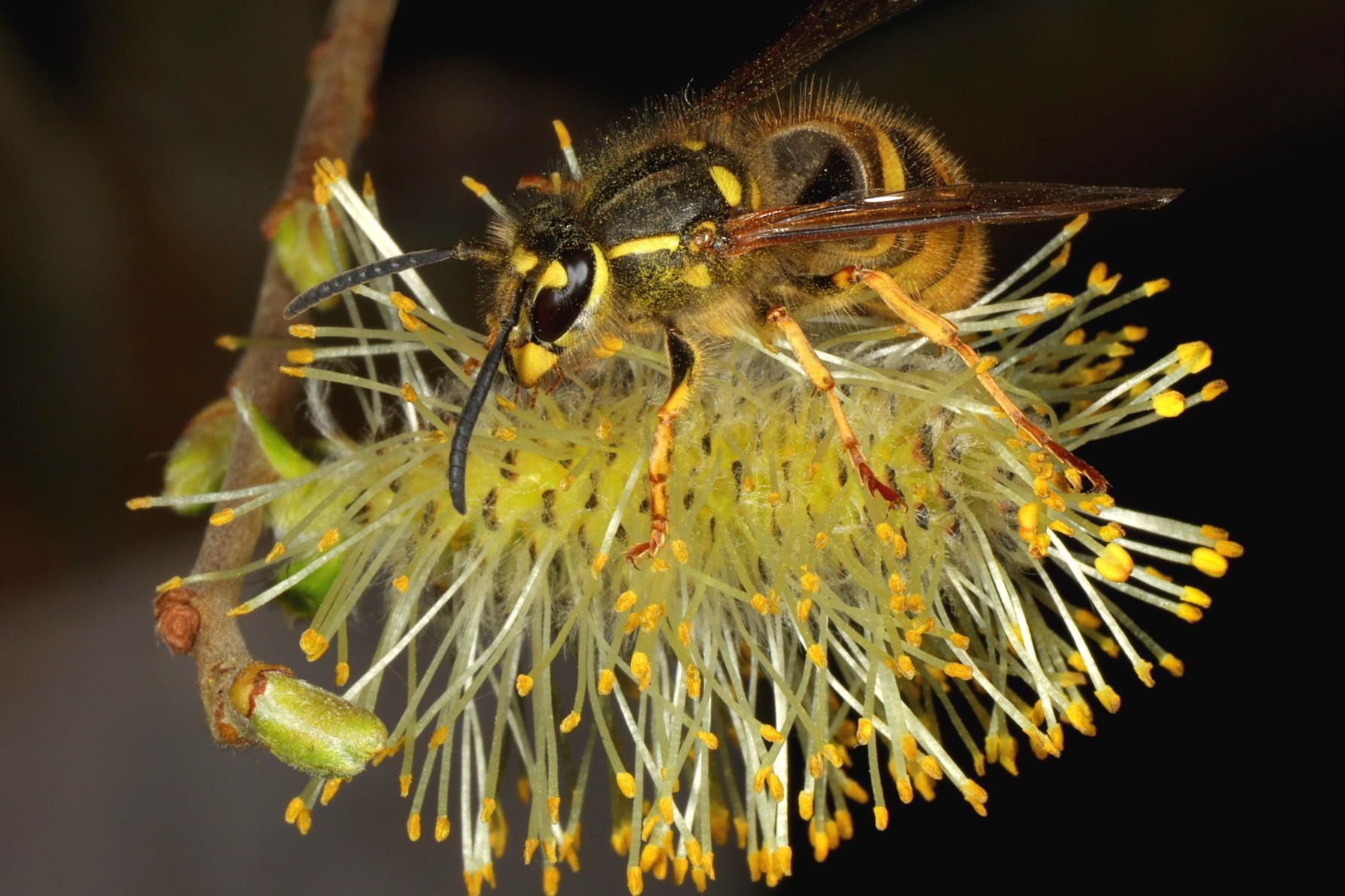
To conclude this week’s edition, rewilding legend and Trees for Life founder Alan Watson Featherstone shares with us a bit of his iconic photography that often takes a look at nature in a way that’s far closer to what we ordinarily perceive in passing. Alan takes time - as we all should. Below image: Walking past, you wouldn’t even notice. Just a wasp, just the flower of a willow … but with Alan’s keen eye - what colors, what mesmerizing, almost magical, nature.
To find out more about Alan, his public speaking, writing, photography and more, visit him at alanwatsonfeatherstone.com. And if you feel like reading about my fantastically unique day with him in Glen Affric, go here.
Glad you’re here, reading the Rewilder Weekly. Share the stories, write your own (and let me know about it), engage with others. Let’s continue to reach out, inspire and activate ever more people around the world. The rewilding movement is growing, and with all of us pitching in, it’ll grow a great deal more!
That’s it for this week’s edition. Eager for more rewilding insights?
connect with these organizations - sign up for newsletters and support them in any way you can;
join these events - conferences, online seminars, rewilding days and weeks to immerse yourself and learn from the experts;
read these books - a selection from Foreman to Macdonald, and from Tree to Daltun, Hetherington and Bowser;
listen to these podcasts - it’s inevitably inspiring when the likes of James Shooter, Ben Goldsmith and Brooke Mitchell talk to the pros in the field;
and check out these resources - explore the principles, ways of funding, research publications and personal ways to start rewilding.
And, of course, connect with and follow the many passionately engaged rewilders. Let’s keep growing the movement! 🦬🌳🐺🌞🌍
Go ahead, do it! 😊 I love comments and you can ask me anything (literally). You can also let me know about projects you come across, article you think I should share - and feel free to throw in tough questions, too - spice of life!
Oh, and please do click the ❤️ (like) button, too. The more ❤️, the more these posts rise in Substack’s algorithm - which means more and more people will discover rewilding, will learn about it, will engage around it, and hopefully will become active rewilders before long. Thanks!
Another lovely and super interesting update Daniel thanks for sharing. 🙏
This is a brilliant and uplifting read Daniel! I'm happy to have found your Substack.
Also I'm happy to say that I recently wrote a post about Wood Pigeons, and the response has shown me that there's a lot of love for pigeons out there!!
If you're interested you can check it out here:-
https://melissalee1.substack.com/p/wildlife-spotlight-wood-pigeons?r=3heuxr