


Welcome to the latest edition of the Rewilder Weekly. 🦬🌳🐺🌞🌍
This week with the latest rewilder portrait - featuring the Rewilding Britain’s Policy and Advocacy Lead for Wales, James Hitchcock - as well as inspiring and insightful stories from 🇵🇱 Poland, 🇵🇹 Portugal, 🇷🇴 Romania, 🇬🇧 the UK, 🇺🇸 the US and 🇨🇭Switzerland.
Wishing you a good week!
Cheers,

👉 If you come across stories you’d like to see featured in a future edition of the Rewilder Weekly, send them to me and I’ll gladly do what I can.

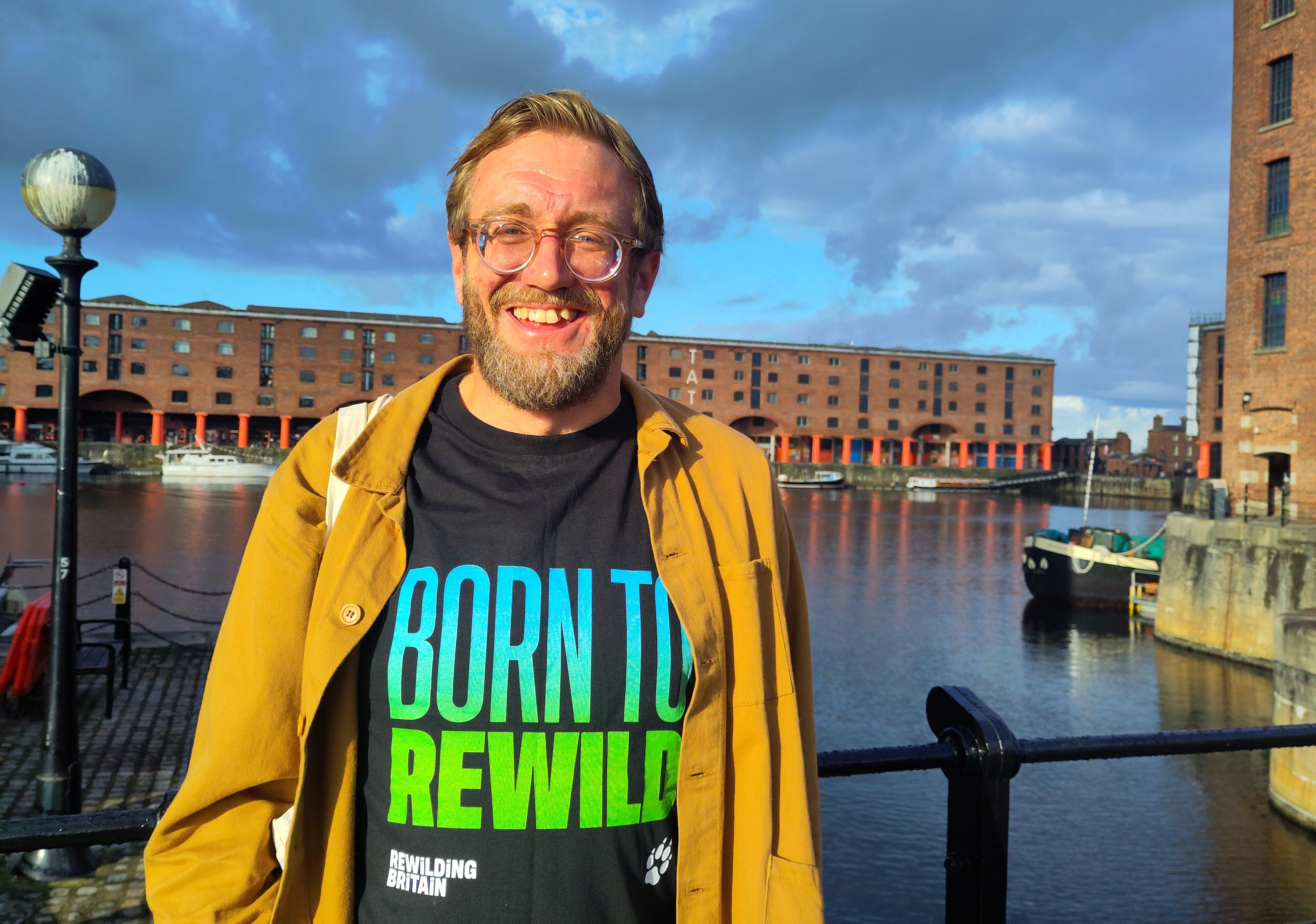
1) Meet the Rewilders: James Hitchcock
Meet the Rewilders is a series that introduces you to people engaged in the rewilding movement across the globe. Today meet James Hitchcock, the Wales Rewilding Policy and Advocacy Lead for Rewilding Britain. The timing couldn’t be better as, while various rewilding projects were already happening in Wales, the brand-new Welsh Rewilding Alliance has just been launched. Bravo!
In his portrait, James talks about his journey from protecting a single species to restoring entire landscapes - and with everything he says you sense just how strong his focus on people is. In his words: “Success will come from continuing to move away from “nature is great, nature makes you feel good” to “nature helps solve these problems and provides these opportunities for the challenges we need to meet and the issues that people care about”. Widening the conversation so there’s more voices included and we look more at land policy, community wealth and rural jobs outside of farming is going to be essential.”

2) Protecting both people and bears in Poland
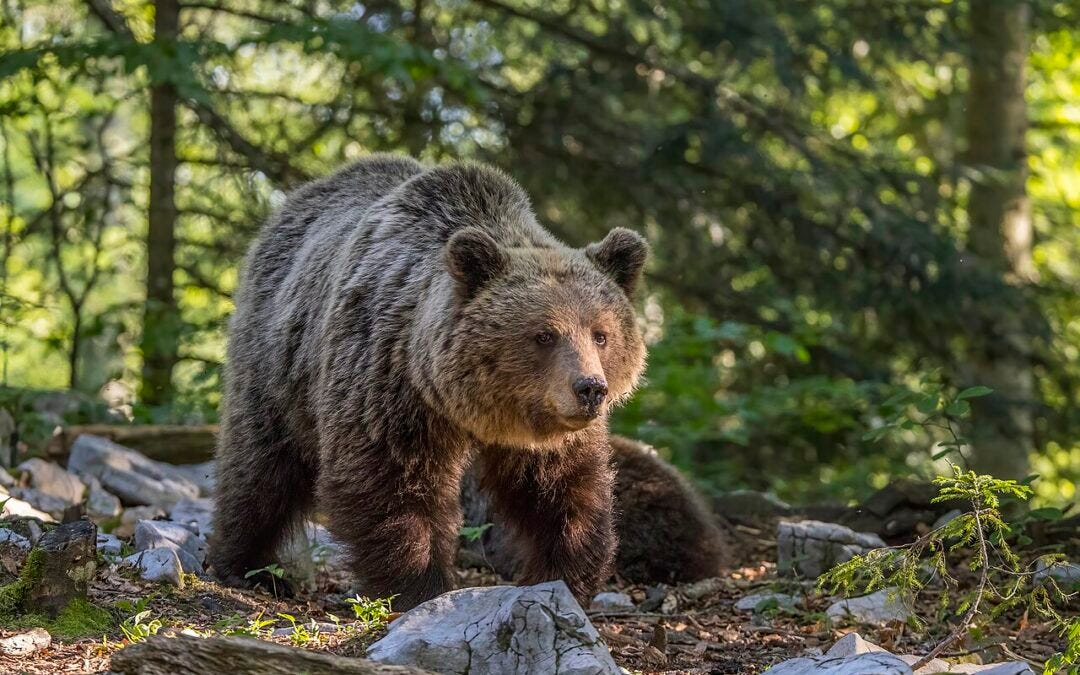
There are thought to be somewhere between 120 and 400 brown bears in Poland. They seem to be doing well and as the population is growing, coexistence efforts are now implemented. A new scheme (funded by the EU) is set up to monitor and respond to bear sightings. When they’re too close to human habitations, they’re caught, fitted with trackers and released.
Part of conflict prevention is about a rapid-reponse team of twenty people that is expected to be at the ready for whatever potentially dangerous situation is reported. But there’s more to this, of course. Bears like an easy meal and rubbish bins are feasts! So bear-proof bins are installed and in years to come the replanting of fruit trees and bushes in the mountains will offer bears plentiful food sources. Another part of any coexistence effort is, of course, education. Whether it is local residents or hikers, learning about bears is key. As Tomasz Zajac of the Tatra National Park says, hikers should stick to trails and avoid leaving waste behind and “if someone comes across a bear, they should slowly retreat but avoid running away, as a bear will be provoked to chase and, reaching speeds of 50 km/h, is the likely winner.” Indeed!
3) What you’re looking at was a mine until recently
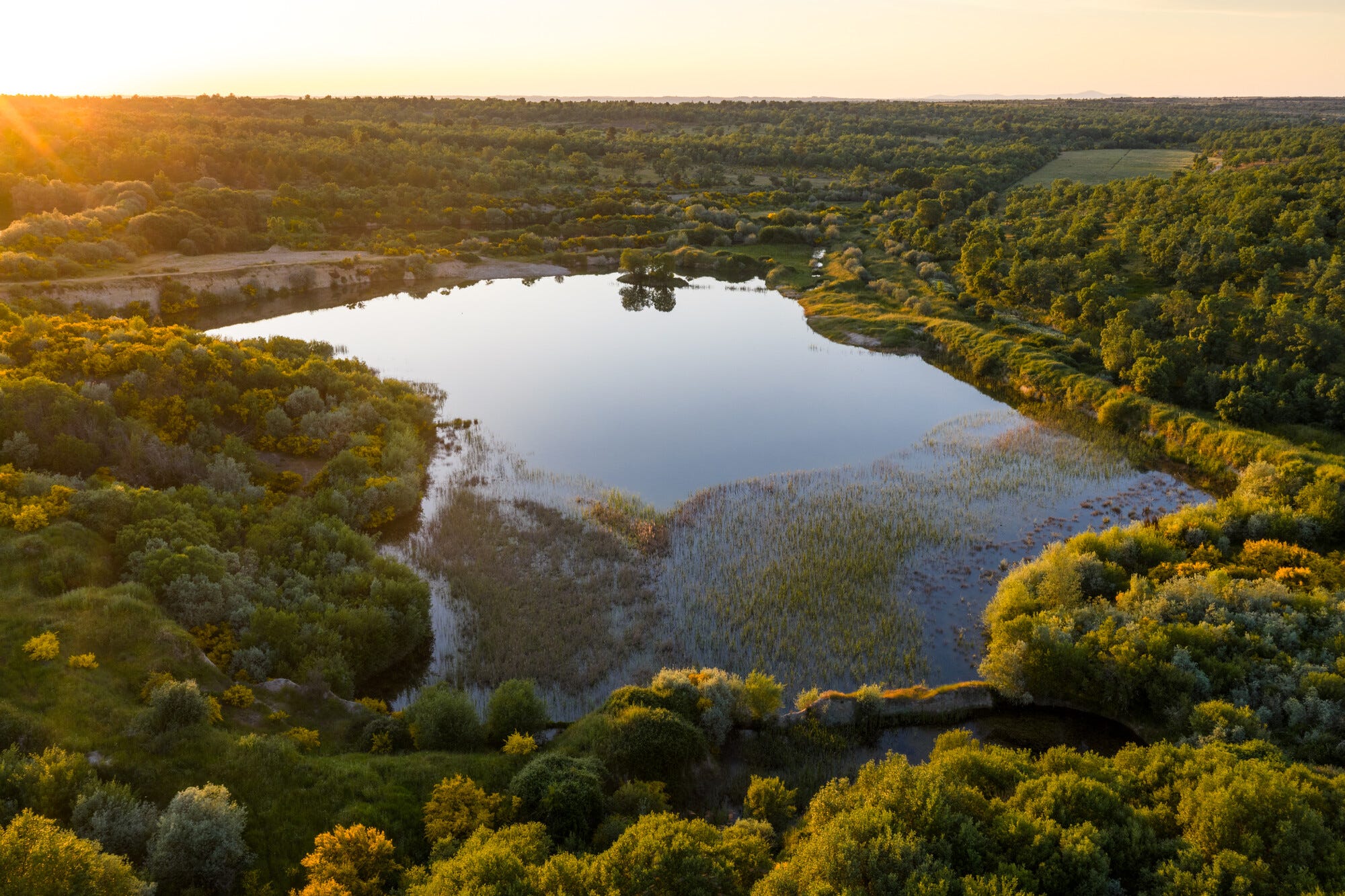
Until just ten years ago, the landscape was an industrial wasteland. Before it was abandoned, the mine was used to extract tin, tungsten and sand. Today, I mean just look at the picture, tells one heck of a beautiful story. Rewilding Europe writes: “Today, from the air, the 300-hectare rewilding site reveals a vibrant mosaic of lakes, ponds, ditches, and wetlands, as birds, dragonflies, turtles, otters, and a host of other species return to recolonise newly formed habitats. Around the water bodies, native forest is regenerating, strengthening resilience and further boosting biodiversity.”
With rewilding projects, quite often water needs a helping hand, either by digging ponds, undoing drainage damage, removing dams and freeing rivers. In this case, when the mine no longer operated, water began to collect in the hollows - and so the healing began. Rewilding Portugal - with funding support from Mossy Earth - has been managing the site since 2022 and stepped in with some heavy lifting to help nature recover. What a fantastic difference the efforts have made.
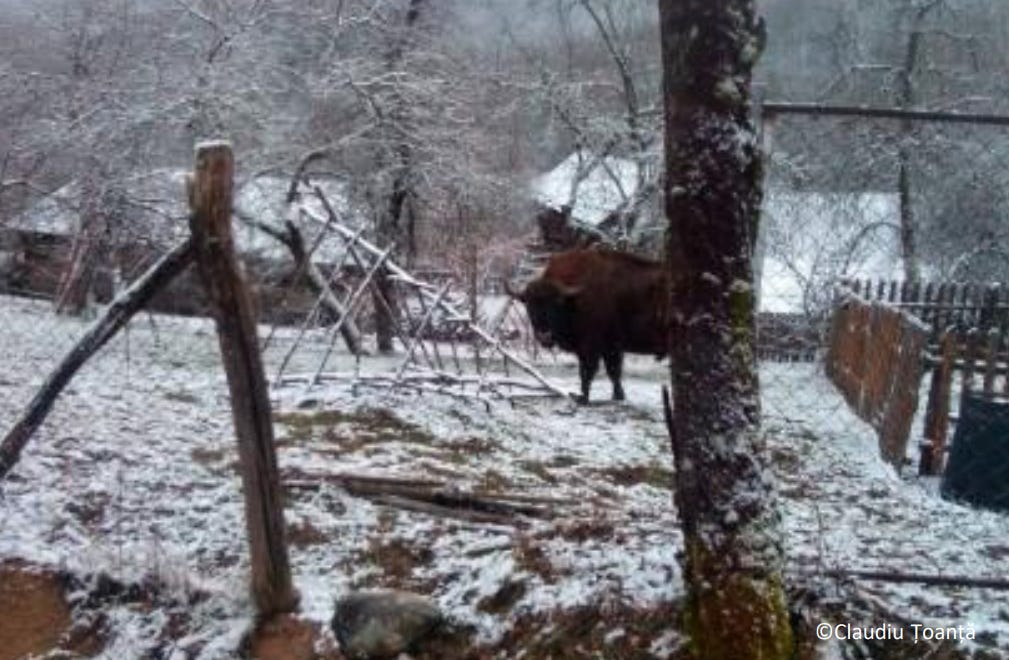
4) What do you do when a bison walks into your village?
Every month, the Carpathia conservation foundation sends out an update. Invariably, their efforts and initiatives and successes are a joy to see. By now 4.5 million trees have been planted; 75’000 hectares are protected for wildlife - zero recreational hunting; 28’000 hectares or forest are under permanent protection; 2’200 students and teachers have been involved in environmental education projects and 353 local people receive fair pay for their involvement with Carpathia activities.
You’re wondering what all of that has to do with a bison walking into the village … well, it’s all part of overall effort. Follow below link and check out page 12 of the report where they write about the work “caused” by two reintroduced bison that have wandered into a village, damaging fences and feeding on hay. The way they go about, handling it together with villages, is exemplary. This is the way a healthy level of respectful coexistence is achieved. Well done!

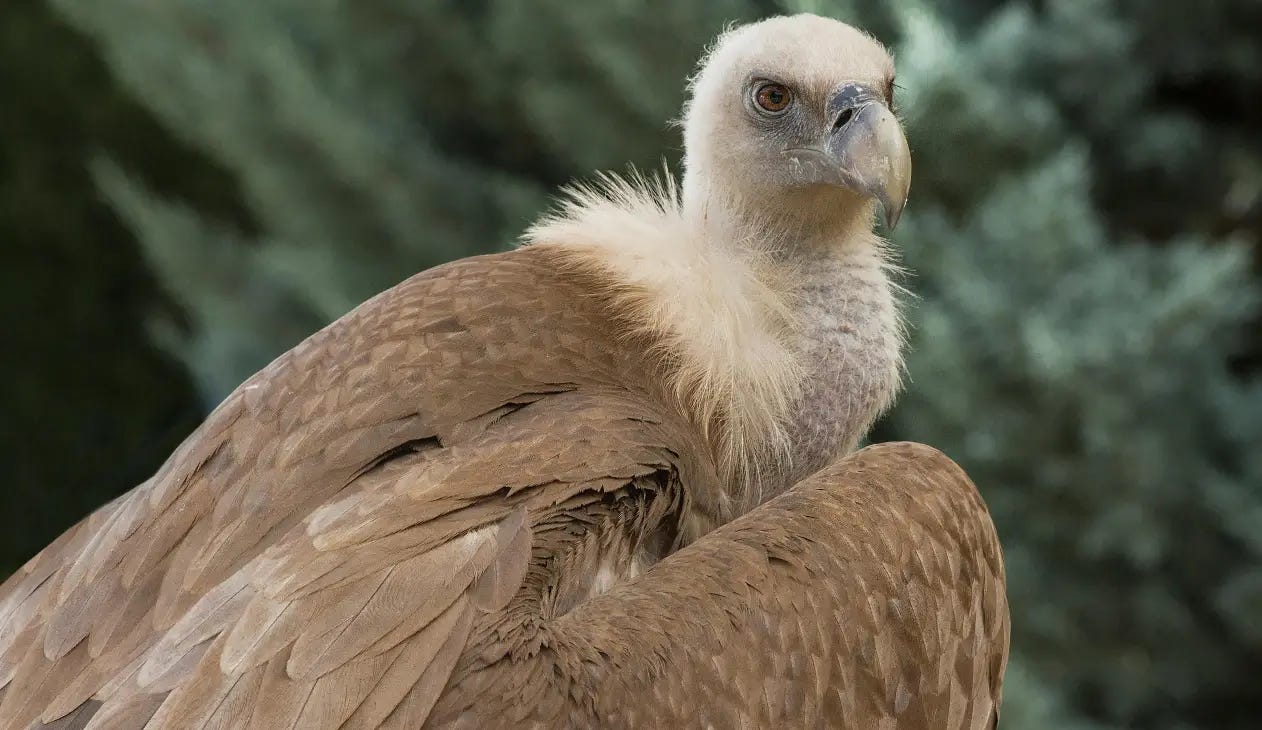
5) The griffon vulture returns to Romania
Another Carpathia story! This one is about returning vultures to Romania. Until about the middle of the last century, some vultures were still soaring the Romanian skies. There once were griffon, cinereous, bearded and Egyptian vultures - and then they were all gone. With several partners, Carpathia plans on reintroducing all of these vultures to Romania - and the work begins with returning the griffon vulture to the Fagaras Mountains.
A special aviary has been built where the griffon vultures that have arrived from Spain are housed while the acclimatize. They will be gradually released into the wild and will stay near for a while until they really roam wild. These birds are amazing - they can have a wingspan of nearly three meters! Carpathia writes, “Through the vulture reintroduction project in Romania, we aim to restore an important part of the natural balance of the Făgăraș Mountains and to offer a concrete example of collaboration between science, local communities and conservation. This is just one of the efforts we are making to protect the area as a future national park, the highest level of protection that priceless wilderness in the heart of the country can receive.”
6) The first of the ‘Brit Bisons’ are moving north!
I wonder if anyone’s already used that term, I kinda like it - Brit Bison - has a nice ring to it, doesn’t it? Here’s the thing, the first three European bison returned to England in 2022 as part of the Wilder Blean Project. They were three females, one from Scotland and two from Ireland - and to everyone’s surprise, a calf was born even before a bull from Germany arrived! Read the whole story here. The herd began to slowly and steadily grow … and now the north of England just received their first five bison from the Wilder Blean gang.
The location is somewhere in Cumbria. Paul Whitfield (head of the Wildwood Trust) explains in the video, the folks up there want to make their own announcement so stay tuned for that. Says Paul: “Inspiring a new project like this is exactly what we hoped for from the start. The Blean bison were always meant to act as a catalyst for change, showing how bison, as ecosystem engineers, can alter woodland structure and support greater biodiversity.” Well, ‘Blean bison’ sounds okay, too, I guess - but there’s country-wide pride in Brit Bison, Paul - feel free to use and trademark it!

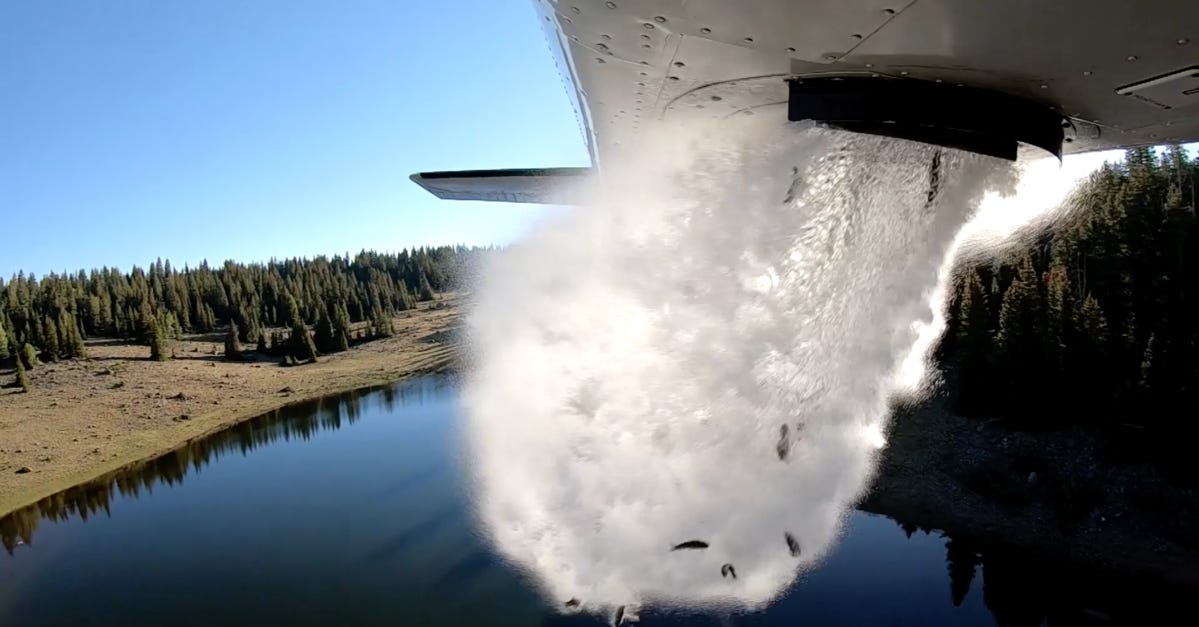
7) What is more important: healthy nature … or angling?
Apparently, the answer is angling! A new VOX article, penned by Benji Jones, tells a very uncomfortable story: Millions of nonnative fish are dumped into lakes and rivers across most US states every year - because of recreational fishing needs. This is as fascinating as it is concerning. He writes “recreational fishing is an enormous industry in the US, contributing some $230 billion to the economy each year, according to the American Sportfishing Association, an industry group. Because waters across the country are so degraded, stocking nonnative fish keeps this industry afloat.”
The economy is of course most often a key decision factor. Here, in addition, there’s a problem with the funding model. State conservation is apparently funded in part by selling fishing licenses. No recreational fishing, no fishing licenses sold - simple as that. This is a horribly warped system. The dumping of millions on nonnative fish is obviously a challenge for any ecosystem, with negative impacts unfolding everywhere. These has been done already for a very, very long time and so there’s the actual argument that, heck, the ecosystems are already broken, so why stop now? Anglers are happy, the money keeps flowing, all’s well …
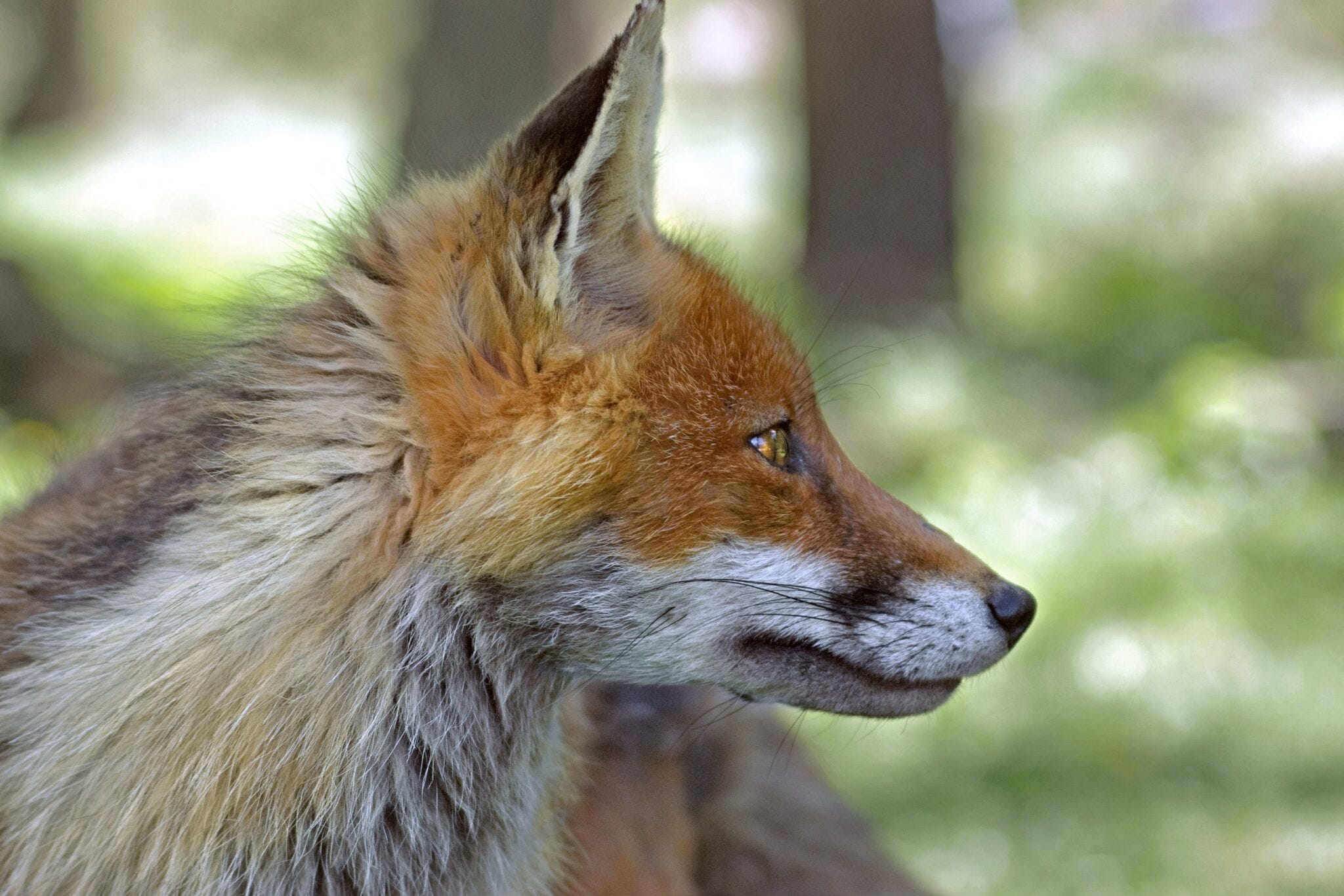
8) Fox hunting must end
In my neck of the woods, Switzerland, around 25’000 foxes are slaughtered in Switzerland annually. In neighboring Austria it’s around 65’000 - and in Germany the number, annually, is around 500’000 foxes. Let those numbers sink in. Hobby hunters shoot them as “small game” target practice - their official claims that they kill foxes because they’re pests/vermin, that they spread disease and that ground-nesting birds need protecting are all scientifically disproven.
Foxes are valuable predators and places where fox-hunting has been outlawed, like Geneva and Luxembourg and Vienna, show that there are no disease outbreaks nor measurable declines in ground-nesting birds. Where there are fewer ground-nesting birds, it is because of loss of habitats due to intensive agriculture. In this article, I’m looking into the history, the claims, the present and a way forward without the misguided and utterly pointless mass slaughter of foxes.

To conclude this week’s edition, rewilding legend and Trees for Life founder Alan Watson Featherstone shares with us a bit of his iconic photography that often takes a look at nature in a way that’s far closer to what we ordinarily perceive in passing. Alan takes time - as we all should. He’s quite right in referring to the below image as nature’s artistry. Beautiful, right? What you see there are tracks of a carrion crow (Corvus corone) crossing the ripples in a sand dune.

To find out more about Alan, his public speaking, writing, photography and more, visit him at alanwatsonfeatherstone.com. And if you feel like reading about my fantastically unique day with him in Glen Affric, go here.
Glad you’re here, reading the Rewilder Weekly. Share the stories, write your own (and let me know about it), engage with others. Let’s continue to reach out, inspire and activate ever more people around the world. The rewilding movement is growing, and with all of us pitching in, it’ll grow a great deal more!
That’s it for this week’s edition. Eager for more rewilding insights?
connect with these organizations - sign up for newsletters and support them in any way you can;
join these events - conferences, online seminars, rewilding days and weeks to immerse yourself and learn from the experts;
read these books - a selection from Foreman to Macdonald, and from Tree to Daltun, Hetherington and Bowser;
listen to these podcasts - it’s inevitably inspiring when the likes of James Shooter, Ben Goldsmith and Brooke Mitchell talk to the pros in the field;
and check out these resources - explore the principles, ways of funding, research publications and personal ways to start rewilding.
And, of course, connect with and follow the many passionately engaged rewilders. Let’s keep growing the movement! 🦬🌳🐺🌞🌍
Go ahead, do it! 😊 I love comments and you can ask me anything (literally). You can also let me know about projects you come across, article you think I should share - and feel free to throw in tough questions, too - spice of life!
Oh, and please do click the ❤️ (like) button, too. The more ❤️, the more these posts rise in Substack’s algorithm - which means more and more people will discover rewilding, will learn about it, will engage around it, and hopefully will become active rewilders before long. Thanks!