


Welcome to the latest edition of the Rewilder Weekly. 🦬🌳🐺🌞🌍
This week with the latest rewilder portrait - featuring SCOTLAND: The Big Picture’s Northwoods Rewilding Network Manager James Nairne - as well as inspiring and insightful stories from 🇺🇦 Ukraine, 🇺🇸 the US, 🏴 Scotland, 🇦🇿 Azerbaijan, 🇨🇦 Canada and 🇪🇺 Europe.
Wishing you a good week!
Cheers,

👉 If you come across stories you’d like to see featured in a future edition of the Rewilder Weekly, send them to me and I’ll gladly do what I can.

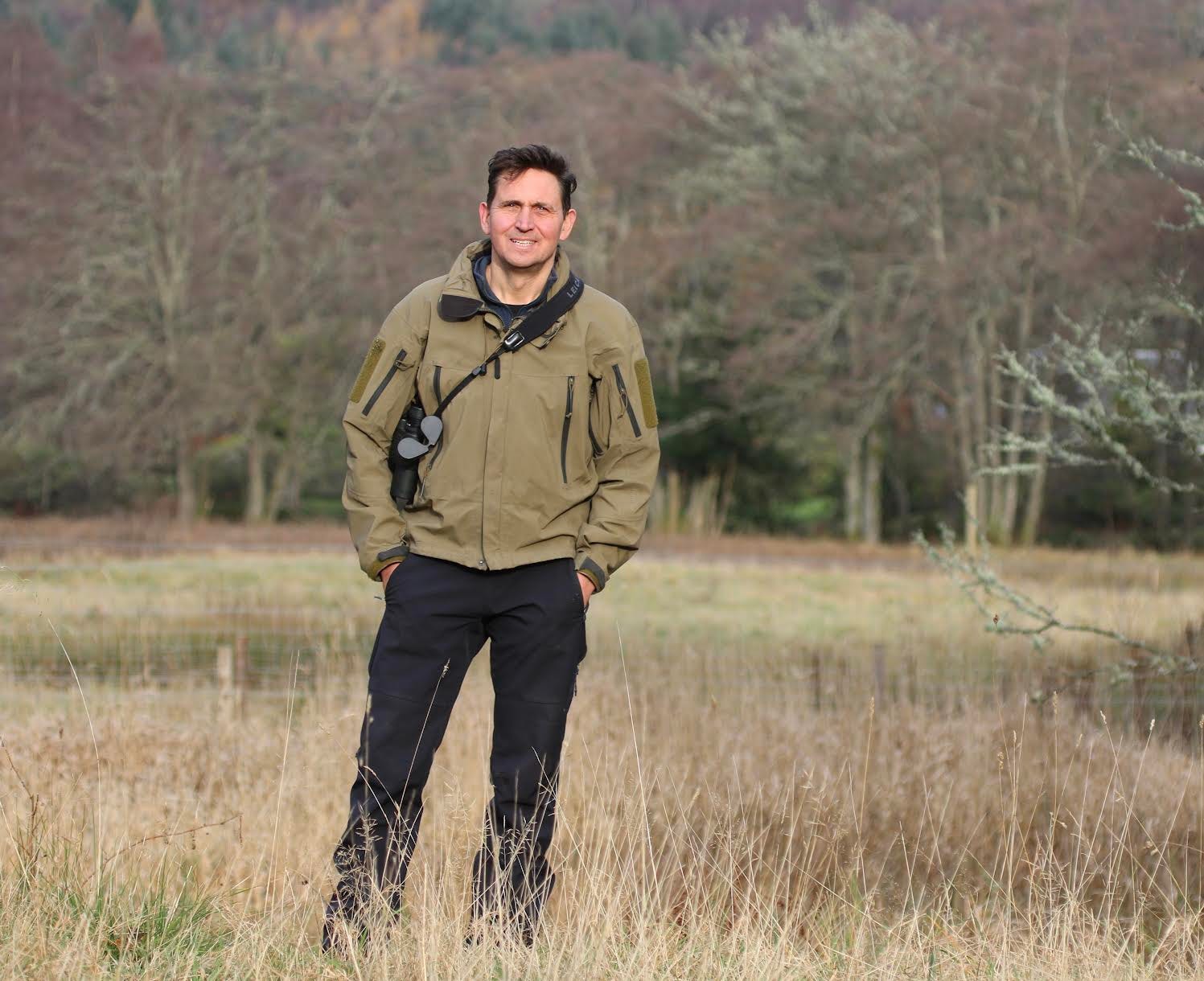
1) Meet the Rewilders: James Nairne
Meet the Rewilders is a series that introduces you to people engaged in the rewilding movement across the globe. Today meet James Nairne, SCOTLAND: The Big Picture’s Northwoods Rewilding Network Manager. Asked about the key decisions in his life, James says, “Abandoning a twenty-year career as an international lawyer to return to university to study environmental management & conservation, and ultimately work for a rewilding charity in Scotland. I don’t regret it for a minute.”
The Northwoods Rewilding Network is amazing - it already consists of over one hundred farms, crofts and community woodlands - and all owners commit to upholding the network’s rewilding principles. This creates ever more ecological stepping stones that will (here’s hoping) eventually turn into corridors. I love the system changes he hopes for: “I’d love to see a system where landowners can choose to receive public funds for restoring and maintaining ecosystem processes as an alternative to less efficient forms of food production.”
Yes! That’s exactly what should happen, and across all of Europe. Many farmers would love to be stewards of nature, but the current subsidy system forces them to continue doing what’s has been traditionally asked for. And none of this would endanger food security - it would simply bring about a new equilibrium. (more on that here)

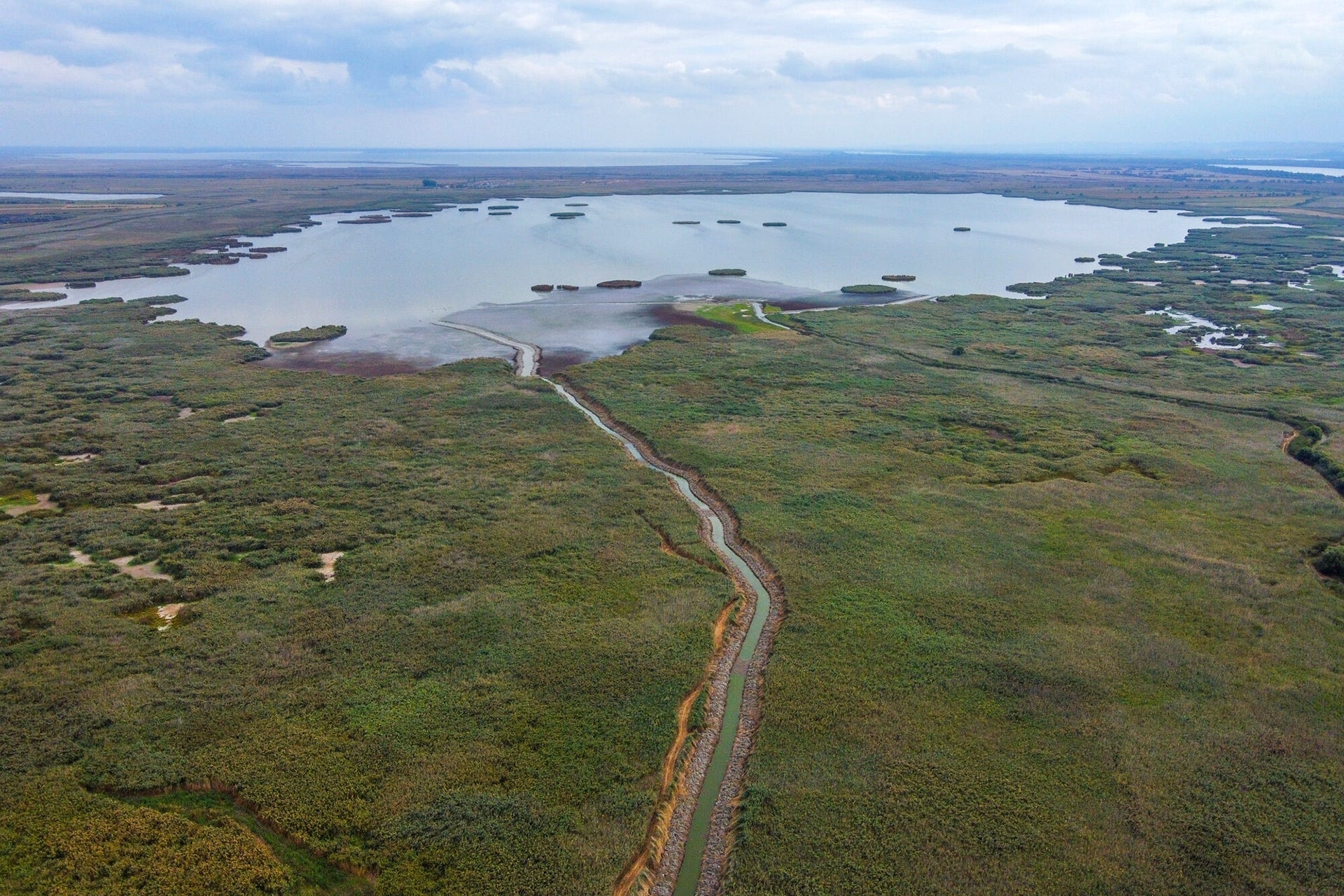
2) The rise of Ukraine’s Lake Kartal
Wetlands across the globe are biodiversity hotspots. They cover only 6% of the Earth’s lands, but support up to 40% of all plant and animal species, as Rewilding Europe explains in their article (comes with excellent graphics and an equally excellent video). The flood plains that once were, have been turned into farmland over the course of the past century, everything was drained and dammed. The results with regards to biodiversity, soil and water quality, fish stocks, etc. could have been foretold.
The restoration work began six years ago - now the water levels of Lake Kartal are rising again - and flora and fauna are returning. “Supported by funding from the Endangered Landscapes & Seascapes programme, the Rewilding Ukraine team and local partners have breathed new life into more than 18,000 hectares of land and water by removing dams and other barriers, clearing silted-up channels, and installing sluice pipes. By enabling a more dynamic, natural exchange of water with the Danube, this has helped reverse decades of human intervention in the landscape, which choked off large parts of the floodplain from the river.”
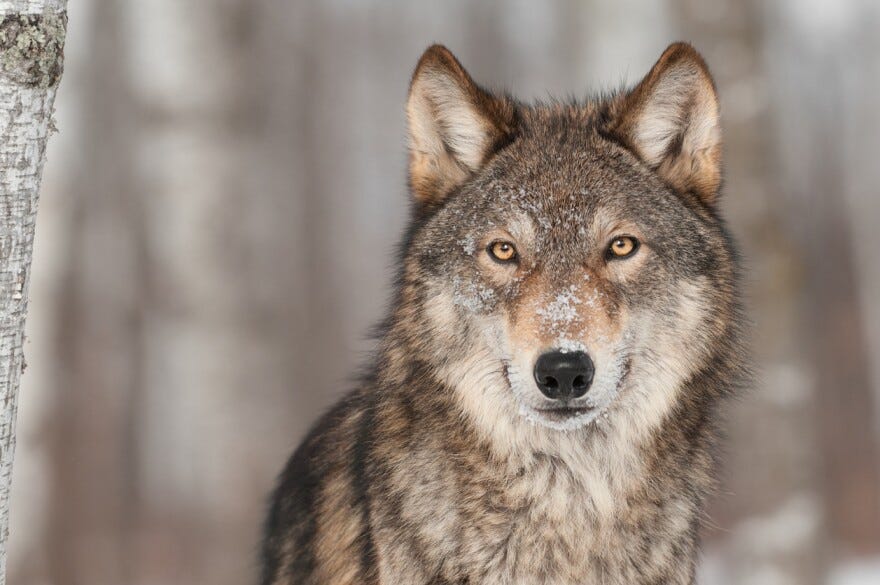
3) Did wolves really fail in Yellowstone?
Of course they didn’t! One of the problems in the world today is that there’s always claim and counter claim. Everybody has their opinion, everybody can pick the statistic that tells they story they want to hear, and it is the same, unfortunately even when it comes to science. With most studies, as time goes on, someone will eventually say that this or that wasn’t taken into consideration. This preamble simply because recently a study found that the Yellowstone wolves were not the trophic cascading heroes they have been proclaimed to be. News articles inevitably followed.
Do wolves have an outsized impact on their environment? Yes, absolutely. It is just as undeniably true for Yellowstone wolves. Some of what was written and told was surely hyperbolic - heck, it’s human nature (and the press wants it - and “wolves changing rivers” does sounds pretty awesome). The truth is always more nuanced. So do not let nay-sayers deride the impact of wolves in Yellowstone or elsewhere. Suzanne Asha Stone’s written a detailed article that unpacks the spin and clarifies what’s actually happening on the ground.
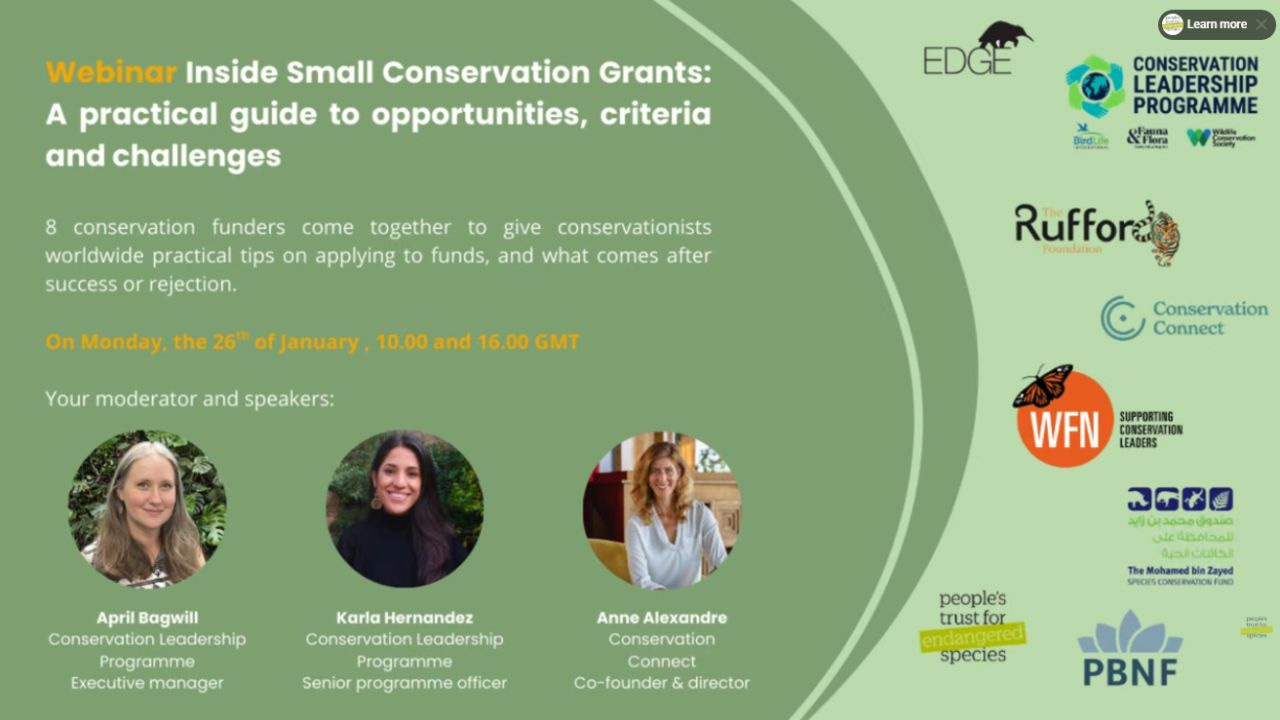
4) Could your nature restoration efforts use a financial boost? Check out this funding webinar
Everybody has ideas, most people don’t act on those ideas. But if you’re one of those who do, with a nature recovery idea, then a grant is often a great way to go. Getting them is not nearly as impossible as it may seem. There are lots of charities, lots of funders, especially small grants are out there, ready to be deployed. One of the great things that happens is that the application process forces you to sharpen purpose, vision and mission. Once something is put to paper, clarity often follows.
This webinar brings you together with three funders and their expertise. The session offers guidance on navigating the grant process, including how to communicate successfully run projects with your funder, and how to turn rejection into future opportunities. Meet Anne Alexandre (Co-Founder and Director of Conservation Connect & Managing Director of PBNF), Karla Hernandez-Aguilar (Senior Programme Officer at Birdlife International) and April Bagwill (Executive Manager at Fauna & Flora) and benefit from their insights!

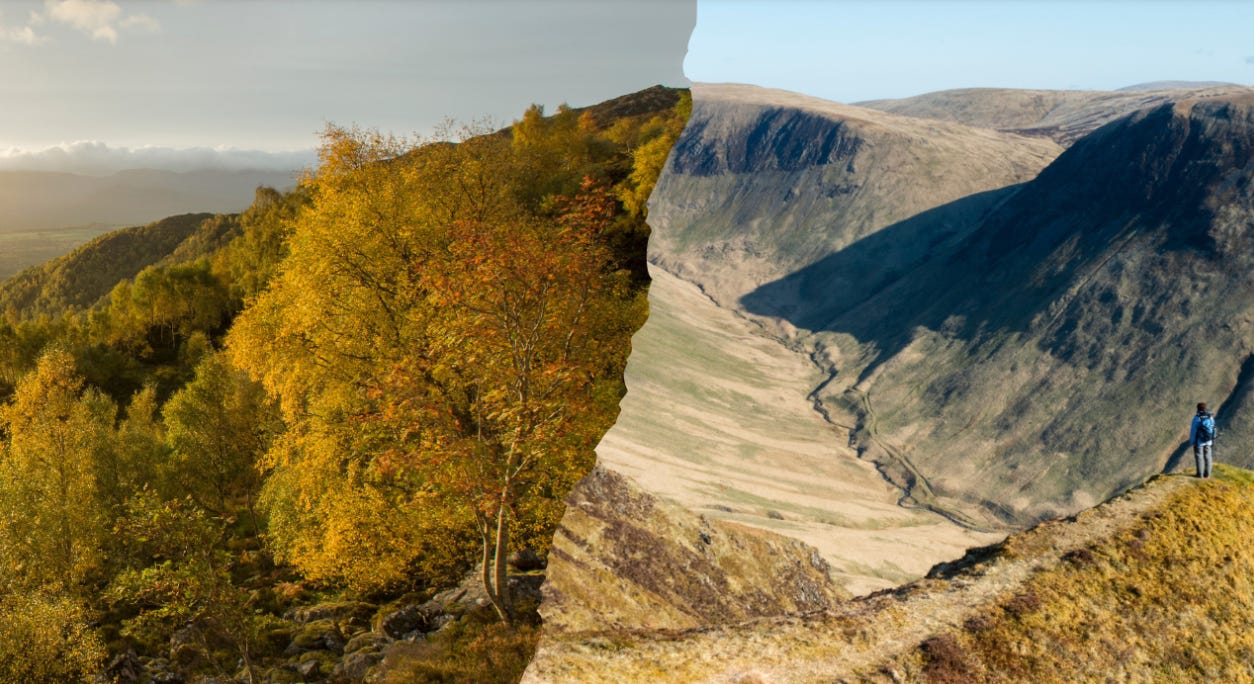
5) Scotland’s Natural Environment Bill has been voted into law - what does it mean?
While sharing its delight about the passage of the bill, the Scottish Rewilding Alliance also highlights that the work is far from done, saying, “While this legislation is a major leap forward, the real work is done by people on the ground – and they still face barriers to nature recovery not addressed by this Bill.” In the alliance’s statement you hear from Alastair Seaman (Director at the Woodland Trust Scotland), Lisa Chilton (CEO of SCOTLAND: The Big Picture) and Steve Micklewright (CEO of Trees for Life).
In no uncertain terms, they point out that current protection measures are at times actually blocking restoration efforts. Instead the protection of isolated sites, the focus needs to shift entire landscapes. Says Steve Micklewright: “Scotland’s network of protected sites has been a vital brake on biodiversity loss. But to really halt and then reverse biodiversity loss, it’s time to move from protecting fragments of nature to restoring entire landscapes. Modernising designations for those that need it most would give nature the freedom to restore itself.”
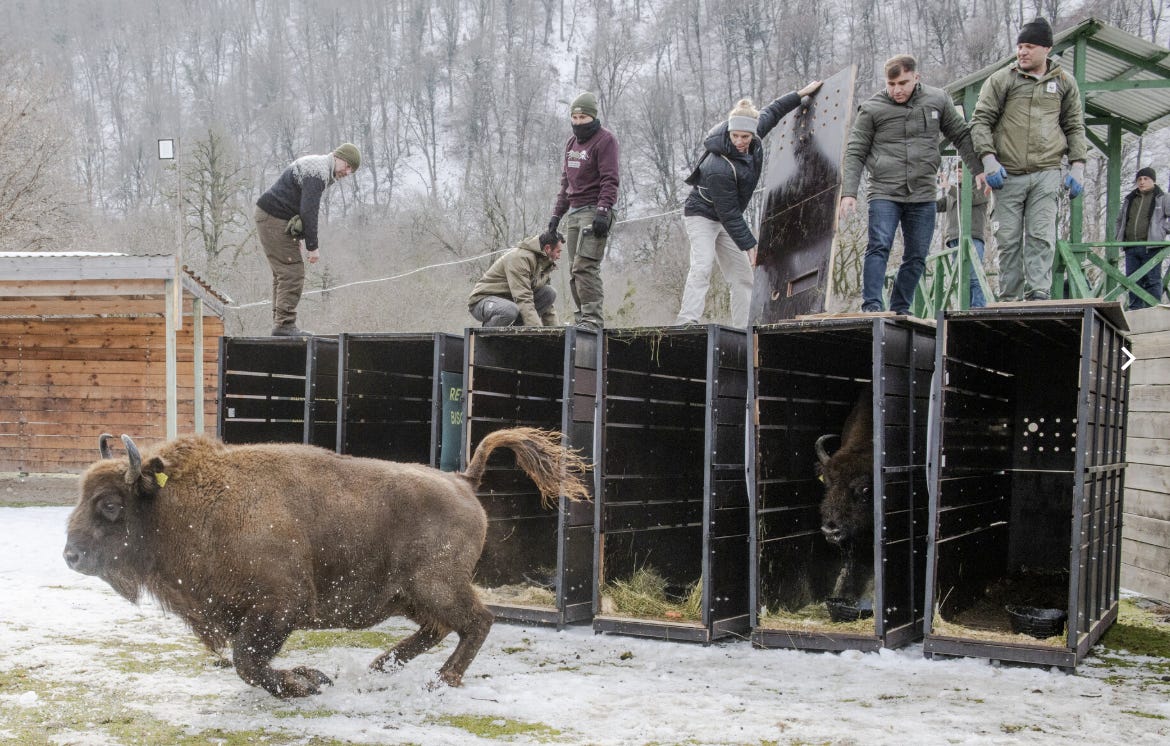
6) The return of the European bison to the Caucasus
Little by little, the European bison begins to settle again across a number of countries and regions. I often report on the restoration and relocation efforts - and this latest story deserves special attention. Let’s start by realizing that a male can weigh up 1’000 kilos and reach a shoulder height of up to two meters! Moving one such wild colossus as a logistical effort of gargantuan proportions - moving 18 at one time from Europe to Azerbaijan - well that’s a logistical masterpiece.
The return of the European bison to the Causasus project began in 2019. Since then, the number of bison in Shadagh National Park (where they had been extinct for over a century) keeps rising. A total of 64 European bison have been relocated to the park, and they are reproducing nicely - with the herd now totaling 90 animals. Says Andreas Knieriem (Director of Zoo and Tierpark Berlin),“The European bison disappeared from the wild in the 1920s and survived only in zoological institutions, including Zoo Berlin. The fact that we now once again have European bison in the forests of Europe and Asia is a milestone that required almost 100 years of conservation work. The return of the European bison to the Caucasus is therefore a collective success we are very proud of.”

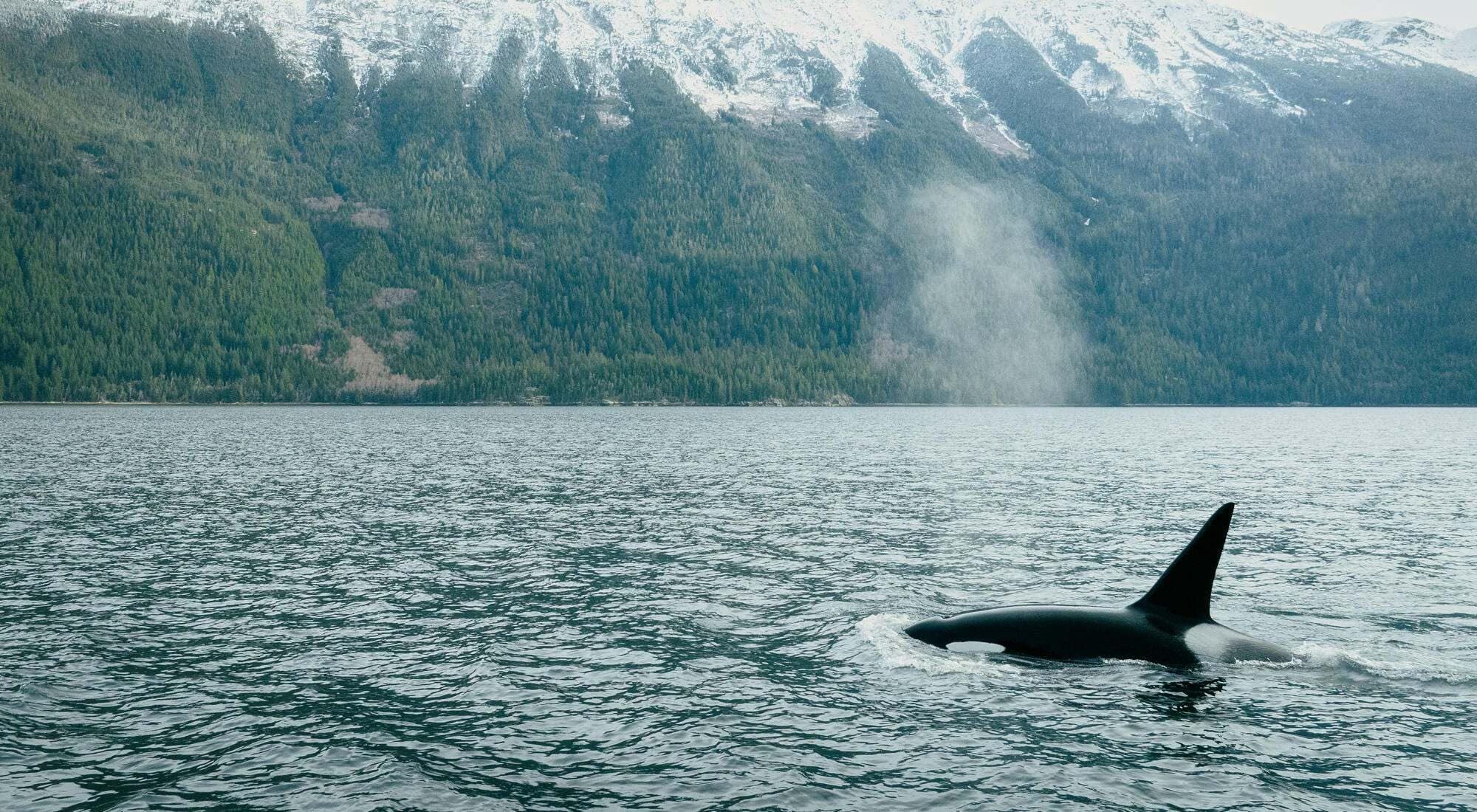
7) Protecting the Great Bear Sea
The Great Bear Sea covers two-thirds of the coast of Canada’s British Columbia and is a many-faceted habitat with open ocean, estuaries, kelp forests, coral and sponge beds and deep fjords. All of these have been essential for First Nation communities for thousands of years. In modern times the threats and results thereof were the usual ones: overfishing, shipping traffic and climate change led to declines in fish, bird and shellfish populations - with ripple effects negatively affecting the entire ecosystem.
So when 17 First Nations led an initiative to establish the Great Bear Sea PFP in partnership with the Canadian government and the Province of British Columbia, something of tremendous size and impact was begun. With long-term funding in place, the work began in 2024 and is secured for more than twenty years. The expectation is not just the protection of a great deal of the coastal region, but that it’ll also generate thousands of jobs. The Nature Conservancy has put together a wonderful article that brings you up close with the people, the work, the wild nature - stunning photography, too.
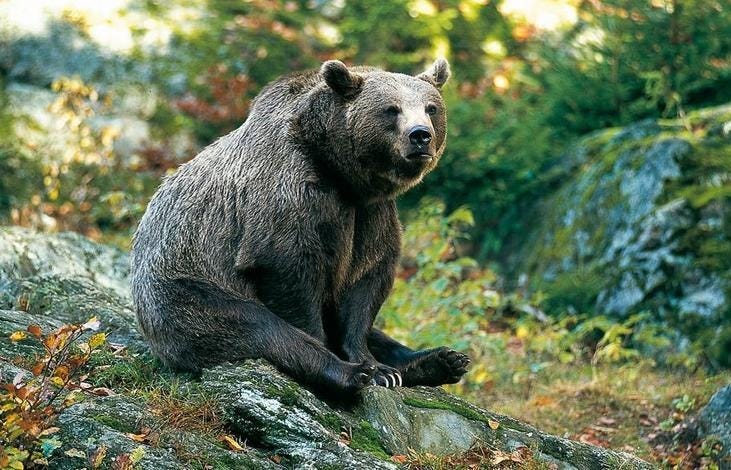
8) There’s so much more room in Europe for so many more bears
Instead of downsizing and aiming to maintain at least minimal viable populations, we should aim for abundance. When you look at distribution maps, you'll see that there are exactly ZERO bears in many European countries. That means that huge parts of Europe do not get to profit from the immense ecological benefits the bear generates by its presence. This is where we are. Many European countries have no bears at all - and those that do fall prey to fear-mongering lobbies and weak-kneed government willing to downsize bear populations ... all of this is foolish at best.
Instead of slaughtering these marvelous ecosystem engineers, the very least that should be done is to support their populations and ramp up coexistence measures everywhere. There should be BEARS EVERYWHERE. I know this will feel slightly outlandish and removed from current realities. But there are different possible paths and we can choose the future we want to live in. A world with bears across all of Europe, would change all of Europe - and I think it would change it for the much, much better. If you're up for it, come down the rabbit hole (or bear cave) with me to explore the issue.

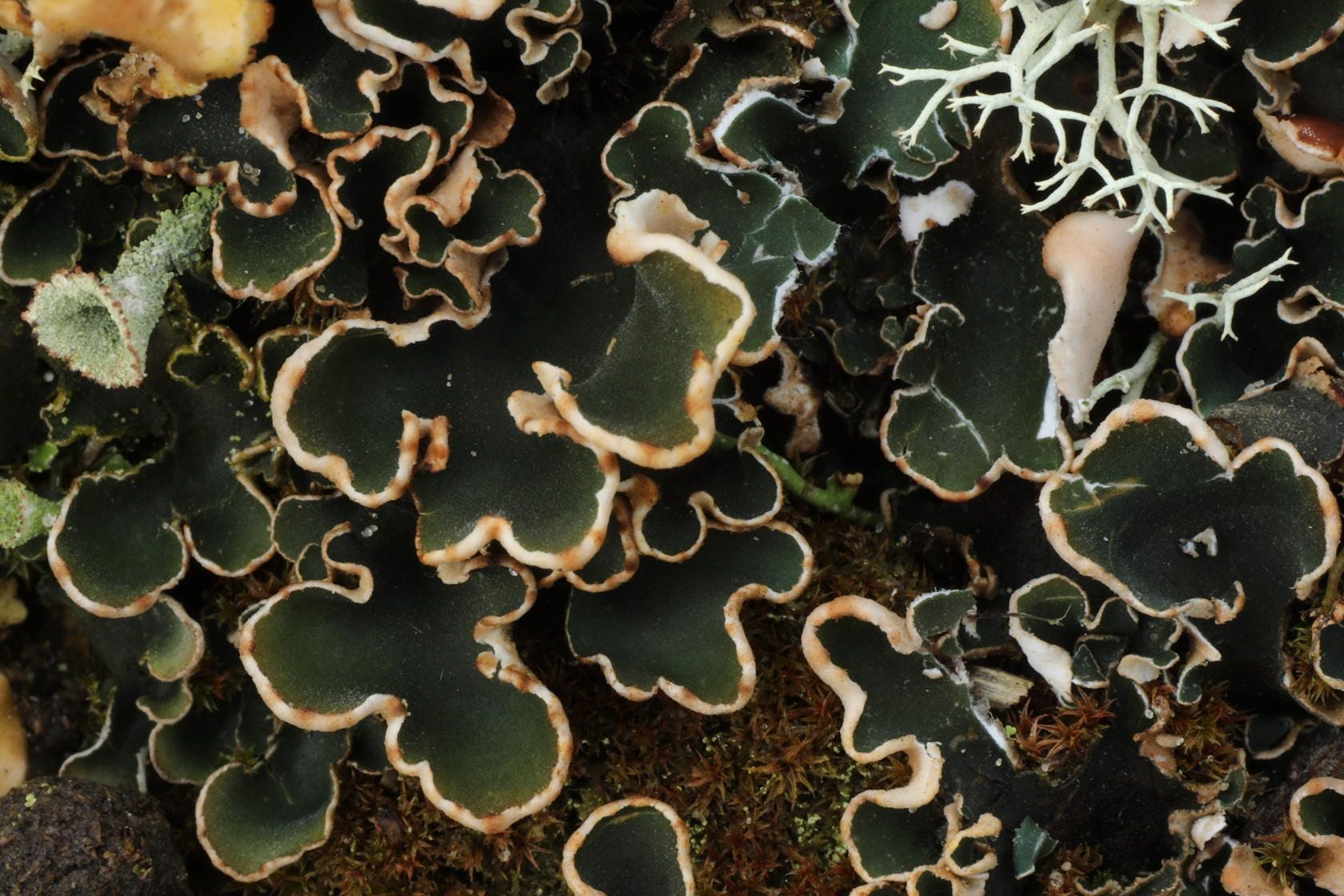
To conclude this week’s edition, rewilding legend and Trees for Life founder Alan Watson Featherstone shares with us a bit of his iconic photography that often takes a look at nature in a way that’s far closer to what we ordinarily perceive in passing. Alan takes time - as we all should. Here he photographed a special find and explains: “This is matt felt lichen (Peltigera malacea) in the dune heath area on the Findhorn Hinterland. It's one of our 'star species' as it is Nationally Rare and is classified as Endangered on the Red List of Threatened Species. We have a good population of it here though, making our site an important one for its survival.”
To find out more about Alan, his public speaking, writing, photography and more, visit him at alanwatsonfeatherstone.com. And if you feel like reading about my fantastically unique day with him in Glen Affric, go here.
Glad you’re here, reading the Rewilder Weekly. Share the stories, write your own (and let me know about it), engage with others. Let’s continue to reach out, inspire and activate ever more people around the world. The rewilding movement is growing, and with all of us pitching in, it’ll grow a great deal more!
That’s it for this week’s edition. Eager for more rewilding insights?
connect with these organizations - sign up for newsletters and support them in any way you can;
join these events - conferences, online seminars, rewilding days and weeks to immerse yourself and learn from the experts;
read these books - a selection from Foreman to Macdonald, and from Tree to Daltun, Hetherington and Bowser;
listen to these podcasts - it’s inevitably inspiring when the likes of James Shooter, Ben Goldsmith and Brooke Mitchell talk to the pros in the field;
and check out these resources - explore the principles, ways of funding, research publications and personal ways to start rewilding.
And, of course, connect with and follow the many passionately engaged rewilders. Let’s keep growing the movement! 🦬🌳🐺🌞🌍
Go ahead, do it! 😊 I love comments and you can ask me anything (literally). You can also let me know about projects you come across, article you think I should share - and feel free to throw in tough questions, too - spice of life!
Oh, and please do click the ❤️ (like) button, too. The more ❤️, the more these posts rise in Substack’s algorithm - which means more and more people will discover rewilding, will learn about it, will engage around it, and hopefully will become active rewilders before long. Thanks!