


Welcome to the latest edition of the Rewilder Weekly. 🦬🌳🐺🌞🌍
This week with the latest rewilder portrait - featuring Rewilding Oder Delta’s Wildlife Comeback Manager Wiebke Brenner - as well as inspiring and insightful stories from 🇵🇱 Poland, 🇸🇰 Slovakia, 🇭🇺 Hungary, 🇧🇪 Belgium, 🇦🇲 Armenia; 🇹🇷 Turkey, 🇮🇸 Iceland, 🇮🇹 Italy, 🏴 Scotland, 🏴 Wales and the 🇺🇸 US.
Wishing you a good week!
Cheers,

👉 If you come across stories you’d like to see featured in a future edition of the Rewilder Weekly, send them to me and I’ll gladly do what I can.

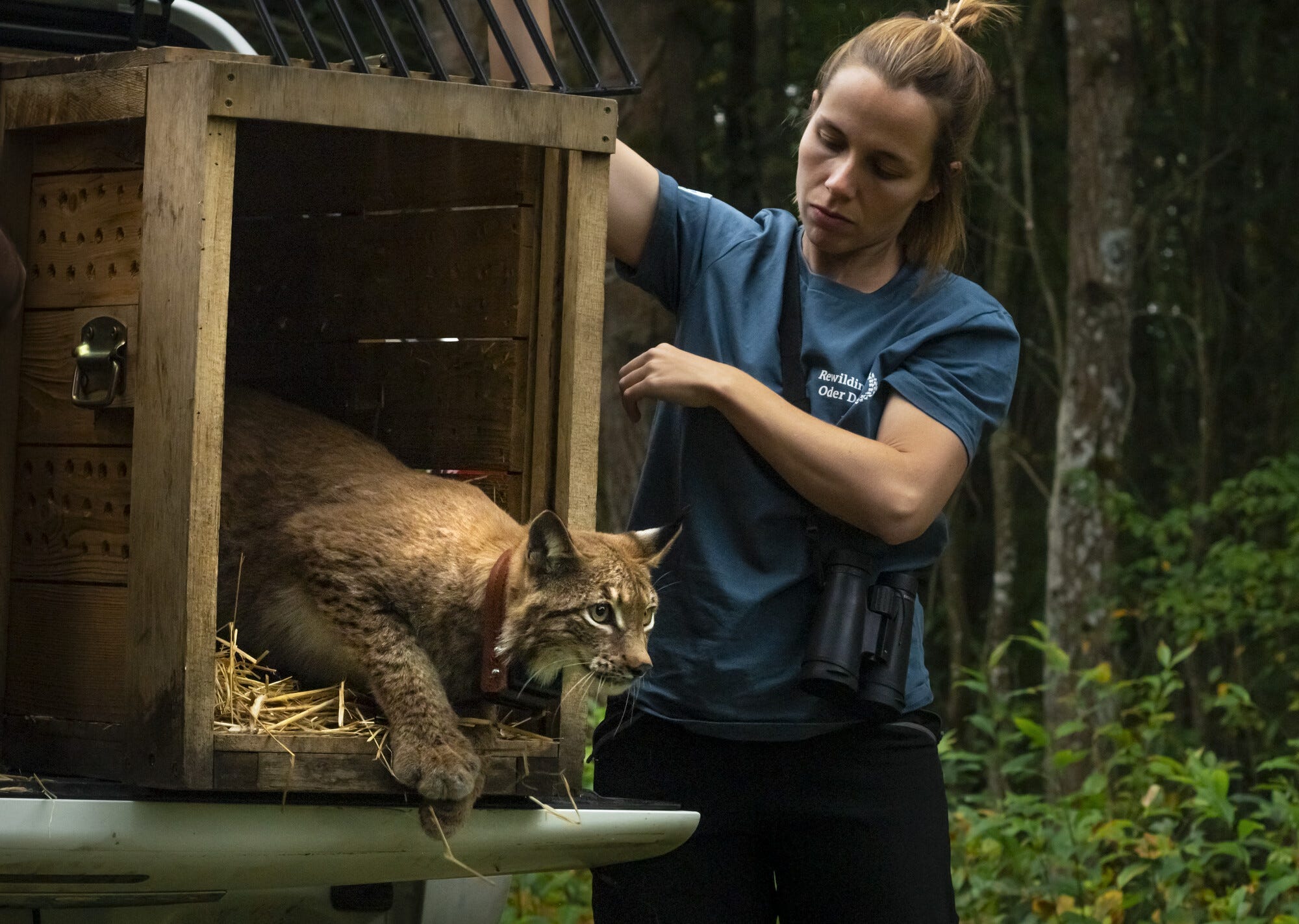
1) Meet the Rewilders: Wiebke Brenner
Meet the Rewilders is a series that introduces you to people engaged in the rewilding movement across the globe. Today meet Wiebke Brenner, Wildlife Comeback Manager at Rewilding Oder Delta. Wiebke studied the complexity of human-wildlife coexistence and mastered in wildlife biology and conservation. Her work tends to focus on the return of large animals, such as bison and wolf, moose and lynx - so the coexistence challenge is often baked in.
She says that “When it comes to human-wildlife conflicts, I support a solidarity-based approach. As a society, we all benefit from improved ecological functionality thanks to keystone species like the wolf returning to our landscapes. So instead of burdening individual livestock owners with increased costs and bureaucracy, we need to face coexistence challenges through collective responsibility and agency.”
When I ask people about their sources of inspiration, I’m occasionally in for a real surprise - like this time! I love what Wiebke wrote: “One of my main sources of inspiration ever since childhood is Astrid Lindgren’s character Pippi Longstocking – for being true to herself, trusting her intuition, having a strong sense of justice and not caring about social conventions or expectations, while at the same time being kind, open-minded and empathetic towards humans and animals alike, and believing in the good in people.” Indeed! Our school system needs an overhaul anyway - maybe we should start by teaching children about rewilding and Pippi Longstocking.

2) 32 million USD to launch 8 huge restoration projects
Wonderful news from the Endangered Landscapes & Seascapes Programme - they’re awarding 32 million U dollars to launch eight large-scale restoration projects. The new investment brings the ELSP’s portfolio to almost 30 large-scale nature restoration projects. The supported initiatives combined influence nearly a million hectares of land and sea, an area comparable to the size of Portugal. The projects are located in 🇵🇱 Poland, 🇸🇰 Slovakia, 🇭🇺 Hungary, 🇧🇪 Belgium, 🇦🇲 Armenia; 🇹🇷 Turkey, 🇮🇸 Iceland and 🇮🇹 Italy.
These efforts are made possible by Arcadia and the foundation’s commitment to restoring Europe’s lands and seas (Go here 👉 for more of efforts supported by Arcadia). David Thomas (ELSP’s director) says, “Arcadia’s generous support allows these projects to move from ideas to action. With this new cohort, we are backing partners who are ready to restore ecosystems at a scale that can make a real difference for nature, climate, and the people who live in these landscapes.”
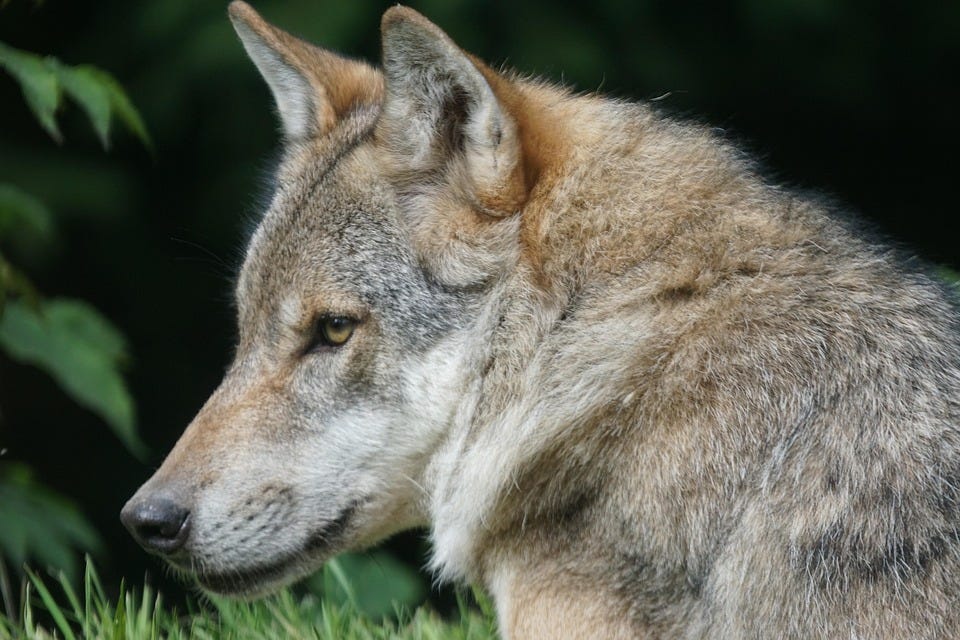
3) TENT teams up with “I Am Not Afraid Of The Wolf”
Io Non Ho Paura Del Lupo (the group’s Italian name) is focused on all matters coexistence: education, conflict mitigation, monitoring, research and ecotourism. While wolf numbers have increased over the past decades thanks to protection measures, so has misinformation. Europe voted to downgrade the wolf’s protection and the fear-mongering clamor has caused some countries to call for massive - and massively unwarranted - slaughter.
In these mis- and disinformation times (and the increasing flood of AI slop is taking all of it to a horrible next level), a great deal needs to be done to continuously educate people. Say something once and it’ll be buried until a heap of misinformation a second later. There, thankfully, TENT (The European Nature Trust) is stepping up to support the Italian organization with their communications, their engagement and outreach efforts. And I’ve no doubt that what they do can offer excellent examples for other like-minded organizations across Europe!
4) New podcast by legendary rewilder Peter Cairns
In his new podcast (and don’t you just love that logo?), Peter Cairns asks, “What kind of country do we want to live in? That’s really what all of this comes down to. Conversations about nature’s place in our future, they can be uncomfortable, they’re often emotionally charged. But that’s no reason to avoid them. I’ve never met anyone who believe that a healthy environment is a bad idea. So if there is a battle ground, it isn’t over whether we restore nature, but over what that process looks like, how we get there, and who calls the shots along the way.”
The first “AT THE EDGE” podcast flys by as Peter travels the Cairngorms and talks with David Hetherington (Cairngorms National Park Nature Networks Manager), Jonny Hanson (who wrote Living with Lynx), Darragh Hare (Senior Research Fellow at Oxford’s Wildlife Conservation Research Unit) and Kirsten Brewster (Wildlife Comeback Lead at SCOTLAND: The Big Picture). Good stuff! I’ll definitely tune in for the next episode. And if you’re up for more rewilding podcasts, go here.
👉 Go here for Peter’s Meet the Rewilders portrait and 👉 here for our meeting last year

5) Rewilding Apennines showcases how rewilding helps local economies
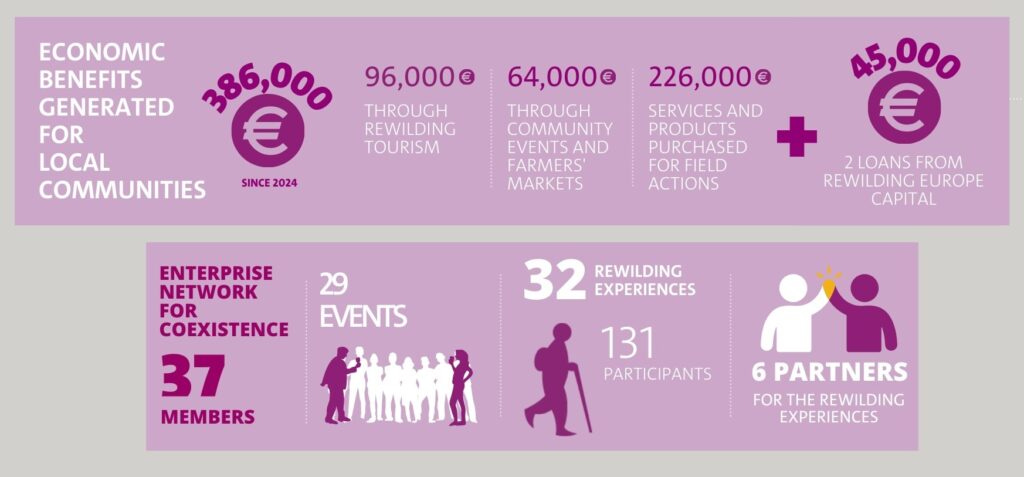
Rewilding Apennines writes that they’ve generated 400’000 Euro for local communities over the course of the past two years. The amount comes together from locally sources services and products (needed for rewilding actions), from rewilding experiences (32 tours and 131 participants in need of local lodging and treated to local cuisine) and events, such as festivals and farmers’ markets. If you’re thinking of engaging your rural community with rewilding ideas - I think you cannot do better than to look at Rewilding Apennines as your blueprint.
They state that “Perhaps these figures, taken individually, will not change the world.
But in the small mountain communities of the Apennines, they can make a real difference.” That’s very modestly put. Those 4'00’000 are just the tip of the iceberg (just think salaries, transportation, increased attractiveness of the region as a whole). The work of Rewilding Apennines and its partners and visitors and volunteers reverberates greatly and, if calculated with everything that is affected by the work, no doubt generates several millions in economic value.
6) The biggest rewilding site in Wales is a big step closer to becoming reality
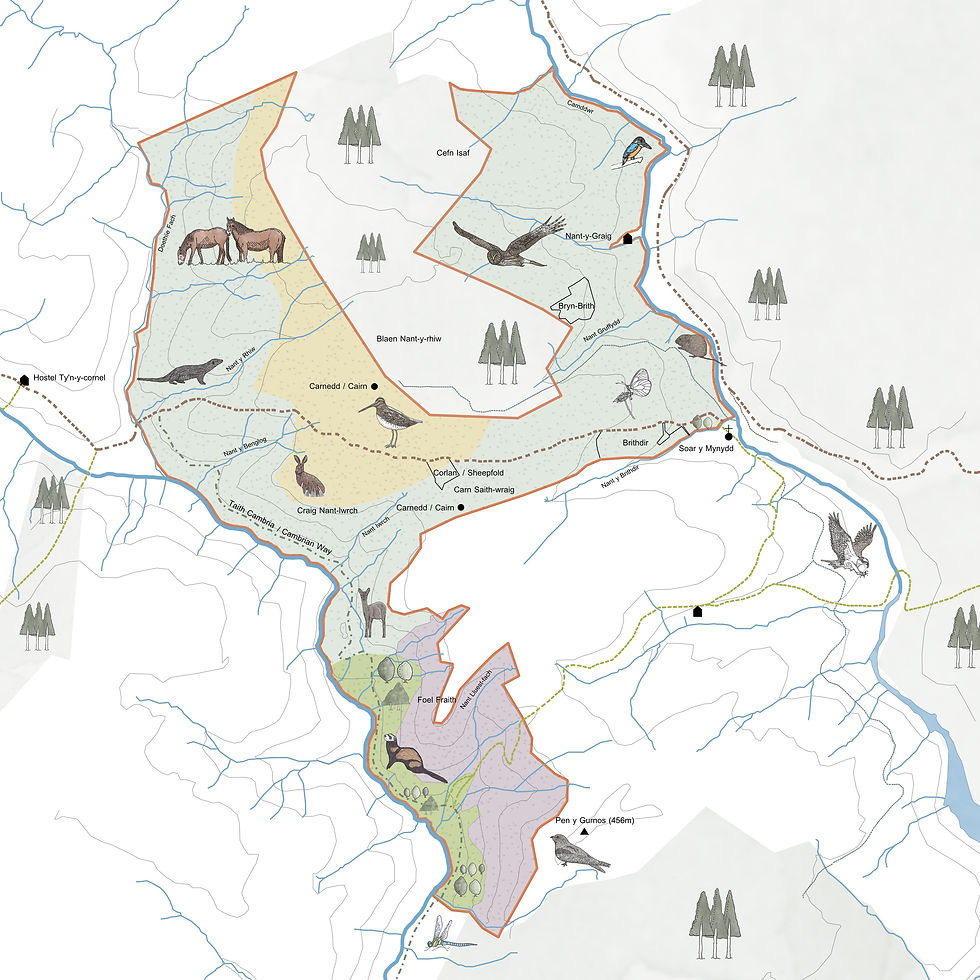
🏴 Welsh rewilding organization Tir Natur has announced that they’ve been able to secure a 1’195 acre site in the Cambrian Mountains. Congratulations! While no one like to hear it, Wales is one of the most biodiversity-poor countries in the world. What has happened here, has happened in Scotland, has happened in Ireland, has happened in other countries, too. But when given the chance, nature CAN recover. There are thousands of such examples by now - it simply takes people, willpower and stamina to actually do it. Oh, and money, of course - support them here!
As with all such nature-positive change, the various Farmers’ Unions are always ready to cry havoc. In this case I read the very positive path Tir Natur is on, read the details, too - was entirely pleased with what I saw, especially also in how rural communities are built into their efforts … and the next thing I see is “Farmers’ union hits out at Wales’ largest rewilding scheme in Cambrian Mountains” … oh, please. Instead of fear-mongering with that same old and tired misinformation, they should step up with hope and help and good will and join in for the benefit of all of Wales!
👉 Go here for more and 👉 here to chip in!

7) The wolf in the US - a tale of threats and hope
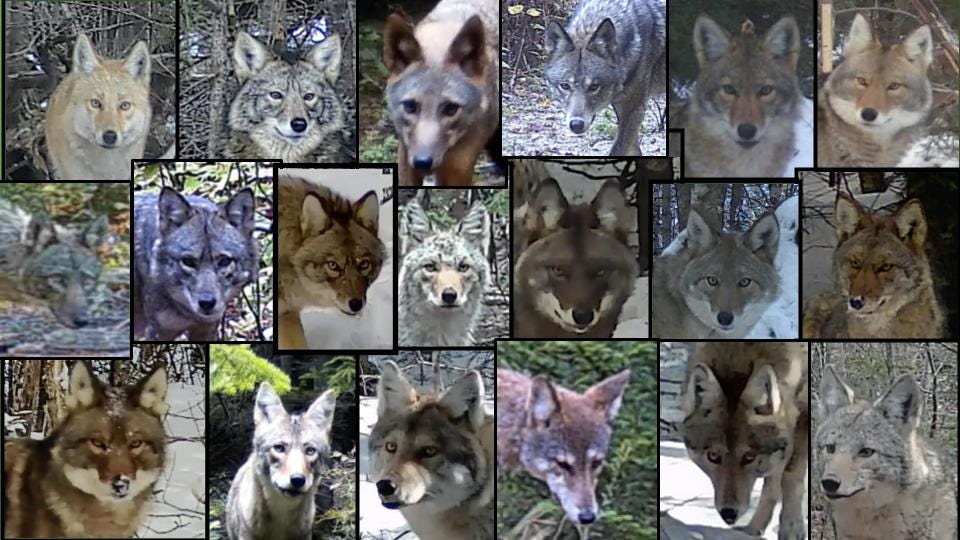
Nadia Steinzor is Project Coyote’s Carnivore Conservation Director and in this Rewilding Institute piece she lays out the current challenges for wolves in the US in general - but also the promising signals from the country’s Northeast. While the folks in the capital these days are doing more and more to ignore the science and destroy the very nature we depend on, the wolf has been quietly doing its thing.
There’s growing evidence that wolves are moving back to the Northeast in numbers, doing their essential work for resilient, healthy ecosystems. These days, no one can rely on the people running the US government (that has removed the wolf’s protection, for which the Center for Biological Diversity is taking them to court). States have their own powers and can add the wolf to the “Species of Greatest Conservation Need” list. Steinzor writes, “To date, New Hampshire has done so, and Maine plans to. Vermont is poised to put the wolf on a short “watch list” of species that could require monitoring and protection in the future.”
8) The magic of bison - up close, very close
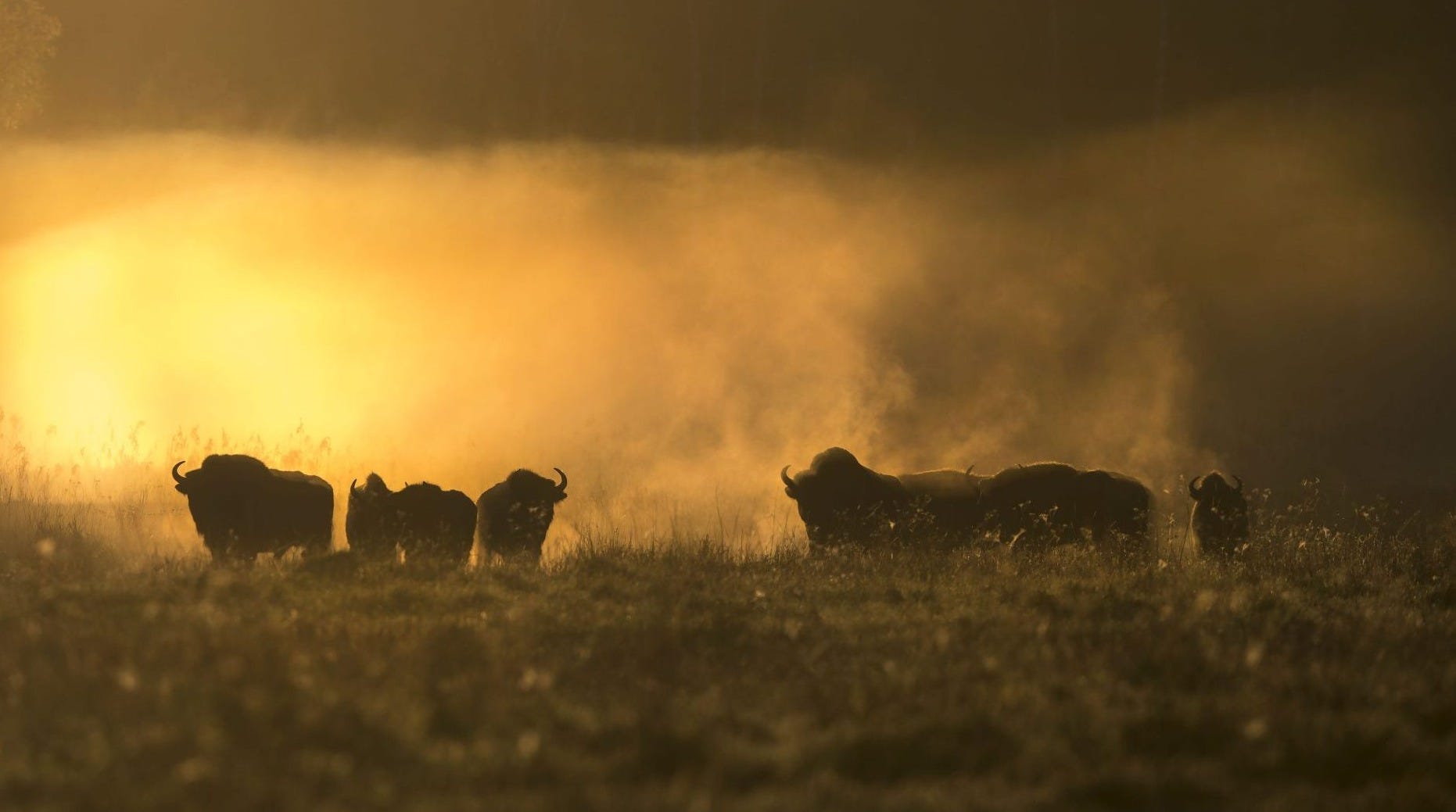
If you haven’t already come across it, here’s your chance to get up close and personal with European bison. The Wildlife Trusts’ bison ranger Donovan Wright says that bison have changed his life. Now that’s fairly easily said, but I’d invite you to watch this documentary and see for yourself. Caring for the tiny number of bison in the UK, Donovan has a great deal of insight … but that insight takes on a whole new life when he journeys to the Białowieża Forest in Poland.
Hetells you how the European Bison came back from the brink, how they recovered … and you’re with him in the forest as he spots bison … and you see a village where these giants roam the streets and gardens of inhabitants! It’s quite a sight that makes me wonder. Does this proximity change their natural behavior? Does it make them less resilient in the wild? Does it make them easy prey for poachers? I’d think keeping a respectful distance between forest and village might be the better option … if you know more, let me know in the comments. In any case, an absolutely beautiful documentary, inspiring!
👉 Go here to learn more about the bison project in the UK

To conclude this week’s edition, rewilding legend and Trees for Life founder Alan Watson Featherstone shares with us a bit of his iconic photography that often takes a look at nature in a way that’s far closer to what we ordinarily perceive in passing. Alan takes time - as we all should. Here he photographed the tiny female flowers of a hazel tree - beautiful, right? And unless you stop and look, you’ll likely never even see them.
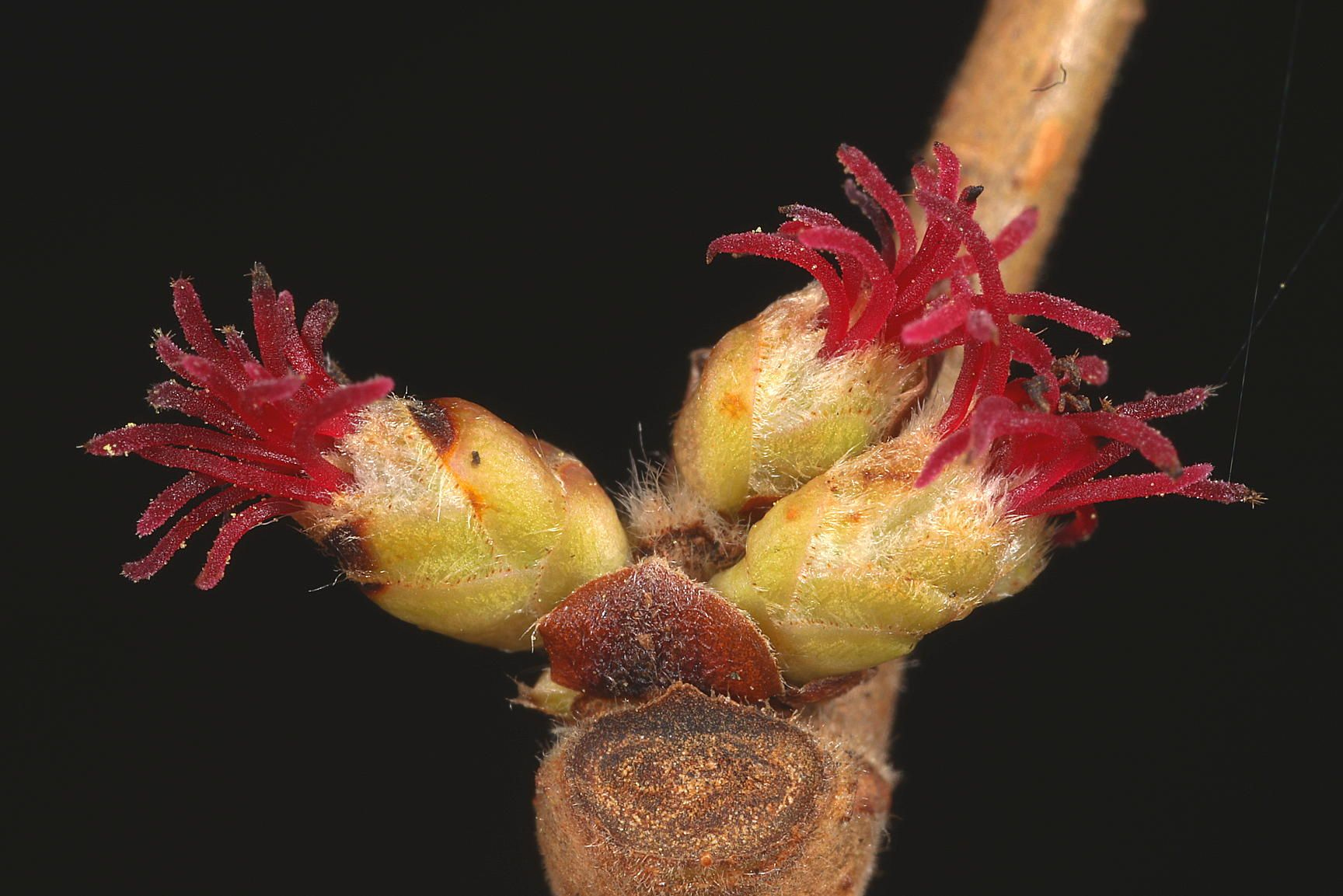
To find out more about Alan, his public speaking, writing, photography and more, visit him at alanwatsonfeatherstone.com. And if you feel like reading about my fantastically unique day with him in Glen Affric, go here.
Glad you’re here, reading the Rewilder Weekly. Share the stories, write your own (and let me know about it), engage with others. Let’s continue to reach out, inspire and activate ever more people around the world. The rewilding movement is growing, and with all of us pitching in, it’ll grow a great deal more!
That’s it for this week’s edition. Eager for more rewilding insights?
connect with these organizations - sign up for newsletters and support them in any way you can;
join these events - conferences, online seminars, rewilding days and weeks to immerse yourself and learn from the experts;
read these books - a selection from Foreman to Macdonald, and from Tree to Daltun, Hetherington and Bowser;
listen to these podcasts - it’s inevitably inspiring when the likes of James Shooter, Ben Goldsmith and Brooke Mitchell talk to the pros in the field;
and check out these resources - explore the principles, ways of funding, research publications and personal ways to start rewilding.
And, of course, connect with and follow the many passionately engaged rewilders. Let’s keep growing the movement! 🦬🌳🐺🌞🌍
Go ahead, do it! 😊 I love comments and you can ask me anything (literally). You can also let me know about projects you come across, article you think I should share - and feel free to throw in tough questions, too - spice of life!
Oh, and please do click the ❤️ (like) button, too. The more ❤️, the more these posts rise in Substack’s algorithm - which means more and more people will discover rewilding, will learn about it, will engage around it, and hopefully will become active rewilders before long. Thanks!