


Welcome to the latest edition of the Rewilder Weekly. 🦬🌳🐺🌞🌍
This week with the latest rewilder portrait, featuring biologist Thor Hjarsen, who’s leading the Hempel Foundation’s Vildmarken in Denmark - as well as inspiring and insightful stories from 🇪🇸 Spain, 🇬🇧 the UK, 🇵🇪 Peru, 🏴 Scotland, 🇨🇷 Costa Rica and 🇨🇳 China.
Wishing you a good week!
Cheers,

👉 If you come across stories you’d like to see featured in a future edition of the Rewilder Weekly, send them to me and I’ll gladly do what I can.

1) Meet the Rewilders: Thor Hjarsen
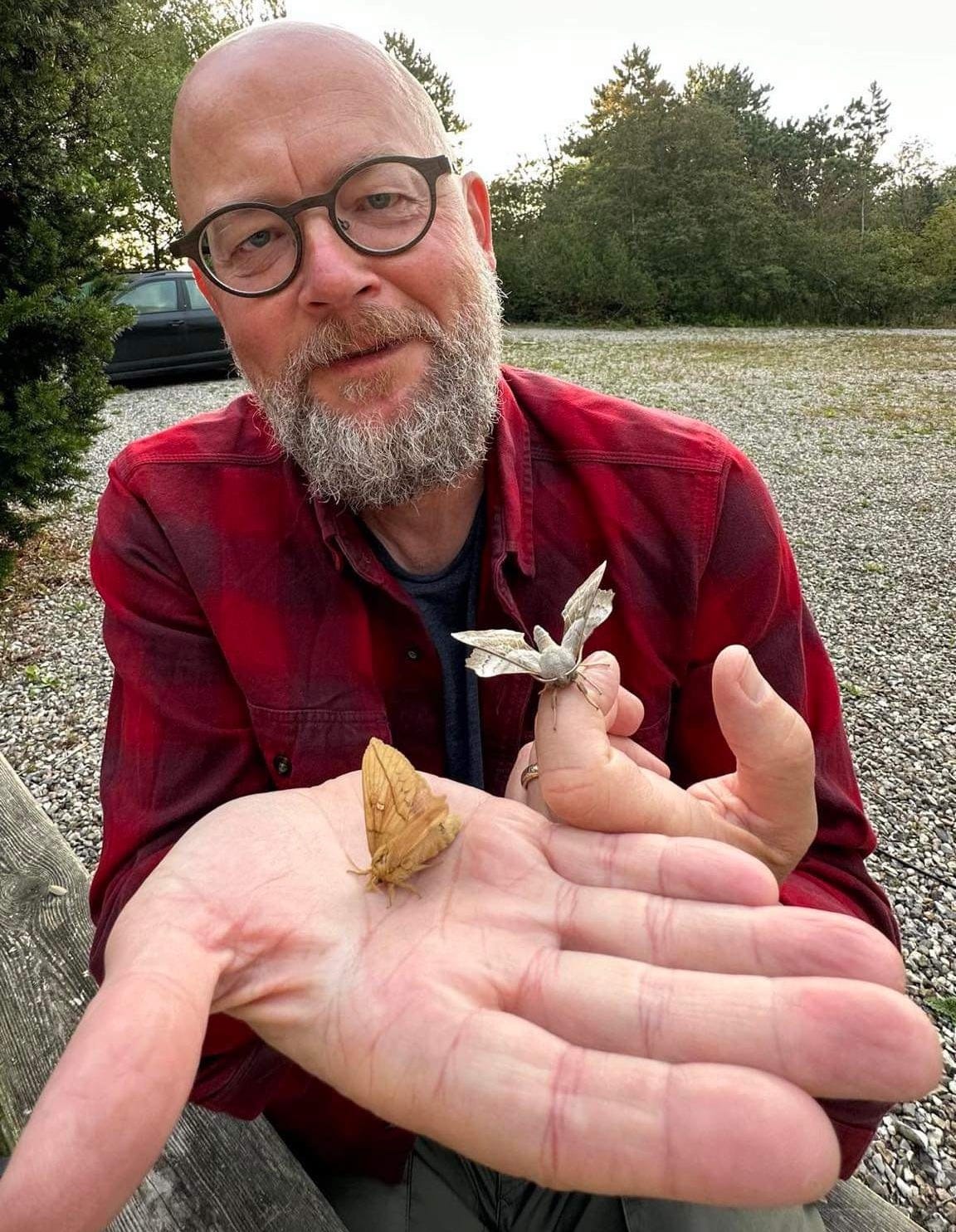
Meet the Rewilders is a series that introduces you to people engaged in the rewilding movement across the globe. Today meet biologist Thor Hjarsen, who’s leading the Hempel Foundation’s Vildmarken in Denmark. Vildmarken (The Wilderness in English) consists of four areas (Saksfjed, Nørholm, Asnæs and the Mols laboratory), totaling 2’600 hectares of land. Thor was hired to implement the rewilding ambition - and it clearly flies! There are already 14 team members and I’ve read about big plans for research, engagement with schools across Denmark and stakeholder conferences.
As he’s shared his thoughts for the portrait, Thor realized that he had spent 30 years working in various nature-related roles even before the Vildmarken opportunity came along. What a journey! He says he feels both lucky and privileged - and there is that, for sure. But I’m a great believer in making our own luck by putting in the work - and Thor has most definitely put in a great deal of work across the globe in those 30 years!
With all of everything he writes, I get a sense of the kid that still happily resides in him. A kid still marveling at nature, at spotting a beetle and being captivated, at always wanting to see more and learn more about nature in all its forms all around us. We should all take care of our inner kid - it makes us better, maybe even whole. Thor’s biggest challenge? Time! “Not having enough time to study ALL the thousands and thousands of species living even in Denmark. Nature and biology are schools where you NEVER get to the final level - it’s both fantastic and occasionally stressful! You see a large beetle or dragonfly and you go “What the f.... was that!?” There are SO many things to learn and to explore!”

2) The return of red kites: Spain helped the UK, now the UK is helping Spain
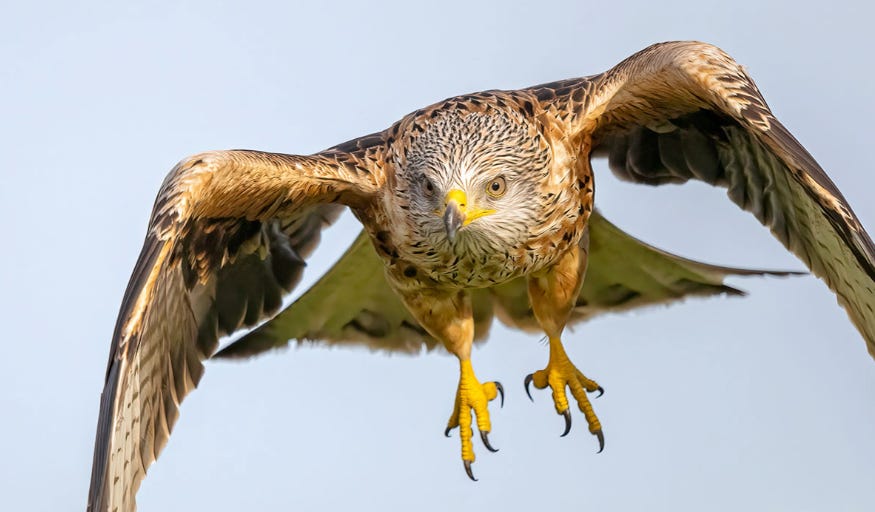
A declining population of red kites in the UK was helped in the 1990s by bringing genetic diversity with birds brought from Spain. The enrichment clearly worked and red kites, adaptable and not shy to consume just about anything, began to spread further and further. Even as far back as the 1990s, some in Spain also thought that red kite populations might decline … then it happened.
In 2018 a project - completed just now - began after a survey had found only a single breeding pair of red kites in Spain’s Extremadura. Reaching out to ornithologists in the UK, help was soon on hand and a reintroduction project with British red kites began in 2022. “All 126 birds released over the course of the project were collected every June from forests in and around England’s Northamptonshire county.” AMUS (Acción por el Mundo Salvaje) has, since 2018, created a 30’000 square kilometer haven for red kites, working with farmers and communities to ensure fruitful coexistence.
3) 240’000 acres of Peruvian Amazon are newly protected
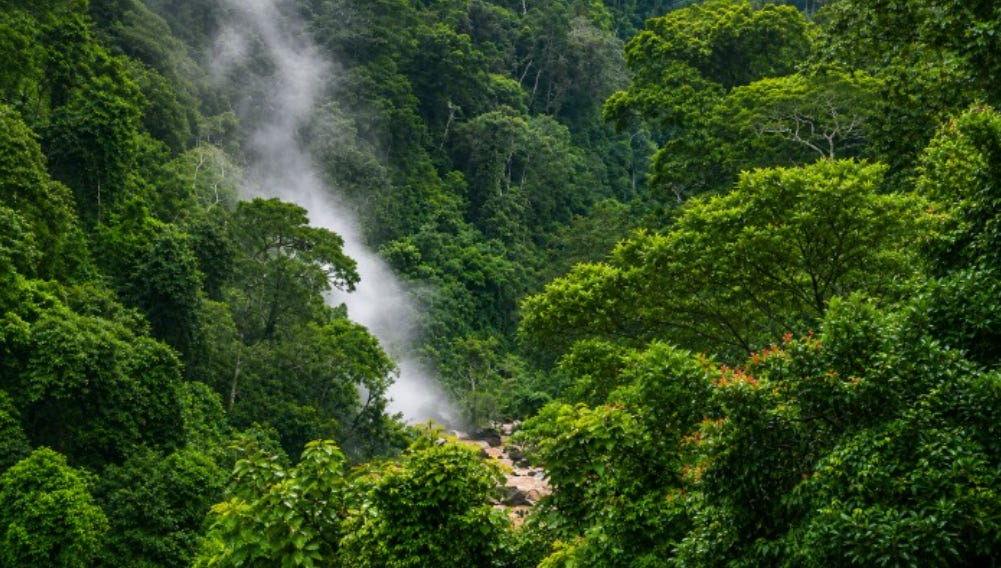
The Andes Amazon Fund reports that a a process begun way back in 2013 has led to the establishment, less than a month ago, of the Aguas Calientes Maquia regional conservation area. The region is home to jaguars, tapirs, macaws and a huge number of other species - nearly one thousand species of flora and fauna have been scientifically documented, among these at least twenty endangered species.
When you check through the article, you’ll find a map that highlights how this isn’t ‘just’ the protection of one specific area. It lies adjacent to the Sierra del Divisor national Park and thus greatly does a great job at growing and safeguarding important wildlife corridors. Importantly, these efforts also protect the headwaters of rivers that are essential resources for the Nuevo Canchahuaya indigenous community. “The creation of the Regional Conservation Area is very important to us because it is the headwaters of our streams. We rely on its resources and also its hot springs and beautiful waterfalls.”
4) The insidious confirmation biases that keep us divided … and how they can be tackled
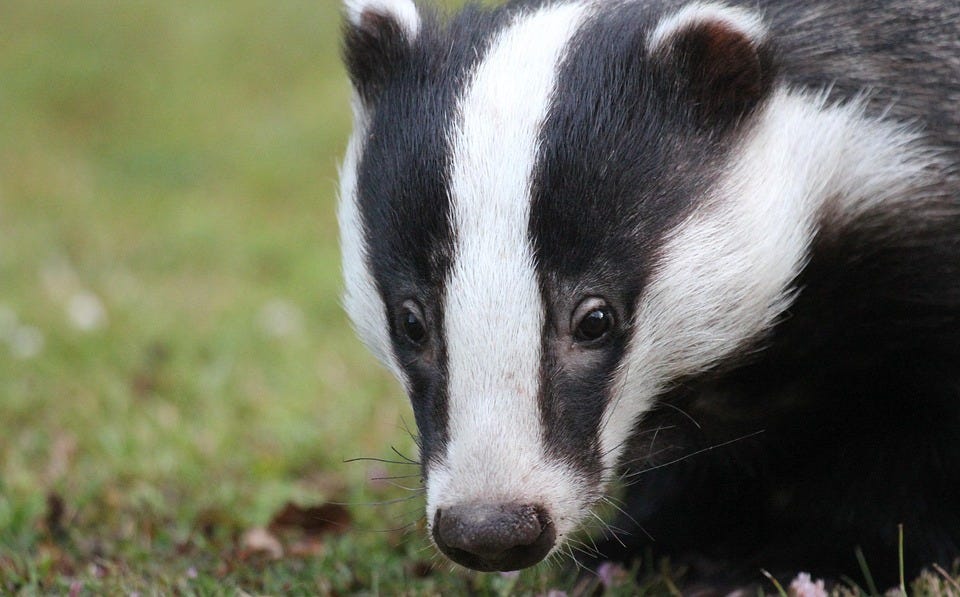
Some claim that badgers kill lambs because it fits their narrative. Facts show that this ever happening is rare at best (scavenging is another matter). This is just one example where, depending on where you are and who you’re with, you’ll immediately jump to the one or the other, because the one or the other confirms what you thought anyway.
Hugh Webster of SCOTLAND: The Big Picture has penned an excellent article (and marvelous alliteration - just take “faded feline fury” - joyous, right?) about the world we live in, where what we think to be true is no longer based on fact, but on belonging. The social media world has done a great deal to exacerbate this into rabid tribalism and ideology-driven fits of outrage. Facts are not what matters, what matters is that it (whatever IT is) fits with what we have in our bubble. The uncomfortable truth is that we humans don’t actually know a great deal. We know some things, but then rely on others to fill in the blanks.
And biases help us ignore a great deal that’s just too time-consuming to bother with … but in the world we live in, this is exactly where we needed to pause - we need to check our assumptions, we need to question what we read, what we hear and what we see. We need to learn to pause, reflect and verify. And in any discussion, I find, sometimes the best thing to do is to say, “I’m really not sure. Tell me more.” In that way you learn. And in that way your opposite often also finds that they may need to learn more as quite often so-called facts thrown at us begin and end with a strongly stated opinion. We must all do better.
5) The return of the peccary to Costa Rica’s Piedras Blancas National Park
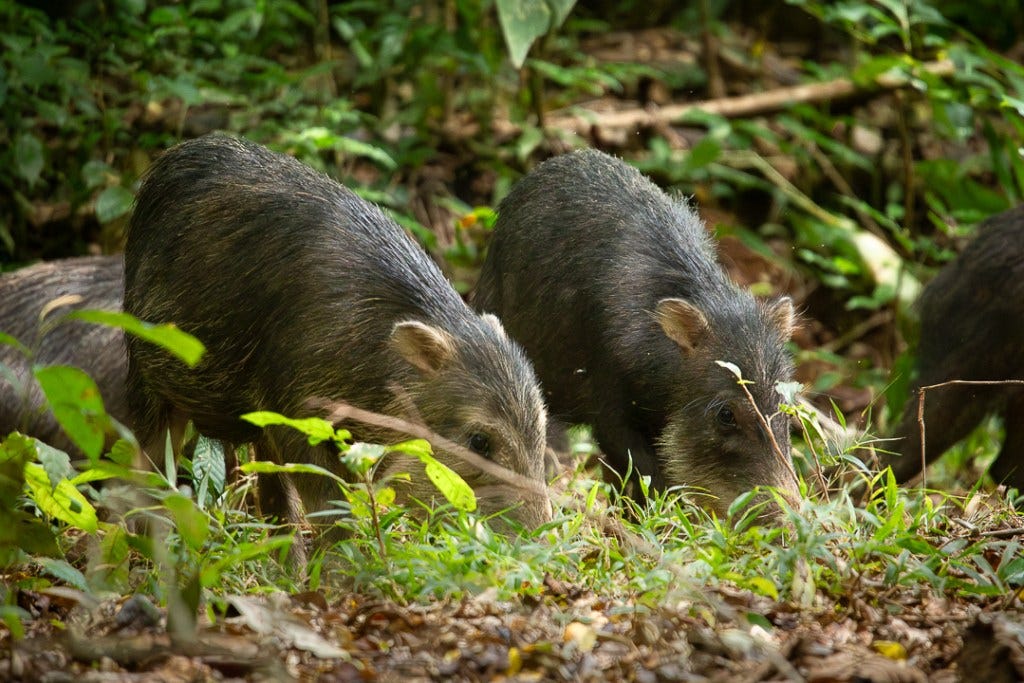
The rewilding team of Osa Conservation (switch the name to Osa Restoration, please! It’s pet peeve, but an important one, I think - see more on that here) has made history by reintroducting 18 white-lipped peccaries to an area where they had not been seen for nearly two decades. The project’s vet, Dennise Ortiz, details the steps it took to make it happen: Three years ago the project came together as a joint effort and started by monitoring still existing herds.
After learning more about behavior thanks to collaring and camera traps, they captured and evaluated individuals. Transporting the peccaries into the wilderness meant logistics involving cars and boats - and even transporting crates on foot. The peccaries, equipped with satellite collars, are not out there in their new habitat. While a big step toward ecosystem recovery, Dennise proudly says that “This is only the beginning of a new stage in Piedras Blancas National Park.”

6) It’s chick time! Growing restoration success of cinereous vultures in Bulgaria
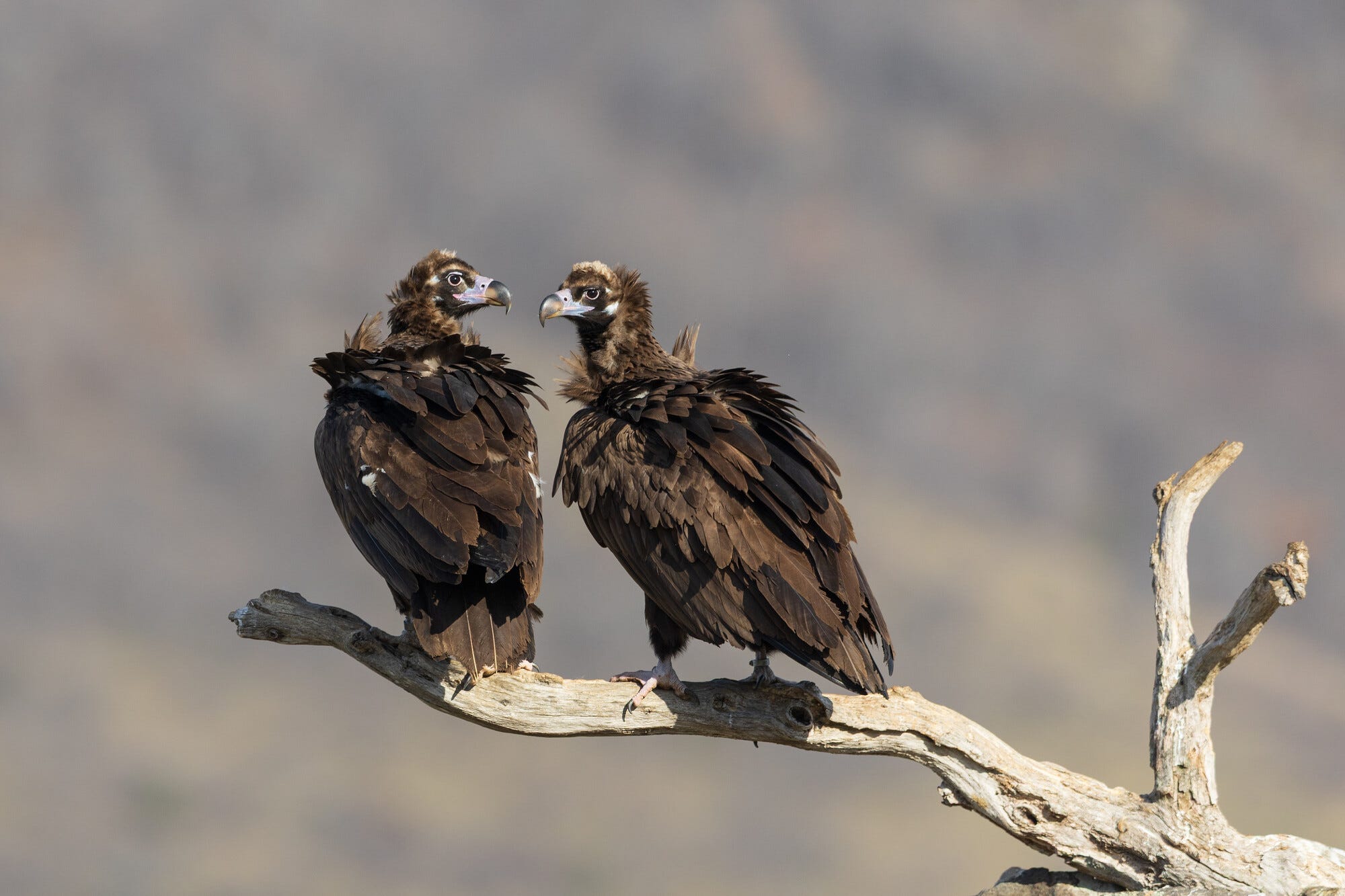
Rewilding Europe has a wonderful story that details the return of cinereous vultures to Bulgaria’s Rhodope Mountains. These magnificent birds, nature’s most excellent cleanup-crew, have been absent from there for decades. But restoration efforts began in 2023 and now the first chicks have been born. This is wonderful news, but when you read the article, you’ll see that it only marks the a stepping stone on a long journey until these vultures are back in numbers to fulfill their essential work as part of the circle of life.
The article also does a good job of showing that rewilders are not about one thing, they are about the restoration of functioning ecosystems. Thus a key element for the success of vulture reintroduction was to ensure that the ecosystem, supported by rewilding, offers growing populations of deer, wild boar and other wild herbivores. When these day, vultures swoop in and scavenge, thus preventing the spread of disease and returning nutrients to the soil.
Vultures are amazing creatures and, unfortunately, one of the biggest threats they still face today is from poisoning (misguided people leaving out poisoned meat to kill e.g. wolves - such actions invariably lead to the deaths of vultures, foxes, badgers and other scavenging animals). They work with an antipoison dog, helping to stop disasters from happening.

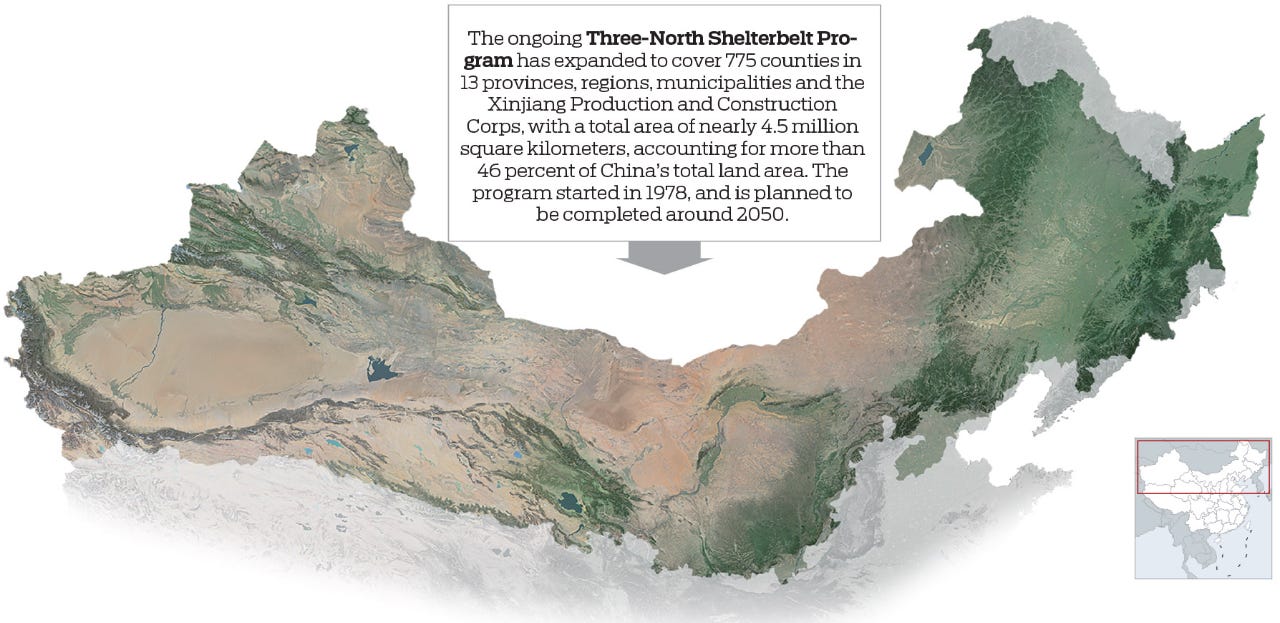
7) China has restored 12 million hectares of desertified lands in just 5 years
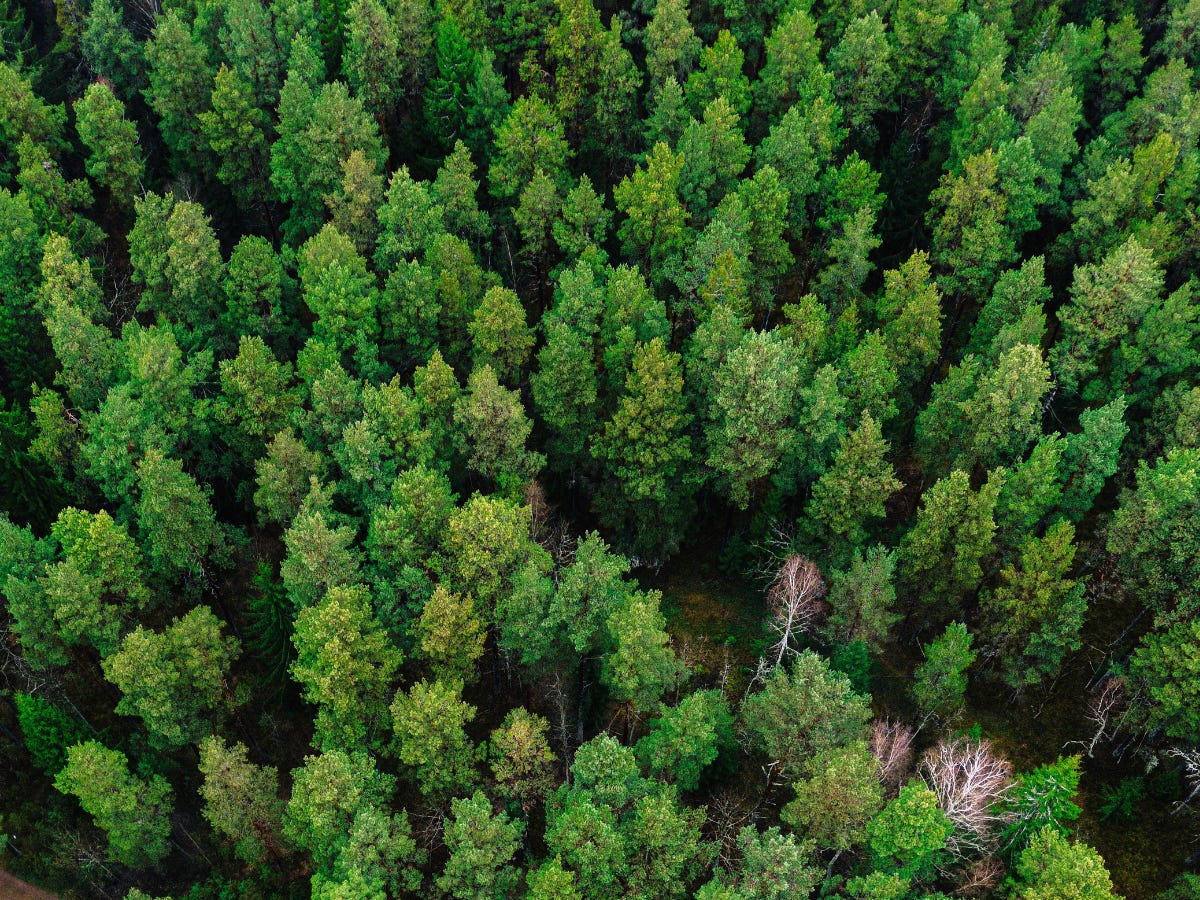
The China Daily reports on something that, gotta hand it to them, I doubt a country other than China could deliver on as rigorously as they have. The 1990s saw the creation of a World Day against Desertification and Drought. At that time, China lost an average of 343,000 hectares of land to desertification. Today, nearly twice that - 666,000 hectares - are restored every year. In the time between 2021-2025, China has restored over 10 million hectares of desertified land and almost 2 million hectares of rocky-desertification land.
“Since 2023, the central government has invested 88.9 billion yuan ($13.2 billion) in 544 key projects, covering 16.3 million hectares of land, it disclosed. China has adopted innovative approaches in desertification control as it forges ahead with the program. For instance, it has integrated photovoltaic power generation with desertification control efforts, bringing 353,300 hectares of sandy land under treatment.”
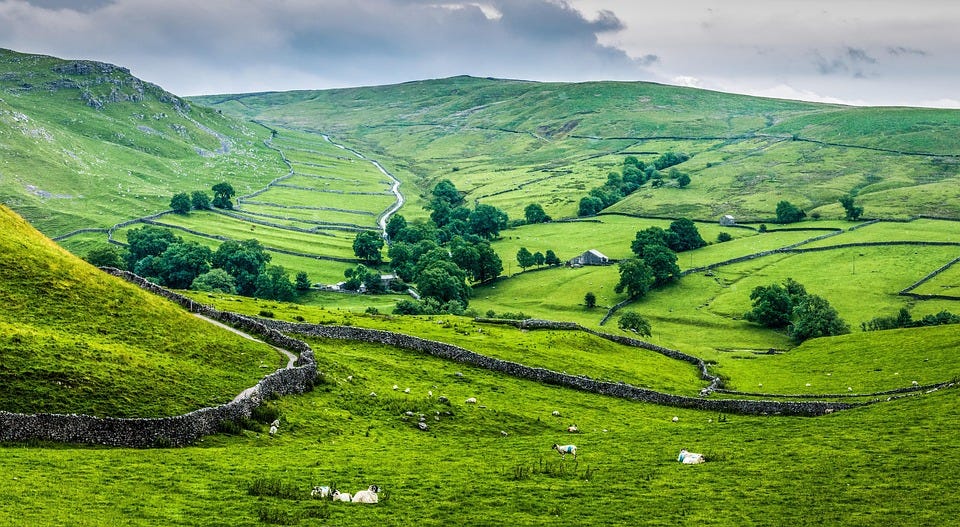
8) A sobering yet hopeful piece about restoring Britain’s nature pyramid from the bottom up
I’ve written a lot about what Suzanne Asha Stone writes about in her excellent essay about Britain’s state of nature - but while I’ve written about deforestation, over-abundance of deer and sheep, nature-degrading shooting estates, the release of millions of non-native pheasants annually, the practice of muir burning, etc. etc. - Suzanne brings it all together beautifully in one powerfully clear essay. It is sobering, to be sure - so much of it is, because it is so obviously and insidiously wrong - a status quo maintained by the exclusive few while most get to suffer the consequences.
Read it, let the numbers sink in - but just as importantly, focus on the positive - recovery is not just possible, it is, in pockets, happening. The proof is there and the key is to start by restoring a solid foundation for nature’s pyramid. One clear way forward is not by starting with apex predators, but with large grazers that restore soil and restore wild pastures for a multitude of species - for the benefit of all of us.
“You build a pyramid from the base, not the apex. The wild ones were here—the meadows alive with orchids, the soil thick with life, the fields and waterways loud with birds, and yes, in time, the great predators in forests wide enough to hold them. The forgetting of them is the deepest kind of shifting baseline, because it convinced us that a green desert was the natural state of things. But a lowered baseline can be raised again, and in Britain, it can be raised from the ground up. A verge, a field margin, a garden left unsprayed: each is a small act of remembering, and a down payment on a richer baseline handed to whoever comes next.”

To conclude this week’s edition, rewilding legend and Trees for Life founder Alan Watson Featherstone shares with us a bit of his iconic photography that often takes a look at nature in a way that’s far closer to what we ordinarily perceive in passing. Alan takes time - as we all should.
In his words, “If everyone would take the time to look at & appreciate Nature more, instead of focussing on 'endless economic growth', political infighting, wars etc., the world would be a much better place.”
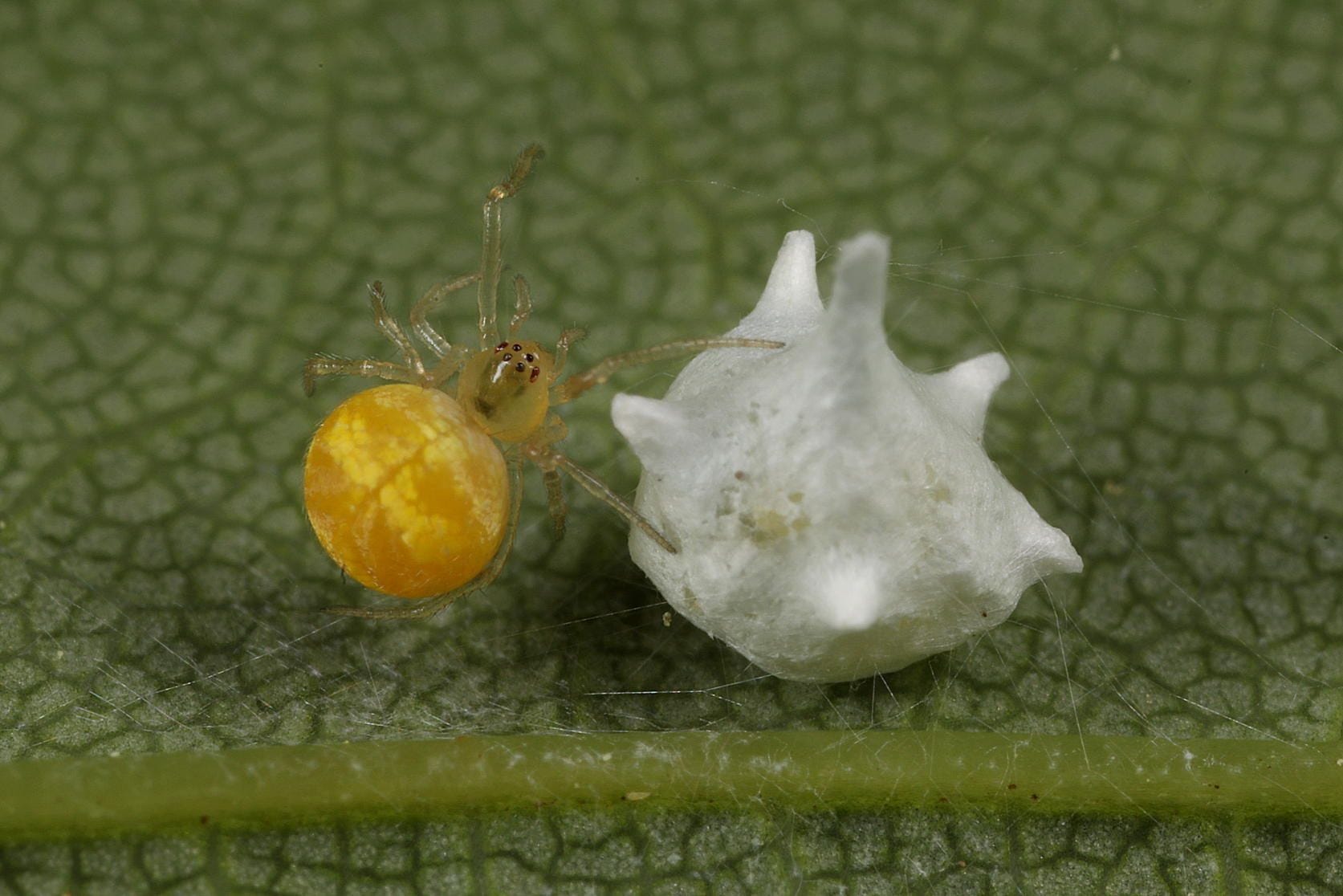
To find out more about Alan, his public speaking, writing, photography and more, visit him at alanwatsonfeatherstone.com. And if you feel like reading about my fantastically unique day with him in Glen Affric, go here.
Glad you’re here, reading the Rewilder Weekly. Share the stories, write your own (and let me know about it), engage with others. Let’s continue to reach out, inspire and activate ever more people around the world. The rewilding movement is growing, and with all of us pitching in, it’ll grow a great deal more!
That’s it for this week’s edition. Eager for more rewilding insights?
get inspired by the lives, decisions, challenges, beliefs and hopes of passionate rewilders with the Meet the Rewilders portraits;
connect with these organizations - sign up for newsletters and support them in any way you can;
join these events - conferences, online seminars, rewilding days and weeks to immerse yourself and learn from the experts;
read these books - a selection from Foreman to Macdonald, and from Tree to Daltun, Hetherington and Bowser;
listen to these podcasts - it’s inevitably inspiring when the likes of Peter Cairns, James Shooter, Ben Goldsmith and Brooke Mitchell talk to the pros in the field;
and check out these resources - explore the principles, ways of funding, research publications and personal ways to start rewilding.
And, of course, connect with and follow the many passionately engaged rewilders. Let’s keep growing the movement! 🦬🌳🐺🌞🌍
Go ahead, do it! 😊 I love comments and you can ask me anything (literally). You can also let me know about projects you come across, article you think I should share - and feel free to throw in tough questions, too - spice of life!
Oh, and please do click the ❤️ (like) button, too. The more ❤️, the more these posts rise in Substack’s algorithm - which means more and more people will discover rewilding, will learn about it, will engage around it, and hopefully will become active rewilders before long. Thanks!