


Welcome to the latest edition of the Rewilder Weekly. 🦬🌳🐺🌞🌍
This week with the latest rewilder portrait, featuring Flo Blackbourn, the general manager of Curlew Action and known to many as the presenter leading through the excellent documentary Why Not Scotland? - as well as inspiring and insightful stories from 🇳🇱 the Netherlands, 🏴 Scotland, 🇮🇳 India,🇳🇵Nepal, 🇨🇦 Canada, 🇺🇸 the US,🇨🇭Switzerland, 🇸🇪 Sweden, plus an in-depth look at rewilding in 🏴 Wales.
Wishing you a good week!
Cheers,

👉 If you come across stories you’d like to see featured in a future edition of the Rewilder Weekly, send them to me and I’ll gladly do what I can.

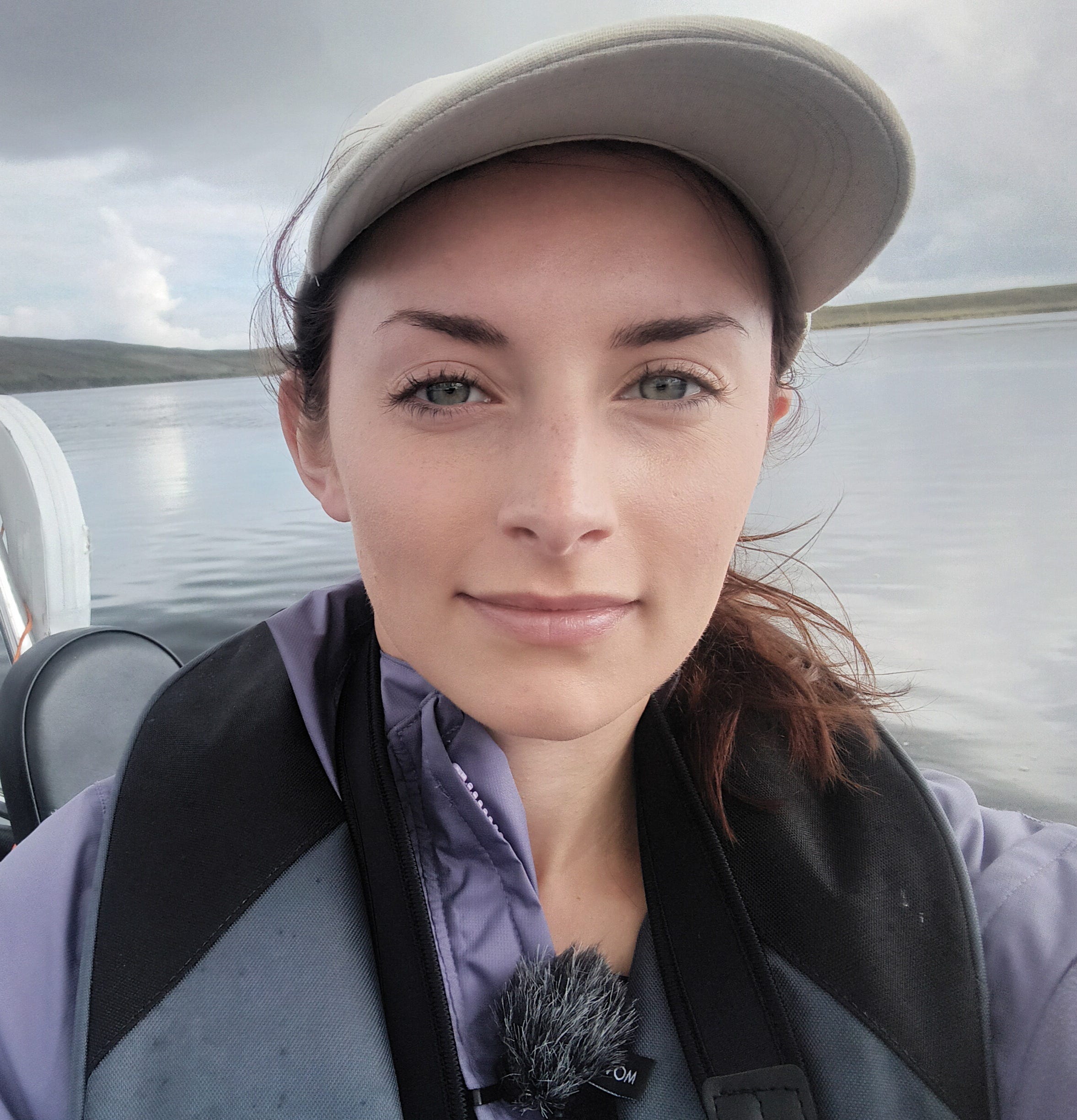
1) Meet the Rewilders: Flo Blackbourn
Meet the Rewilders is a series that introduces you to people engaged in the rewilding movement across the globe. Today meet Flo Blackbourn, the general manager of Curlew Action and known to many as the presenter leading through SCOTLAND: The Big Picture excellent feature length documentary Why Not Scotland?
She studied zoology and her love for wildlife naturally guided her into her current work. When asked about key decisions, I love what she says about applying for things she didn’t expect to get - that putting herself out there has let to many opportunities and experiences. I think that’s marvelous insight. All too often we wait until we think we are perfect for a role - going for it and learning on the job is the far, far better option!
What a wonderful portrait with her thoughts on challenges, on being less set, more pragmatic and open, about bringing people from different sides together. And as with so many of us, happiness for her is often found in nature (and we don’t have to travel the world for that, it can be, as Flo explains, anywhere): “Seeing nature makes me happy, especially birds. I love stopping to watch the simplest of wildlife behaviours and interactions, of any species. I’ve visited dumps to watch gulls and will sit and watch a spider going about its business quite happily.”

2) Celebrating 15 years of Rewilding Europe
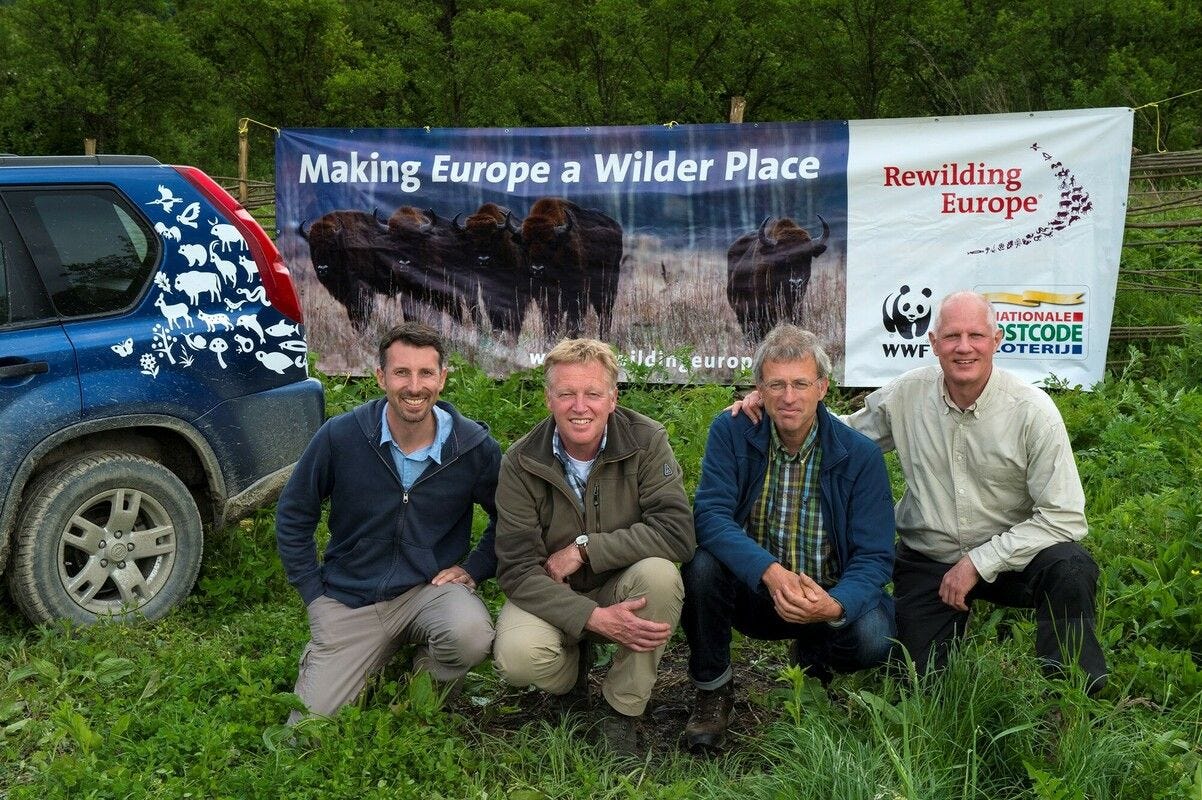
Frans Schepers (second from the left in the image) is the co-founder and executive director of Rewilding Europe. On the 28th of June 2011, fifteen years ago, he met with the notary, together with Staffan Widstrand, Neil Birnie and Wouter Helmer. They signed the paper, which marked the birth of Rewilding Europe. Oh my, how far they’ve come, what an amazing organization that has inspired me and countless others time and time again with their ceaseless efforts for a wilder Europe.
In his LinkedIn post, Frans reflects on what brought them together: “The realization of a historic opportunity to have much more wild nature in Europe, for a range of good reasons – the wildlife we saw coming back, more space for nature due to rural depopulation and land abandonment , the political environment in the EU , and more. But to be honest, it was also because we saw a lack of ambition, long-term vision, thinking big and lack of innovation in the conservation movement in Europe at the time. We needed a new narrative, we felt it was time for change.”
👉 Read the brand-new 2025 Annual Review that looks back at the past fifteen years with all that’s been achieved so far - it is staggering, to say the least!
👉 Read the wonderful ‘Meet the Rewilders’ portraits of Frans Schepers and Wouter Helmer (and Staffan’s is in the works 😊)
3) Want an abundance of herring? Protect an abundance of maerl!
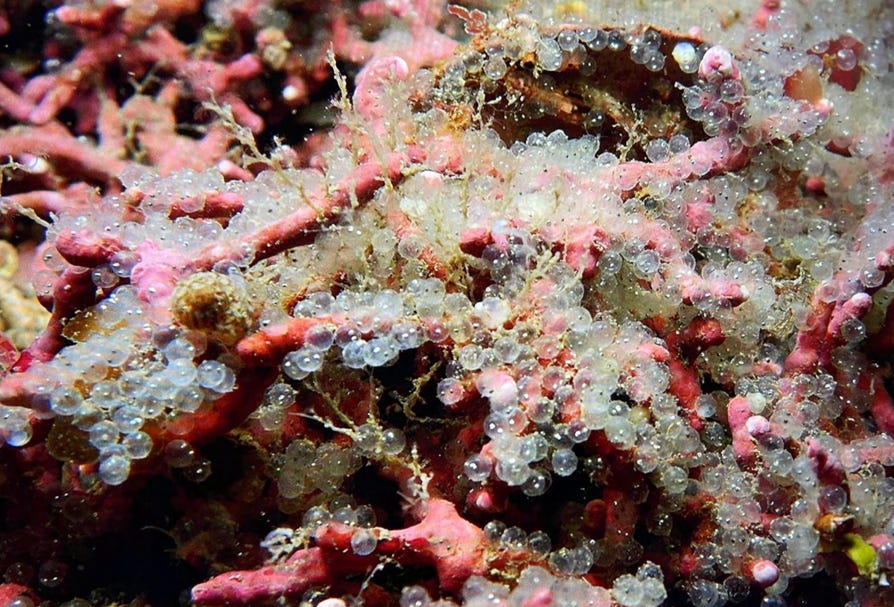
Maerl is a coral-like seaweed that grows slowly and grows amazing pink seabed habitats that are essential to a rich variety of species. The Blue Hope Alliance in Scotland’s Wester Ross has been focused on safeguarding and monitoring Marine Protected Areas and particularly the wondrous maerl that makes a favorite spawning ground for herring.
Herring fisheries once brought economic wealth to coastal communities - but the herring numbers have never recovered in the west of Scotland from a stock collapse in the seventies. Now it would seem obvious that all you need to do is protect the habitat they need to lay their eggs … and still, inside and outside of Marine Protected Areas, maerl beds are under threat by dredgers, illegal activity, sewage and salmon farm waste. The Blue Hope Alliance does amazing work. Check out the latest report!
4) More vultures, please!
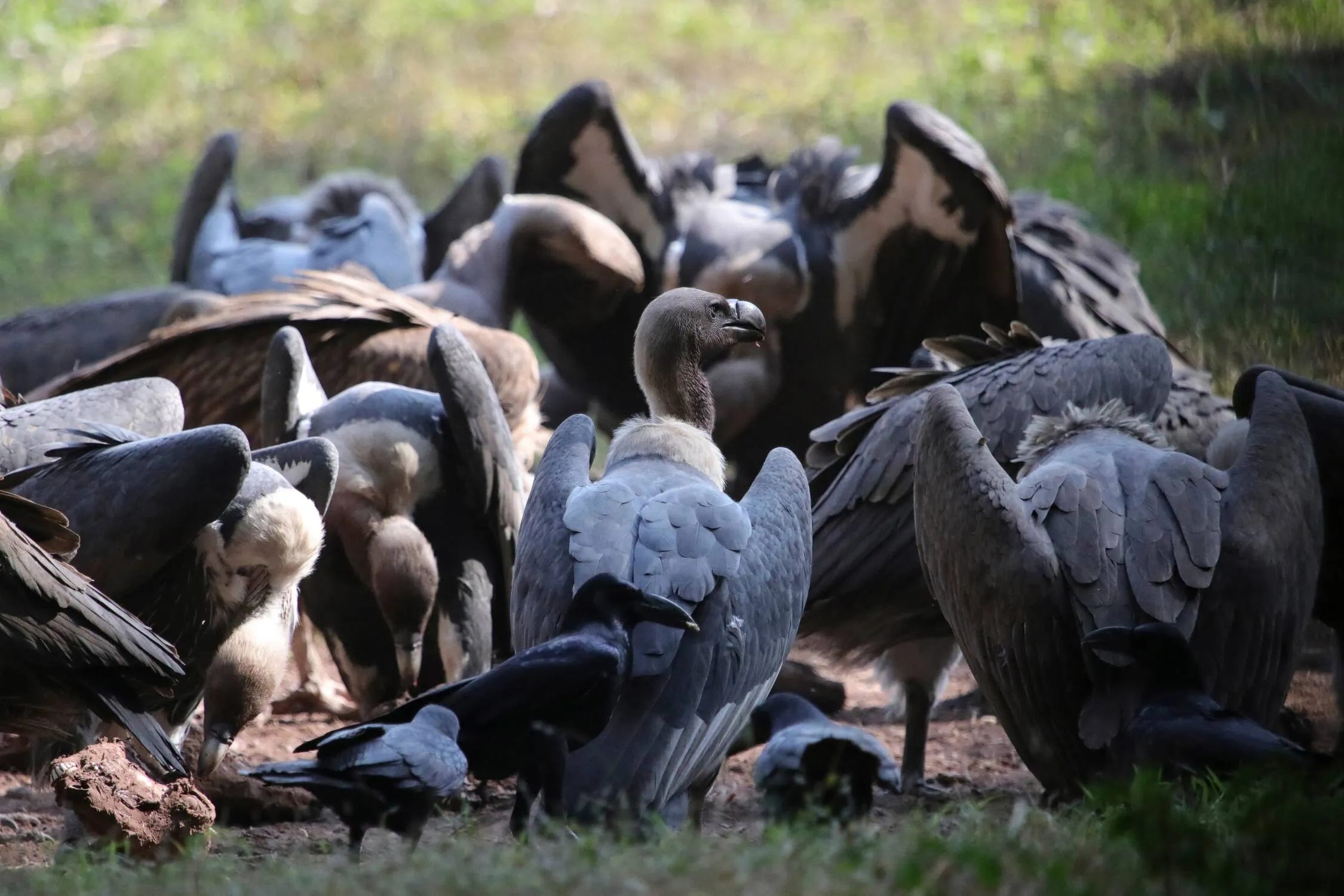
Just as every health ecosystems needs predators, it also needs scavengers. Some call vultures nature’s clean-up crew. When you have them, you best be thankful for them, as they consume carcasses, thus removing potential dangers for soil and water. By simply doing what they do, by simply being present in numbers, they also limit other scavengers that might readily spread diseases (such as feral dogs). And then these majestic creatures are of course a sight to see for any ecotourism fan - what’s not to love about vultures, right!?
The RSPB shares a detailed article about an amazing vulture tale from India and Nepal that spans decades. In the nineties, it was noticed that vulture numbers were declining. They had been present in abundance, valued for scavenging on cattle carcasses. Years later is was discussed that a drug given to cattle was the cause … over the course of years an alternative was found, the old drug was banned - and today vulture numbers are soaring once more. Great story - great for the entire circle of life.
5) Yellowstone to Yukon: Giving wildlife room to roam
This video is from a TEDx event late last year, but it was only just uploaded on Youtube. In it, Y2Y’s president and chief scientist Dr. Jodi Hilty talks about the ecology, and the past and present of the monumental Yellowstone to Yukon effort. You probably know your TED Talks, they always do a great job of telling a great story or important insight in a short period of time. This is a hopeful TED Talk - all the more so because what she talks about is a way to tackle the twin crises of biodiversity loss and climate change.
All we have to do is give nature more room to roam. I know, I know, easier said than done and many countries don’t have the wide spaces North America has. Still, what she shares is heartening, about protecting nature, about connecting nature, about building coalitions of communities. How they go about it, and how they hope to achieve their 30X30 goals is truly hopeful. Hilty impresses the point on the need for large scale and says: “We need to do that because otherwise we loose critters from habitats that are too small. We need to do it if we want humanity to maintain its soul and have our own places to go. For me, it is really about my children. I want them to be able to run wild rivers, to experience wild nature, and for future generations to be able to do the same. Isn’t that what we all want?”

6) A new rewilding adventure in Sweden is coming your way
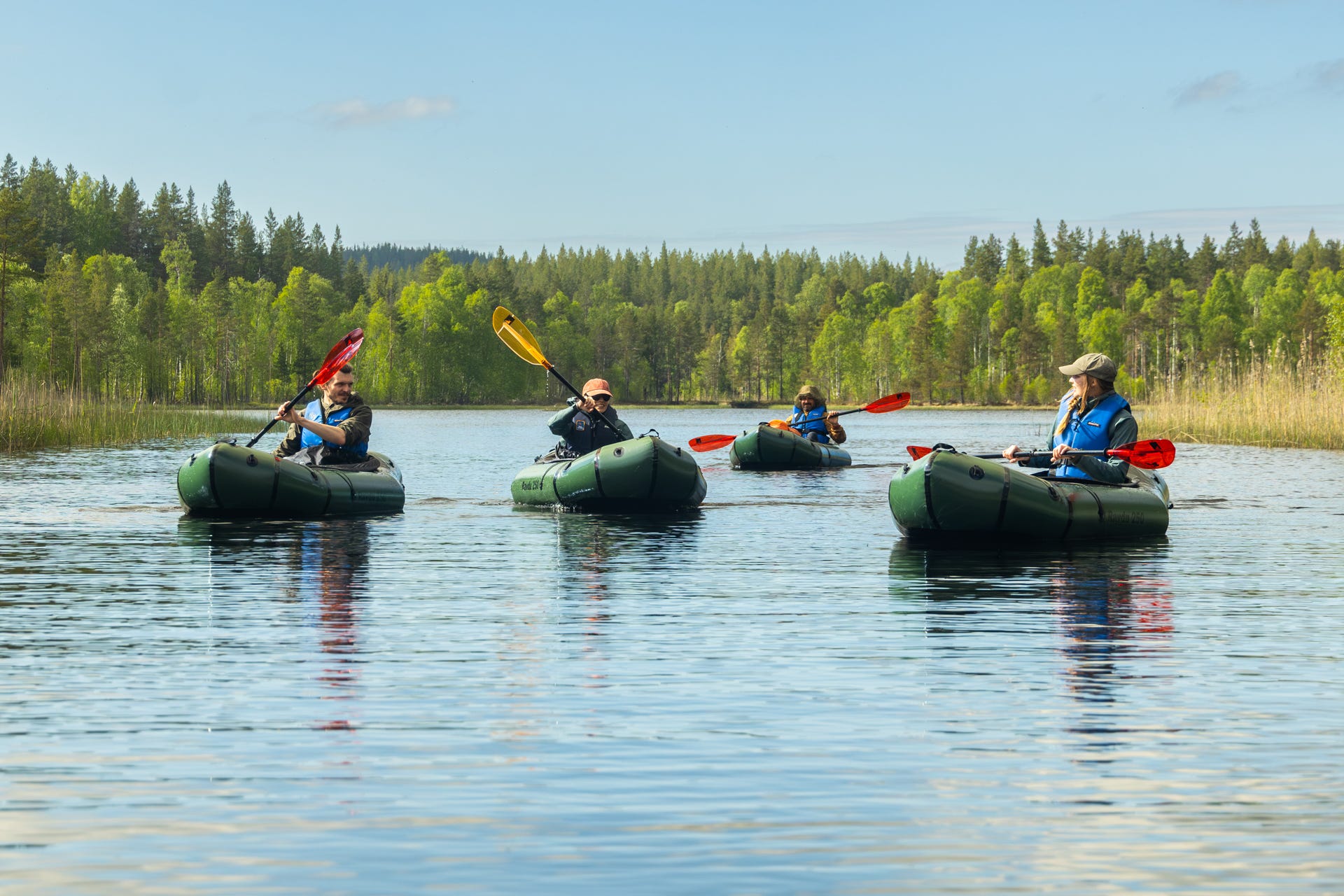
The first such pilot trip was organized earlier this month by Rewilding Sweden and Wild Sweden, a wildlife tours company. Rewilding Europe’s James Shooter was along for the ride and brought along his camera and his drones for some wonderful testimony of what must have been a wonderful exprience. Tag along with James, the way he writes is like being there. “After weeks of anticipation, we finally slipped into the river. My fingertips brushed the cool water as the current began to carry us downstream — our fates now tied to the Hjuksån for the next few days. We were off.”
Such rewilding adventures are more than trips, they are immersive nature experiences - and they are also about learning and working. Sure there was paddling and camping and barbequing, but there the learning about wild nature, about forests, about renaturalizing rivers, about restoring ecosystems one tiny fish at a time: “Watching thousands of tiny trout disappear into the clear water felt like the perfect conclusion to the week. Sixty-five thousand reasons to believe our work had made a meaningful difference.” Discover current rewilding adventures on Wilder Places now - and stay tuned for this one to appear in 2027 on the Wilder Places platform.

7) Support Switzerland’s ‘Wild Pastures’
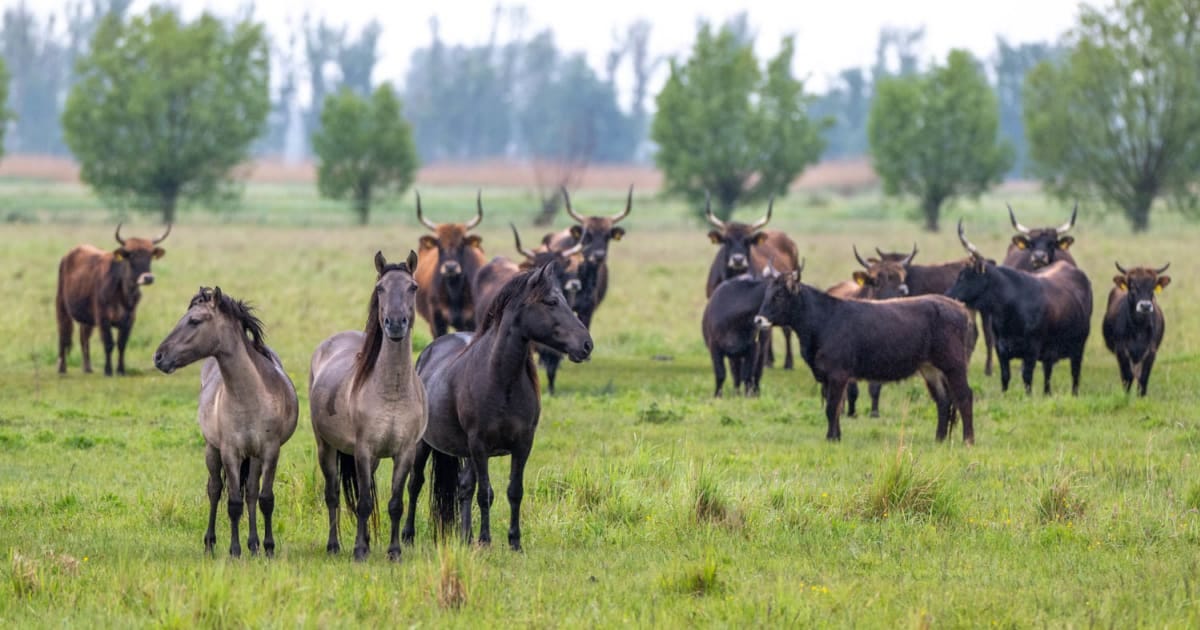
I’m thrilled to see that there’s a ‘large grazer’ rewilding effort in the works in Switzerland. It’s not quite there yet as, with so many other such efforts, a bit of crowdfunding helps to get things off the ground. But mind you, Switzerland is a small countries with most landscapes in use - so finding properties that will be of substantial size to have an ecosystem impact is challenging. They have succeeded. The Wilde Weiden (Wild Pastures) NGO has already extensively engaged government bodies and experts - and has narrowed it down to four possible and promising landscapes.
Now then - the crowdfunding effort is well on its way with over 80% of its 40’000 Swiss Francs funding goal already reached. Help them reach that goal so they can bring their projects to fruition. Wilder meadows with free-roaming large grazers are a boon for nature. Large grazers, by trampling, wallowing and pooping create rich habitats. A single large hoof can be the beginning of a micro-habitat! Now imagine a herd of wild cattle and wild horses - before long, both flora and fauna are richer, before long, the soil replenishes and absorbs and stores, before long - a variety of species (including ours) benefit from such wild pastures.
8) Rewilding in Wales
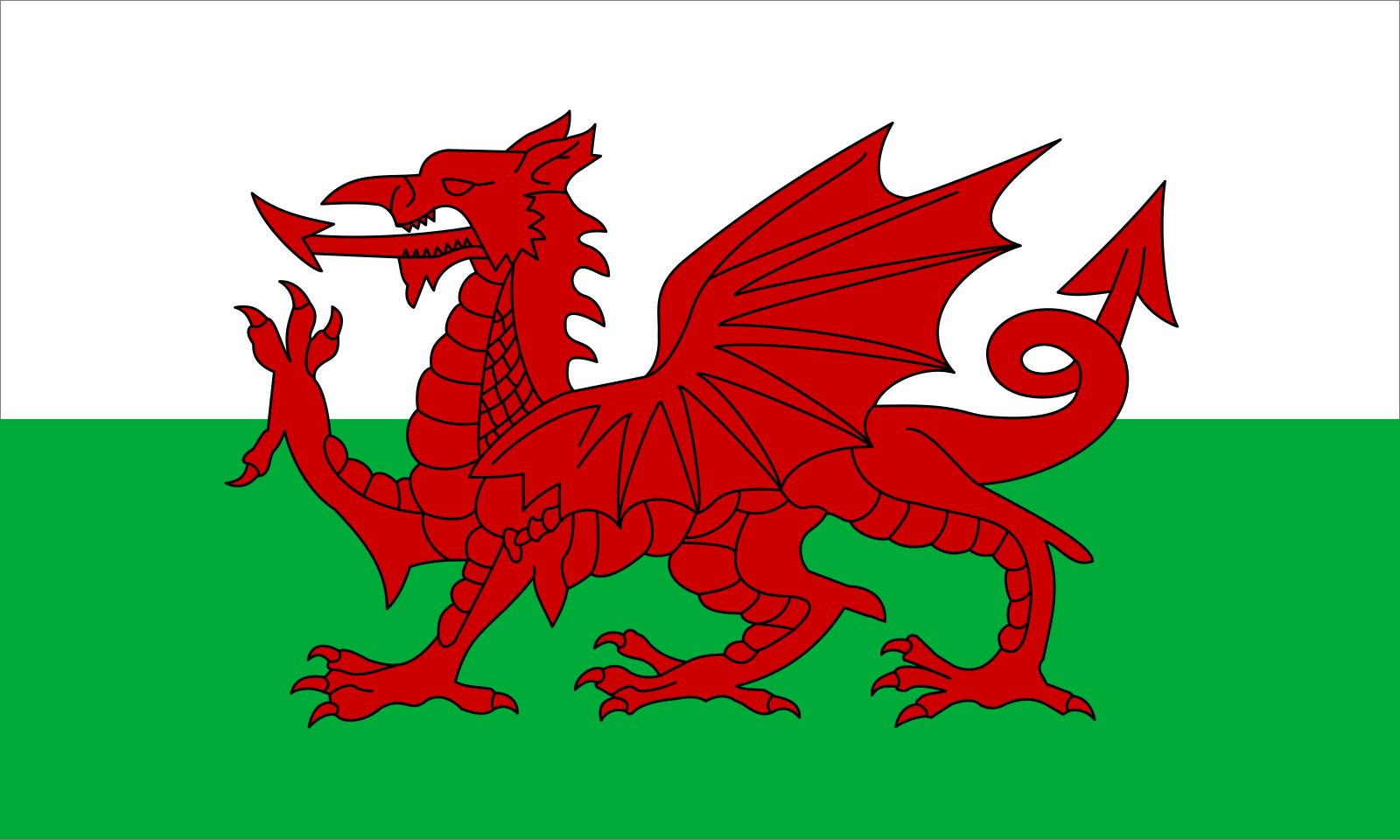
The Welsh Rewilding Alliance has only just come into being. Same as in Scotland, there have been failed beginnings and fears and anger and many understandable (if mistaken) concerns about rewilding as outside influence and exploitation. With all of that exploitation, I’d worry, too. But then I’d take a closer look at the various arguments and facts (or lack thereof) behind them.
Today both England and Scotland have already embraced rewilding with many and always more projects. And I have a feeling that Wales has what it takes to catch up fast - not least because Wales’ 2015 Well-Being of Future Generations Act. In this article I’m taking a closer look at the state of nature in Wales, current rewilding efforts and the potential and power of a merger between the Well-Being of Future Generations efforts and those of the Welsh Rewilding Alliance - a match made in heaven that would prove hugely beneficial for all future Welsh generations.

To conclude this week’s edition, rewilding legend and Trees for Life founder Alan Watson Featherstone shares with us a bit of his iconic photography that often takes a look at nature in a way that’s far closer to what we ordinarily perceive in passing. Alan takes time - as we all should.
In his words, “If everyone would take the time to look at & appreciate Nature more, instead of focussing on 'endless economic growth', political infighting, wars etc., the world would be a much better place.”
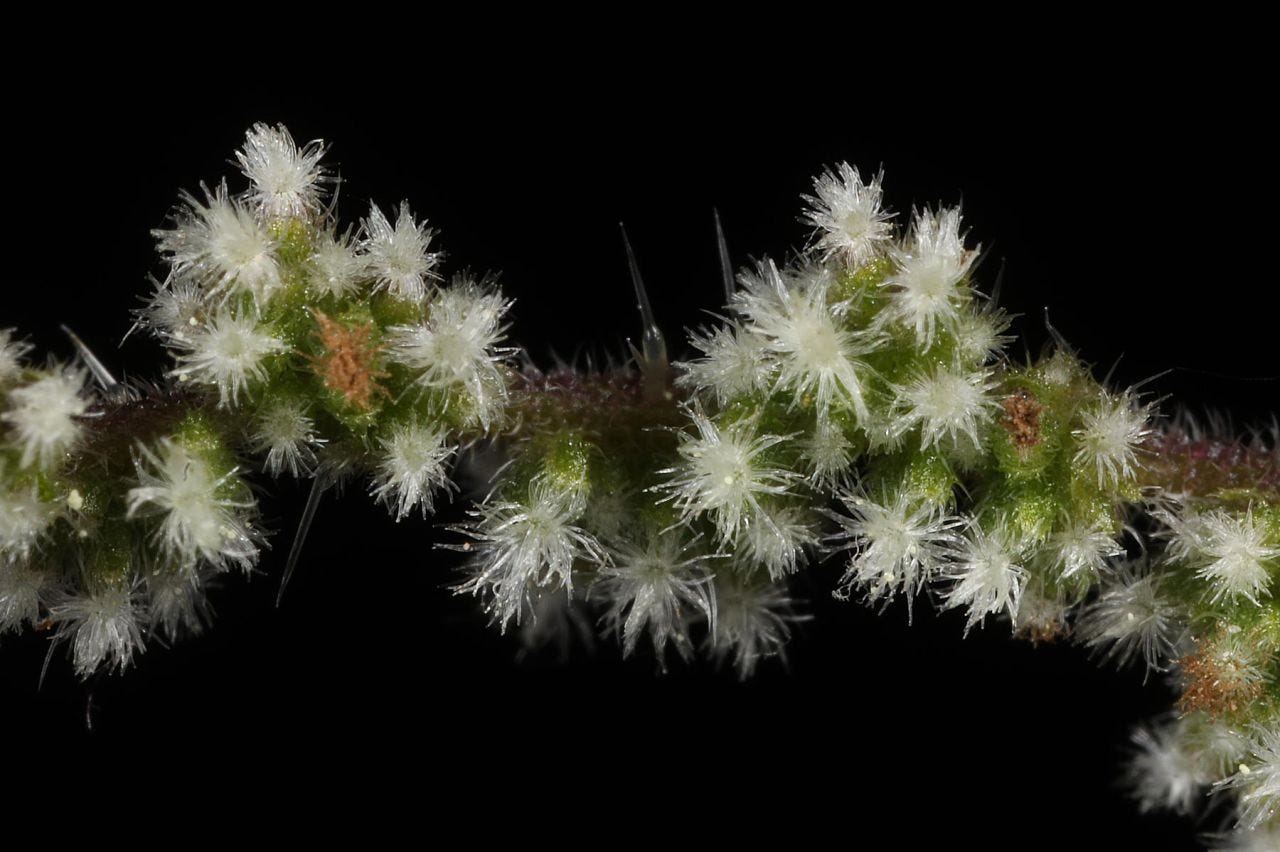
To find out more about Alan, his public speaking, writing, photography and more, visit him at alanwatsonfeatherstone.com. And if you feel like reading about my fantastically unique day with him in Glen Affric, go here.
Glad you’re here, reading the Rewilder Weekly. Share the stories, write your own (and let me know about it), engage with others. Let’s continue to reach out, inspire and activate ever more people around the world. The rewilding movement is growing, and with all of us pitching in, it’ll grow a great deal more!
That’s it for this week’s edition. Eager for more rewilding insights?
get inspired by the lives, decisions, challenges, beliefs and hopes of passionate rewilders with the Meet the Rewilders portraits;
connect with these organizations - sign up for newsletters and support them in any way you can;
join these events - conferences, online seminars, rewilding days and weeks to immerse yourself and learn from the experts;
read these books - a selection from Foreman to Macdonald, and from Tree to Daltun, Hetherington and Bowser;
listen to these podcasts - it’s inevitably inspiring when the likes of Peter Cairns, James Shooter, Ben Goldsmith and Brooke Mitchell talk to the pros in the field;
and check out these resources - explore the principles, ways of funding, research publications and personal ways to start rewilding.
And, of course, connect with and follow the many passionately engaged rewilders. Let’s keep growing the movement! 🦬🌳🐺🌞🌍
Go ahead, do it! 😊 I love comments and you can ask me anything (literally). You can also let me know about projects you come across, article you think I should share - and feel free to throw in tough questions, too - spice of life!
Oh, and please do click the ❤️ (like) button, too. The more ❤️, the more these posts rise in Substack’s algorithm - which means more and more people will discover rewilding, will learn about it, will engage around it, and hopefully will become active rewilders before long. Thanks!