


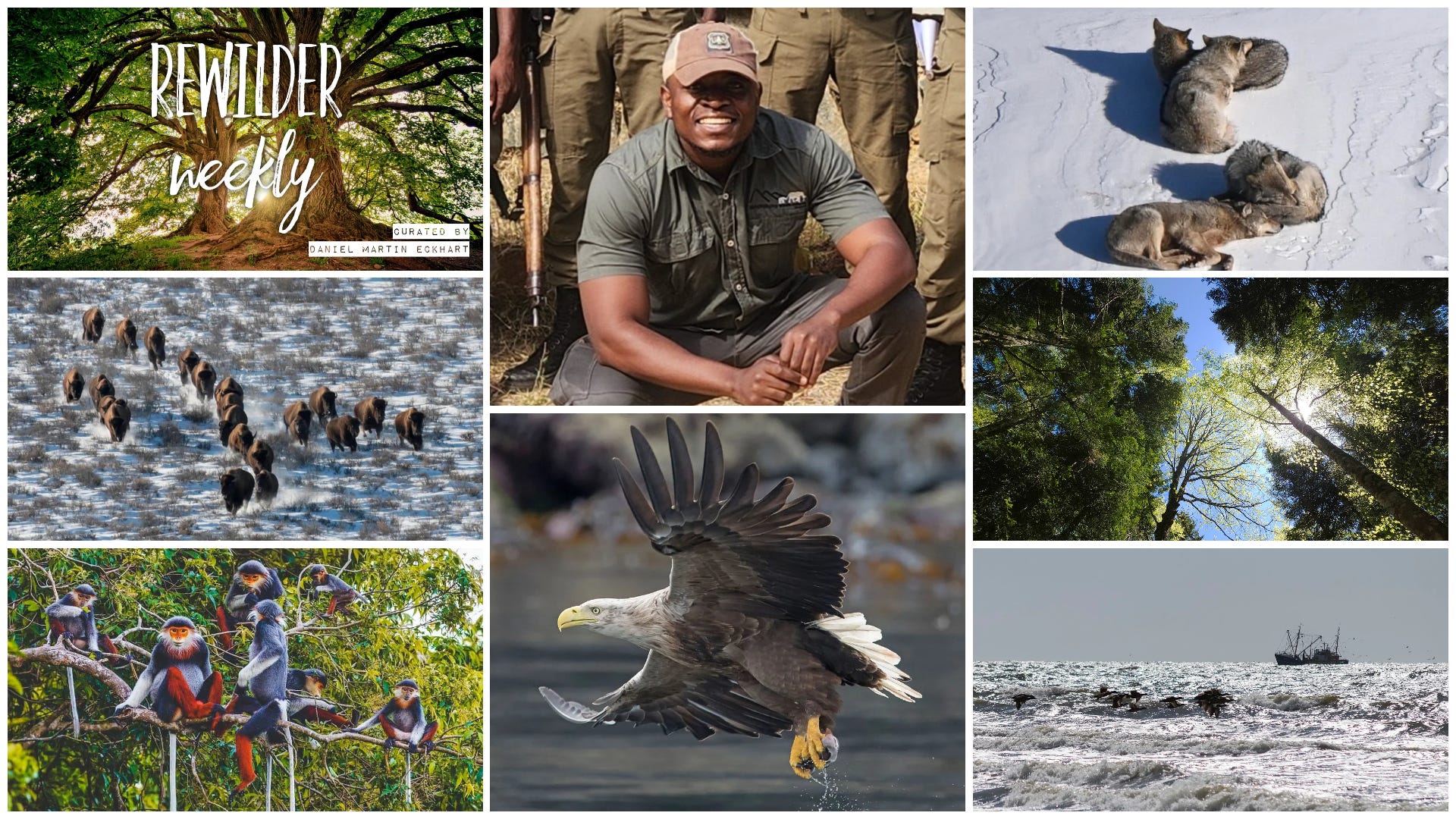
Welcome to the latest edition of the Rewilder Weekly. 🦬🌳🐺🌞🌍
This week with the latest rewilder portrait, featuring Malawi-based conservation and sustainable development specialist and storyteller Mpambira Aubrey Kambewa - as well inspiring and insightful stories from 🇫🇷 France, 🇳🇱 the Netherlands, 🇻🇳 Vietnam, 🏴 England and 🇺🇸 the US.
Wishing you a good week!
Cheers,

👉 If you come across stories you’d like to see featured in a future edition of the Rewilder Weekly, send them to me and I’ll gladly do what I can.

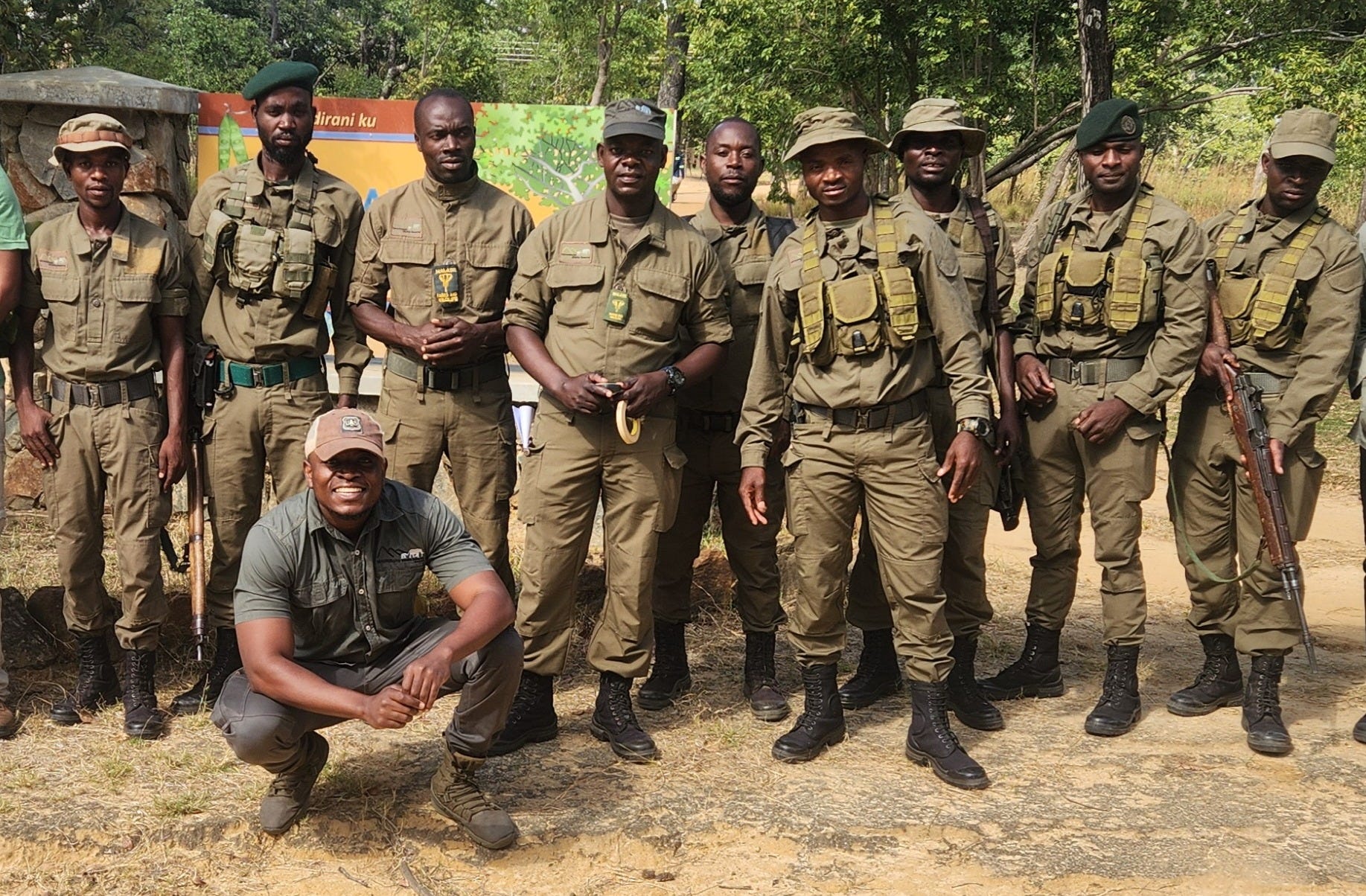
1) Meet the Rewilders: Mpambira Aubrey Kambewa
Meet the Rewilders is a series that introduces you to people engaged in the rewilding movement across the globe. Today meet Mpambira Aubrey Kambewa, a conservation and sustainable development specialist and storyteller based in Malawi. His work focuses on communities living adjacent to protected areas, on landscape ecology management, interpretation and heritage tourism development, and community-centered development initiatives.
The challenges are many, but so are the moments of joy and inspiration. It’s great to read about Mpambira’s mindset, efforts, beliefs and hopes: “In the next ten years, I hope conservation efforts across the Global South will become more equitable, inclusive, and representative of diverse communities and economic backgrounds. I hope to see greater local ownership of conservation narratives and more authentic stories emerging from underrepresented regions and people. Ultimately, I hope for a future where conservation is not only about protecting ecosystems, but also about empowering societies and creating shared prosperity.”
Encouragingly, projects I come across these days often do have that focus on empowering local communities. May more and more communities truly own lands, and thus own and decided the future they want to see become reality.

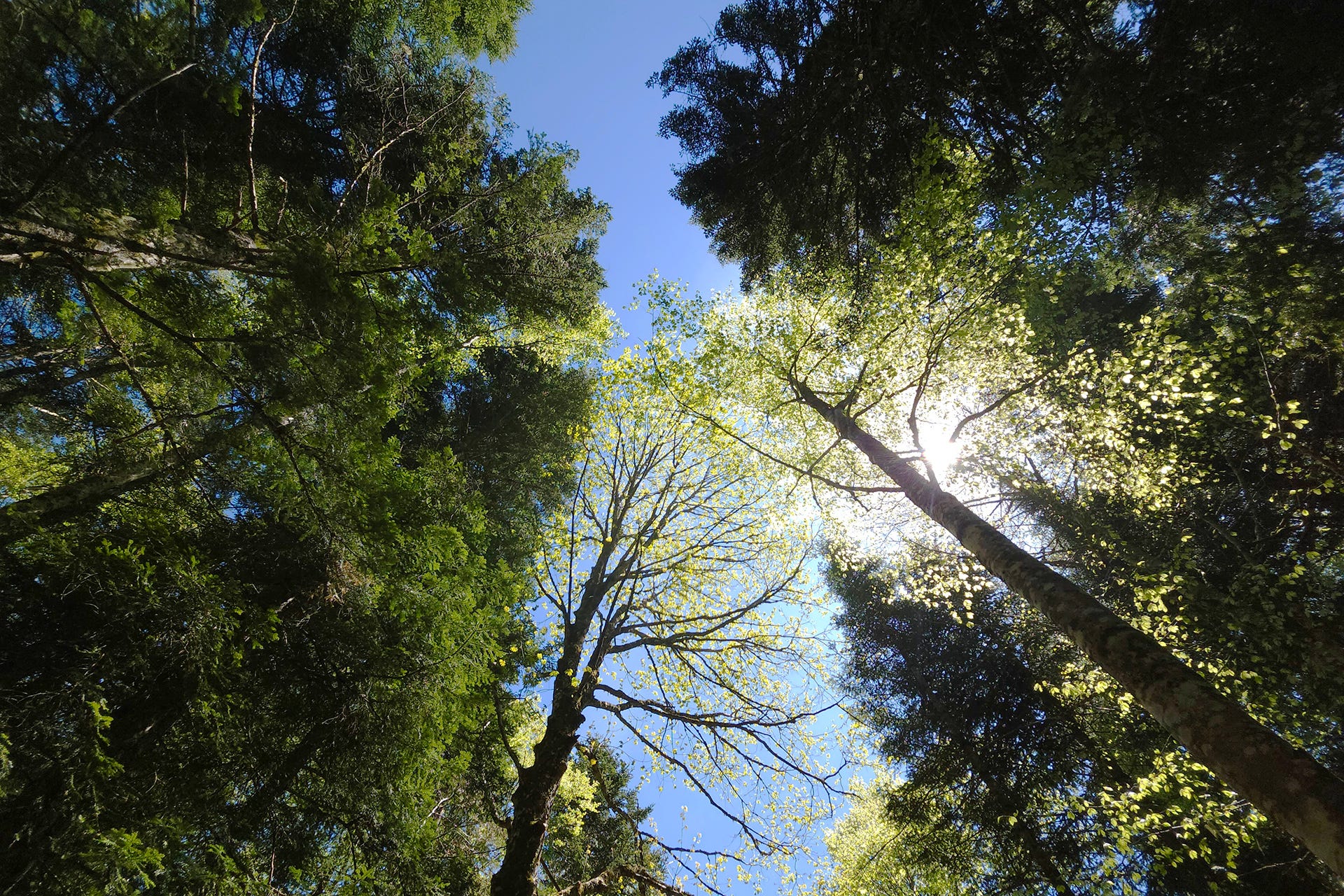
2) French forest gets to lead its own recovery
Good news for the Dauphiné Alps rewilding landscape. The Vercors Regional Natural Park with its vast forests is part of it - now the municipality that owns 432 hectares of communal forest has signed a ground-breaking agreement to let the Die Forest lead its own recovery for at least 60 years. Actually, that’s better than good news - 60 years is great news! There will still be some logging and some hunting - but a lot will be set aside to recover, a lot more deadwood will remain, and hunters have agreed not to hunt in certain areas.
It seems that this agreement just may be catching on - wouldn’t it be great if more and more municipalities would weigh nature’s health, financial gains, and social and cultural cohesion and come to the conclusion that this type of agreement is in the best interests of everyone. Olivier Raynaud, Rewilding France’ Team Leader in the Dauphiné Alps says, “We consider Die Forest as a pilot site to demonstrate that letting nature lead its own recovery is viable, efficient, and economically beneficial, which has been demonstrated elsewhere already. As time progresses, the aim is to also show that there are important ecological benefits to libre évolution in forests too. We hope by achieving this easement in Die, other municipalities will be inspired to take the same approach.”
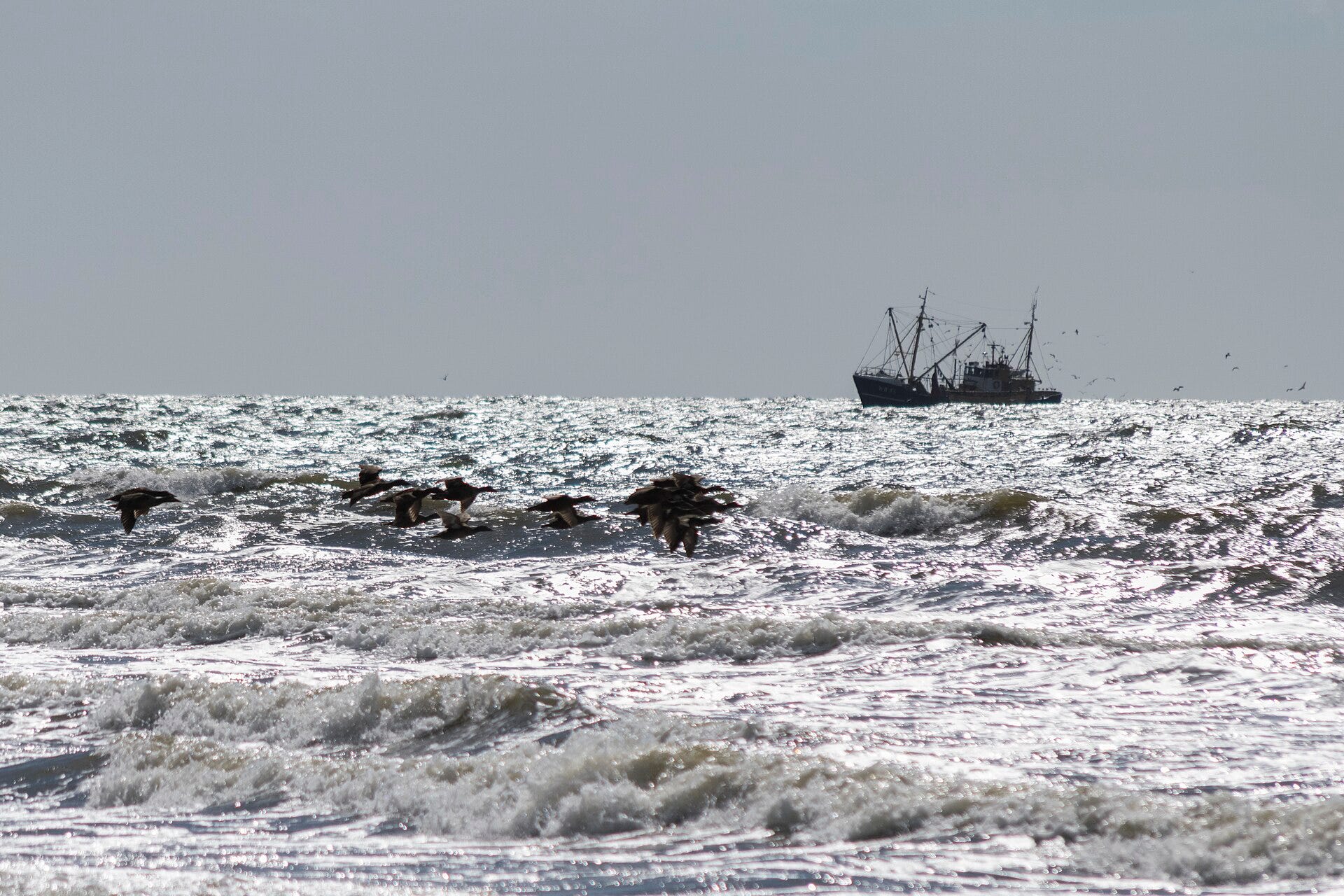
3) Saving Dogger Bank from bottom trawling
The Dogger Bank, part of Doggerland, lies at the bottom of the North Sea. As little as 10’000 years ago, Doggerland was still a massive landmass above sea-level between continental Europe and the British peninsula. Then sea-levels rose, creating the North Sea and the Channel and … what remained for a few thousand years longer was the Doggerbank uplands, still a vast island by 5’000 BC. The Doggerland Foundation came into being to fight in the courts for the protection and active restoration of the Dogger Bank, a rich marine habitat.
Good news from Dutch courts: “The District Court of The Hague has ruled that Dutch bottom trawlers can no longer fish without a permit and full environmental assessment in the Dutch Dogger Bank – the Netherlands’ largest protected nature area and one of the most ecologically significant stretches of seafloor in the North Sea.” This is considered a landmark ruling that is expected to have implications across Europe. May this be a decisive blow to the disastrous practice of bottom trawling.
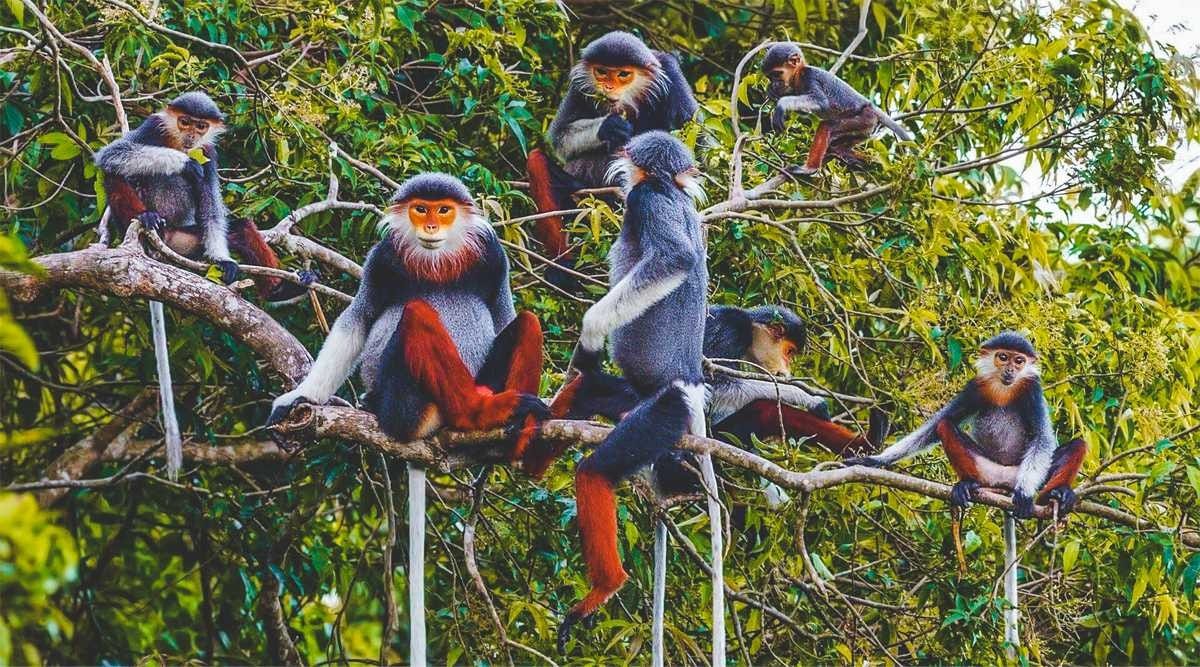
4) Vietnam is preparing its Rewilding Plan 2027-2035
What I particularly love about this is that there’s nothing special about using the term rewilding - the term has arrived, it’s matter-of-fact, it simply is what it is. Good! In Vietnam, the country is in the process of formulating the “Vietnam Rewilding Plan for 2027-2035” as was announced at a conference organized by VNFOREST, the IUCN and Re:wild.
Deputy Director of VNFOREST Dr. Doan Hai Nam said that, while Vietnam’s forest cover at 42% is good, “greening the land alone is not enough, as many forests are not facing the ‘empty forest syndrome,’ meaning serious depletion of wildlife species and a decline of ecological functions.” Vietnam’s three main challenges outlined are: 1) habitat degradation and fragmentation; 2) continued pressure from illegal hunting, trapping and wildlife trade; and 3) essentially funding, as the implementation of any long-time and far-reaching plan requires considerable resources, data, monitoring, facilitation, engagement, etc.
The Cuc Phuong National Park is said to be gradually approaching rewilding as a continuous ecological process under the principle that “nature leads, humans support.” The final plan will hopefully be approved by the government this year. “Vietnam’s future rewilding efforts will focus on restoring natural ecosystems and populations of endangered and rare species, expanding conservation areas, strengthening habitat connectivity, combating illegal hunting and wildlife trade, standardising scientific procedures and mobilising social resources for nature conservation.”
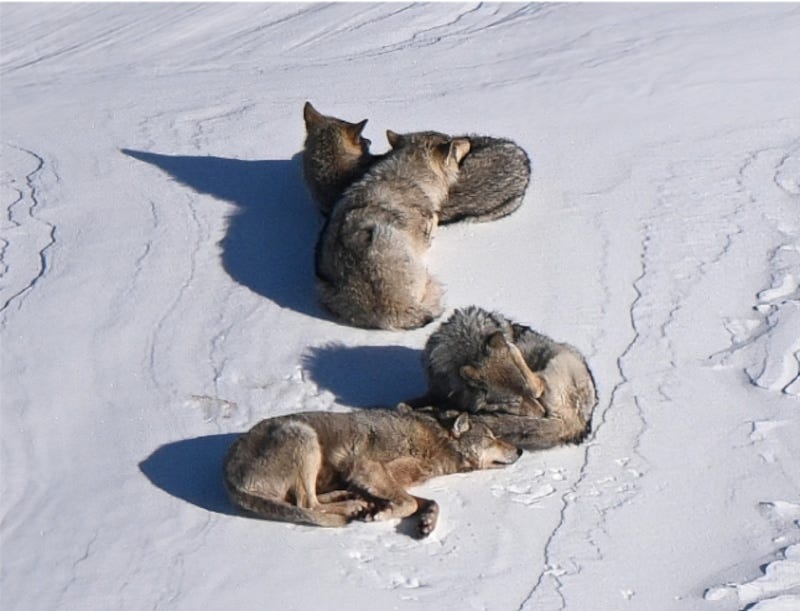
5) How wolves brought healthy balance to the Isle Royale
Don’t worry, these wolves are fine - more than fine, they are thriving on the Isle Royale, an island between Michigan and Canada that is a designated National Park. In her weekly Nature Signals (well worth subscribing to!), Ruth Thornton highlighted the fascinating story with the latest update from the Isle Royale Wold-Moose Project. Begun in 1958 by the Michigan Technological University, this is considered the world’s longest predator-prey study.
In brief: Moose came to the island in the early 20th century. The first wolves arrived decades later by crossing the frozen expanse from Canada. And in 1958 scientists began to monitor. For a while there was balance, then wolf numbers dropped (a virus inadvertently introduced by humans) and moose populations surged … by the late 1990s, moose numbers had tripled to nearly 2’400. A harsh winter dropped that number to 500. Today there’s a healthy balance of both wolfs and moose - but the fascinating thing is really that scientists have learned something important - namely that their predictions are worth little to nothing:
“For over 60 years, the focused purpose of the Isle Royale Wolf-Moose Project has been to predict and understand a relatively simple natural system. But the more we studied, the more we came to realize how poor our previous explanations had been. The accuracy of our predictions for Isle Royale wolf and moose populations is comparable to those for long-term weather and financial markets. Every five-year period in the Isle Royale history has been different from every other five-year period – even after sixty-five of close observation.”

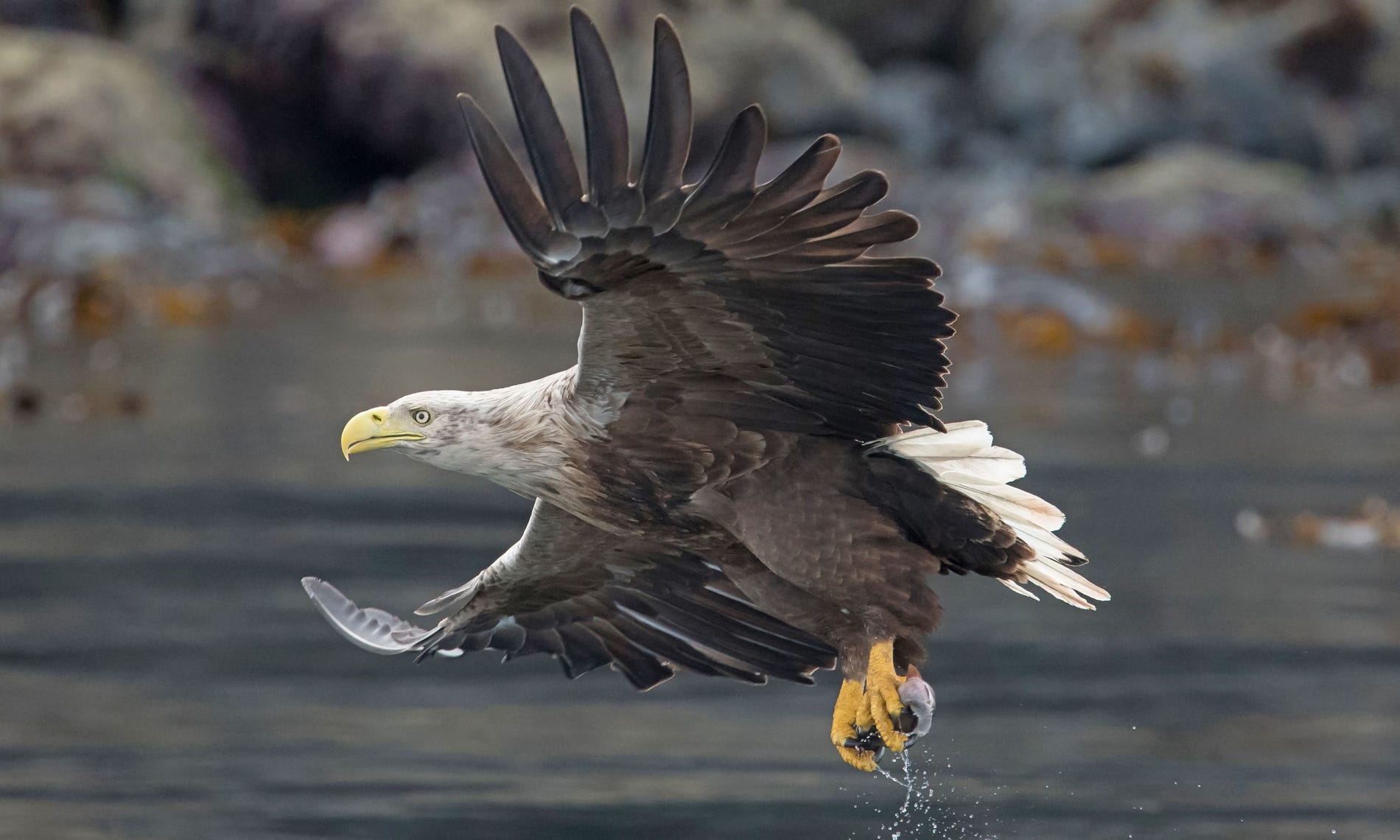
6) White-tailed eagle restoration project in southern England gets a boost
The wildlife licensing authority Natural England has given approval for the release of more white-tailed eagles in the south of England. These majestic birds were once widespread, but regional extinction was in time cause by human persecution. The reintroduction project will add to its existing program of releases (begun in 2019) an additional 20 young eagles over the course of three years.
The one and only Roy Dennis says, “White-tailed eagles were once a common sight in England but were lost centuries ago. This project is reversing that situation, and I am delighted that we will be able to release additional birds this year and boost their numbers in the wild. It is exciting to be able to play a part in restoring these birds back to their former home, and to see how well they are fitting into the English landscape. We will continue to work closely with a range of organisations as we enter this next phase of this exciting project.”

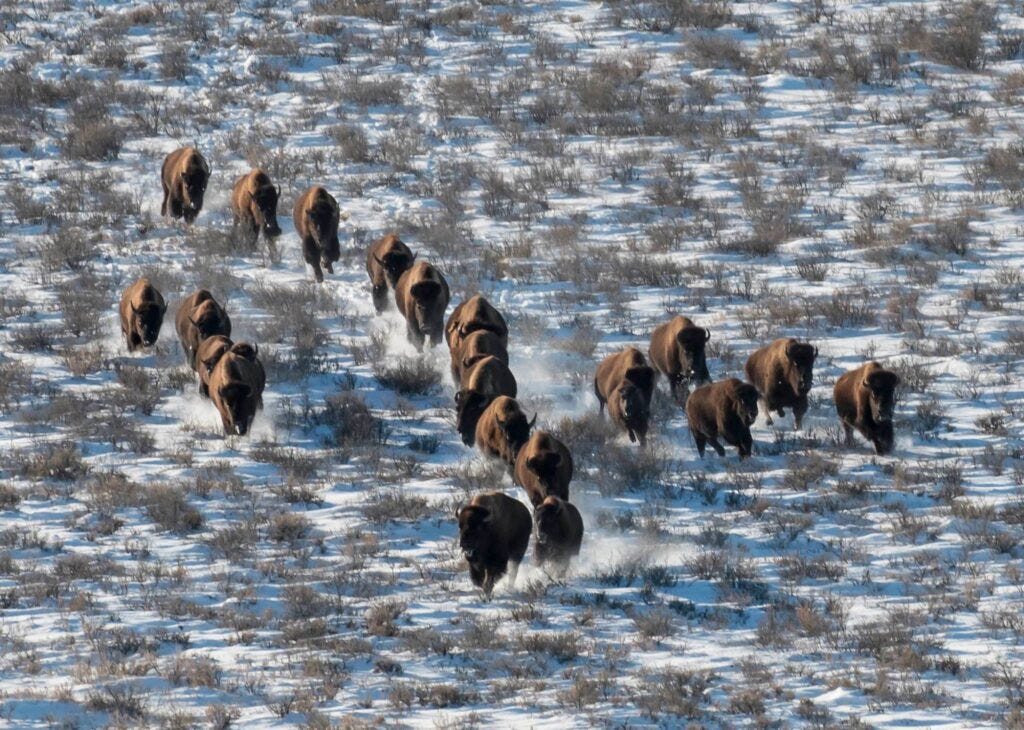
7) American Prairie’s fight for bison
When you pay attention to the news in the US, you can’t help but see how blatantly the current administration is intent on dismantling environmental efforts and protections at every turn. American Prairie is an NGO focused on restoring free-roaming bison. They manage nearly a thousand bison on private and public lands. Now public lands are supposed to be just that - but in the US, ranchers are often granted the right to graze their cattle there.
American Prairie had the permission to let the bison roam on 63’000 acres of public land. The Bureau of Land Management has now revoked that permission … and you know why? Because the ranching lobby was up in arm, arguing that the bison represented a threat to the cattle industry. What rubbish! There’s plenty of grazing land for livestock - but the industry will always want more. What the buffalo graze, should be grazed by their cattle, they say. BLM’s decision is clearly one that simply catered to a lobby - industry’s laughing, and nature, for the millionth time, suffers the consequences … and so do we all.
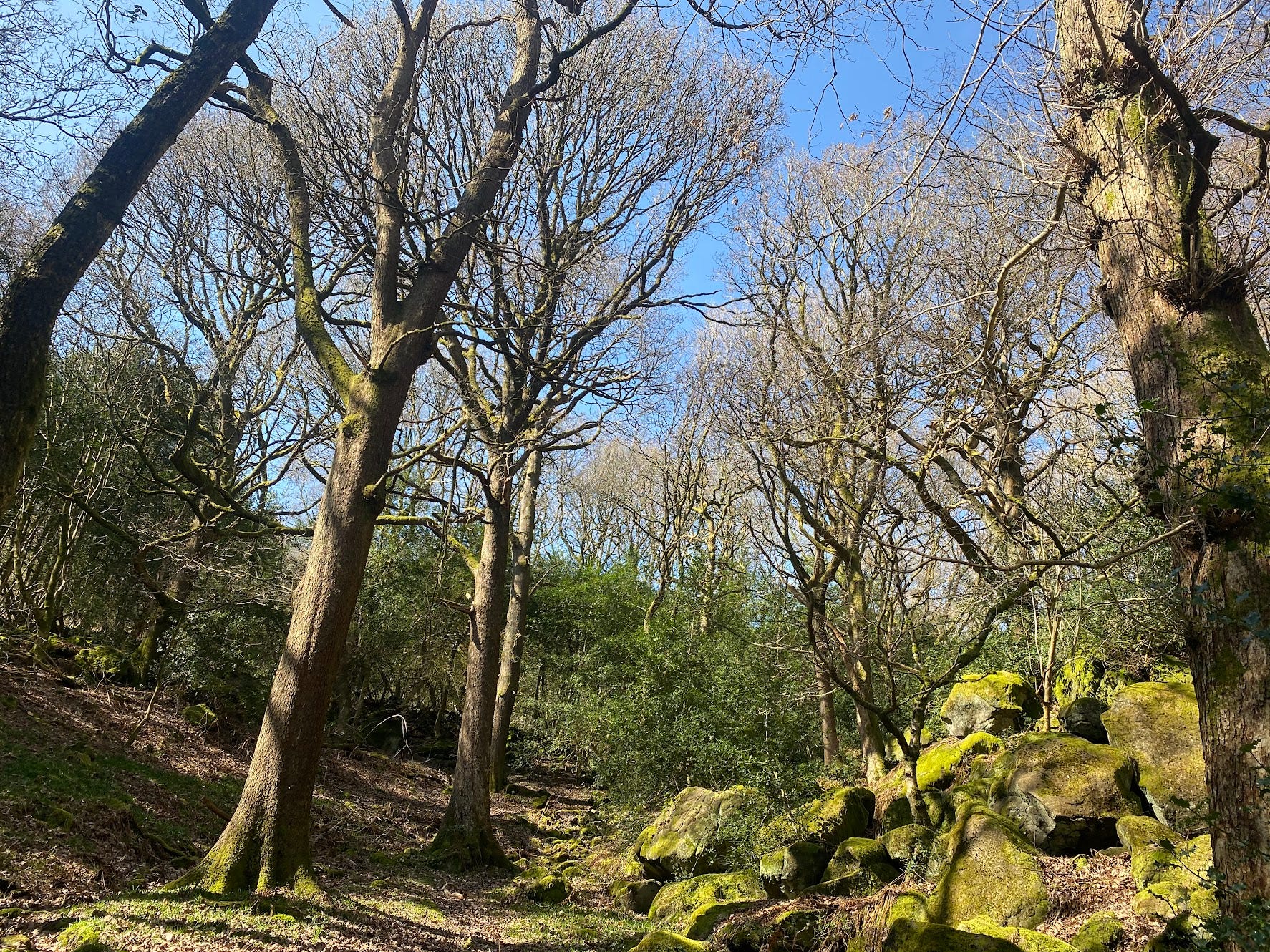
8) “We marinade ourselves in spring.”
What a lovely sentence. This last article I’d like to highlight strays a bit from the usual path of rewilding projects across the globe … but it is, I believe, very much at the core of all of everything nature restoration efforts can and should deliver on for future generations. In her Rewilding Neurodiversity Substack, Claire Ivy Waters writes about her son’s mental health, neurodiversity, home education, wildness, off grid and on grid, the importance of nature for our children and their senses. An unusual, personal and eye-opening read. She writes;
“If we keep siloing children on the straight and narrow curriculum, and away from the natural world, then who’s listening to the biosphere? Our monocrop of children and land have parallel problems. We can nurture kids to have eyes and ears wide open to innovative ideas and creations, to take part in the living web of life. We can reinstate agency for both children and landscapes and allow both to communicate, touch and heed each other with all their plethora of spectrums and senses. Let’s widen the lens of education to facilitate self-directed learners who notice the diverse glimmers of their internal and external landscapes, resourcing this appropriately to reflect the true value of children and wild places and those that tend them. There is regeneration in self-willed learning.”

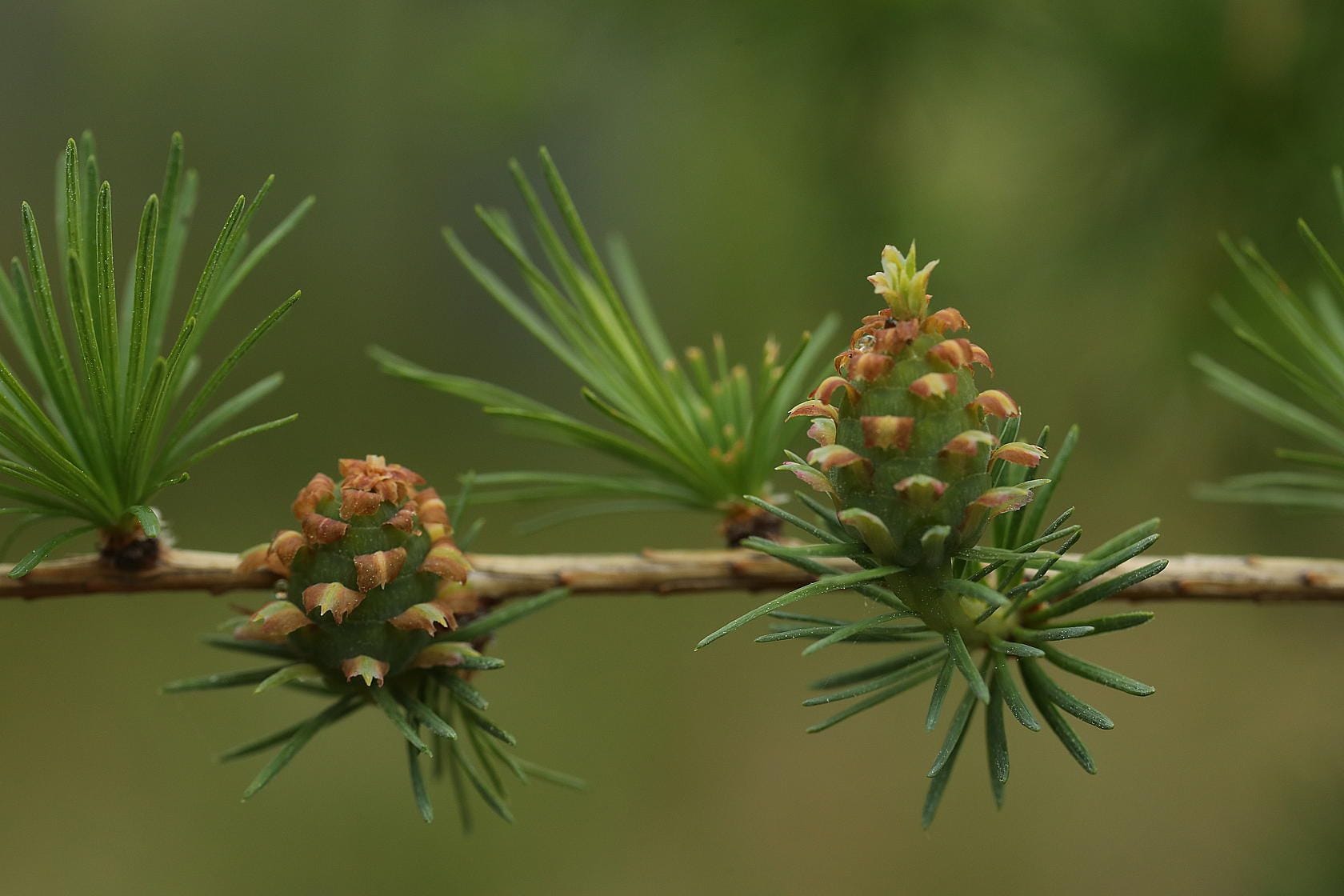
To conclude this week’s edition, rewilding legend and Trees for Life founder Alan Watson Featherstone shares with us a bit of his iconic photography that often takes a look at nature in a way that’s far closer to what we ordinarily perceive in passing. Alan takes time - as we all should. This week he shows new needles opening beside female ‘flowers’ on a twig of a larch tree.
To find out more about Alan, his public speaking, writing, photography and more, visit him at alanwatsonfeatherstone.com. And if you feel like reading about my fantastically unique day with him in Glen Affric, go here.
Glad you’re here, reading the Rewilder Weekly. Share the stories, write your own (and let me know about it), engage with others. Let’s continue to reach out, inspire and activate ever more people around the world. The rewilding movement is growing, and with all of us pitching in, it’ll grow a great deal more!
That’s it for this week’s edition. Eager for more rewilding insights?
get inspired by the lives, decisions, challenges, beliefs and hopes of passionate rewilders with the Meet the Rewilders portraits;
connect with these organizations - sign up for newsletters and support them in any way you can;
join these events - conferences, online seminars, rewilding days and weeks to immerse yourself and learn from the experts;
read these books - a selection from Foreman to Macdonald, and from Tree to Daltun, Hetherington and Bowser;
listen to these podcasts - it’s inevitably inspiring when the likes of Peter Cairns, James Shooter, Ben Goldsmith and Brooke Mitchell talk to the pros in the field;
and check out these resources - explore the principles, ways of funding, research publications and personal ways to start rewilding.
And, of course, connect with and follow the many passionately engaged rewilders. Let’s keep growing the movement! 🦬🌳🐺🌞🌍
Go ahead, do it! 😊 I love comments and you can ask me anything (literally). You can also let me know about projects you come across, article you think I should share - and feel free to throw in tough questions, too - spice of life!
Oh, and please do click the ❤️ (like) button, too. The more ❤️, the more these posts rise in Substack’s algorithm - which means more and more people will discover rewilding, will learn about it, will engage around it, and hopefully will become active rewilders before long. Thanks!
Thanks for the mention Daniel, and for all your work putting these newsletters together.
Love these weekly roundups where you treat us to good news from around the world. Thanks.