


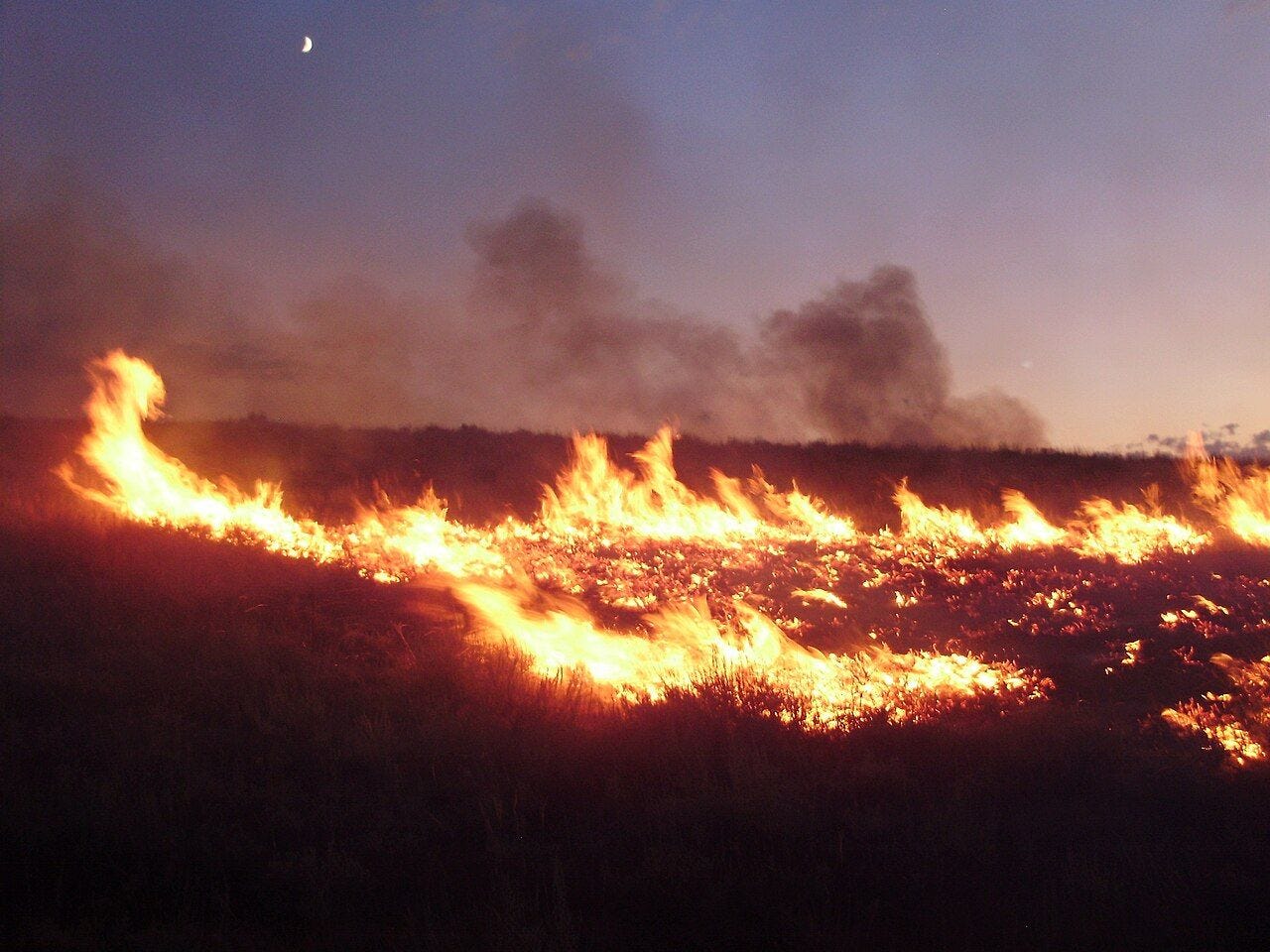
When catastrophic events happen, people have always been quick to look for a scapegoat to blame - for industries and lobbies, a go-to scapegoat is rewilding. The claim is always that rewilded landscapes provide more fuel for fires. That claim is highly questionable, at best.
While landscapes that are allowed to recover will grow more fauna, they will also restore soil and retain more water. This is exactly what must happen on a massive scale - and this can and should happen together with active fire management.
Create firebreaks, by all means. One great way I’ve seen was the creation of a series of ponds across a rewilding landscape. These act as firebreaks, can be used if necessary - and they are not just beneficial for flora and fauna, they also retain and spread water from downpours far beyond the boundaries of the ponds. Learn more about how water moves through soil.

Rewetting landscapes is key
Rewetting landscapes is key - and rewilding is doing exactly that by bringing back wetlands, by reintroducing beavers, by freeing rivers. The climate crisis with its extreme weather conditions is not going away. Refusing to restore landscapes is disastrously negligent.
Anyone telling you that rewilding is to blame for fires (wildfires or others) is ignorant at best, deceptively callous at worst.
The causes for these fires - wildfires and otherwise - are manmade. They are caused by draining and overgrazing the lands. This has created the tinderbox conditions that are now fueling these fires. Keep that tinderbox image in mind. Now imagine it wet - that is what rewilding does.
The climate crisis will get worse before (if humanity comes to its senses) it gets better. In the meantime it is essential that we do everything we can to rewet the lands, and to create ‘fire brigades’ in the form of free-roaming herds of large grazers. All of this can be done, all of this helps to mitigate against the catastrophic fires. Rewilding does that.


Those arguing for the status quo are the ones who don’t want you to look at their status quo. And so they say, look over there, scapegoat! These are the folks are who are basically sitting back and watching it burn.
Rewilding is actively working toward a healthier nature, and that very directly means a wetter nature. The world needs more rewilding and fewer scapegoaters.
Cheers,


For more on this, I’d like to invite you to check in with hugely experienced experts and learn from what they have to say on the subject:
👉 Ben Goldsmith explains that rewilding is the best defence against wildfires. (The Spectator - August 2, 2026)
👉 Alastair Driver sets the record straight regarding the Dunwich Heath fire (not a rewilding site) and argues for more rewilding/rewetting. (LinkedIn - August 6, 2026)
👉 Joe Glentworth, Anna Gilchrist and Ian Thornhill on how restoring ecosystems (rewilding) can make landscapes wetter, patchier and more fire resistant. (The Conversation - August 4, 2026)
Hugh Webster calls for a joined up approach and that abandoning habitat restoration efforts clearly isn’t the solution. (SCOTLAND: The Big Picture - August 10, 2026)
👉 Jeremy Leggett writes about 40 years of warnings and that fighting fires is not enough, a system change can make the a long-term solution happen. (LinkedIn - August 20, 2026)
👉 Frans Schepers lays out how the rewilding of large landscapes reduces fire risks and makes them more climate resilient. (LinkedIn - July 20, 2026)
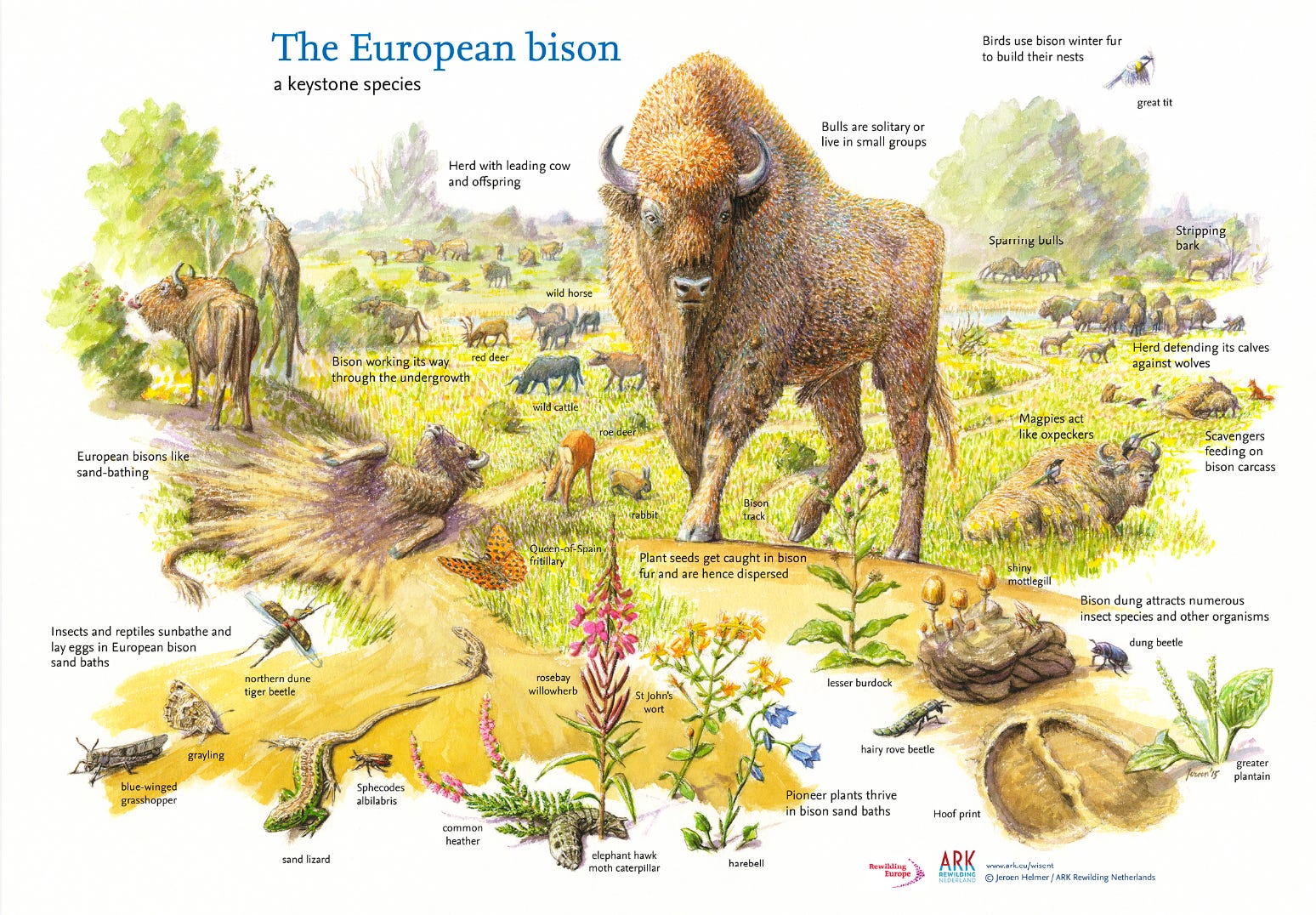
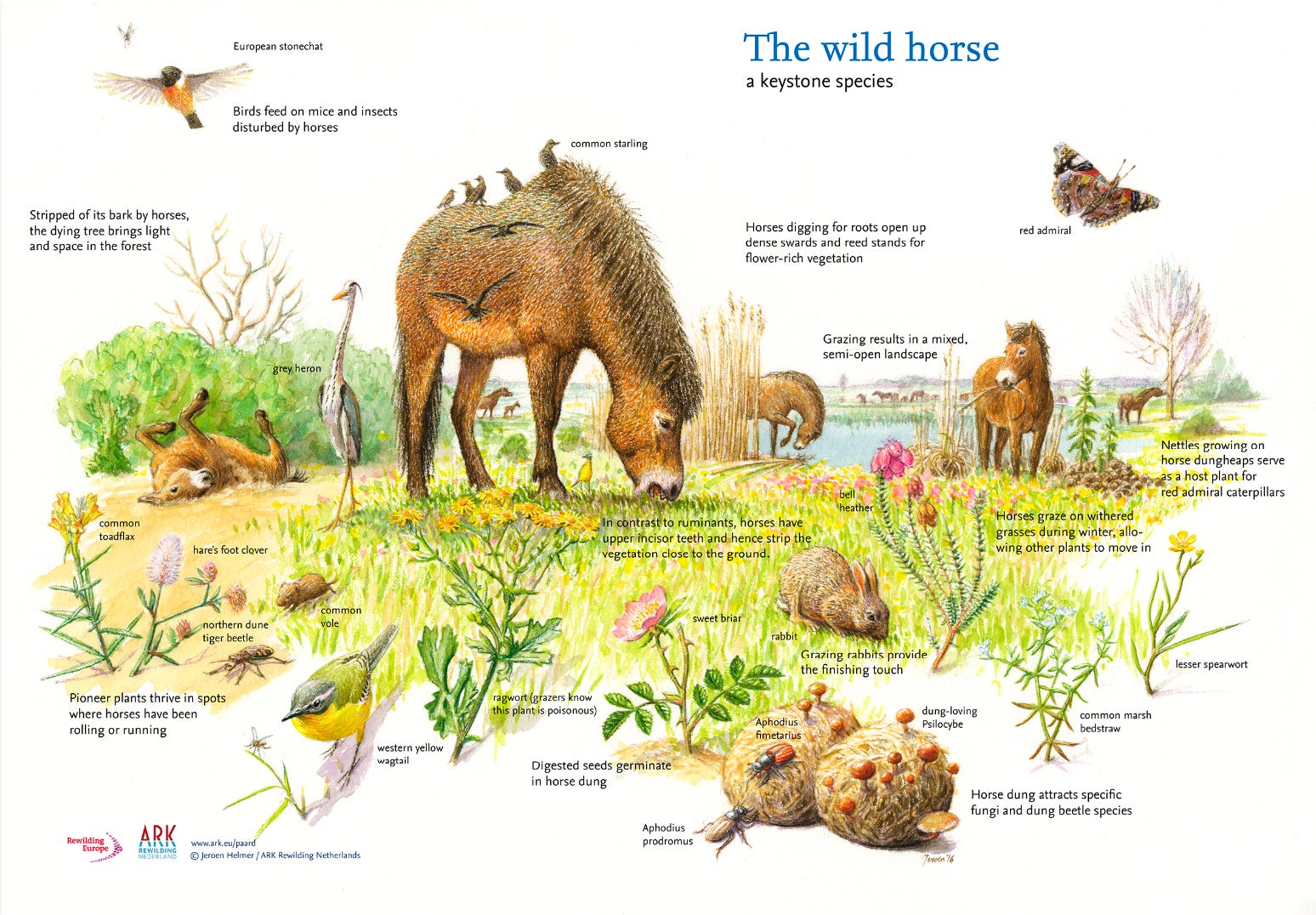
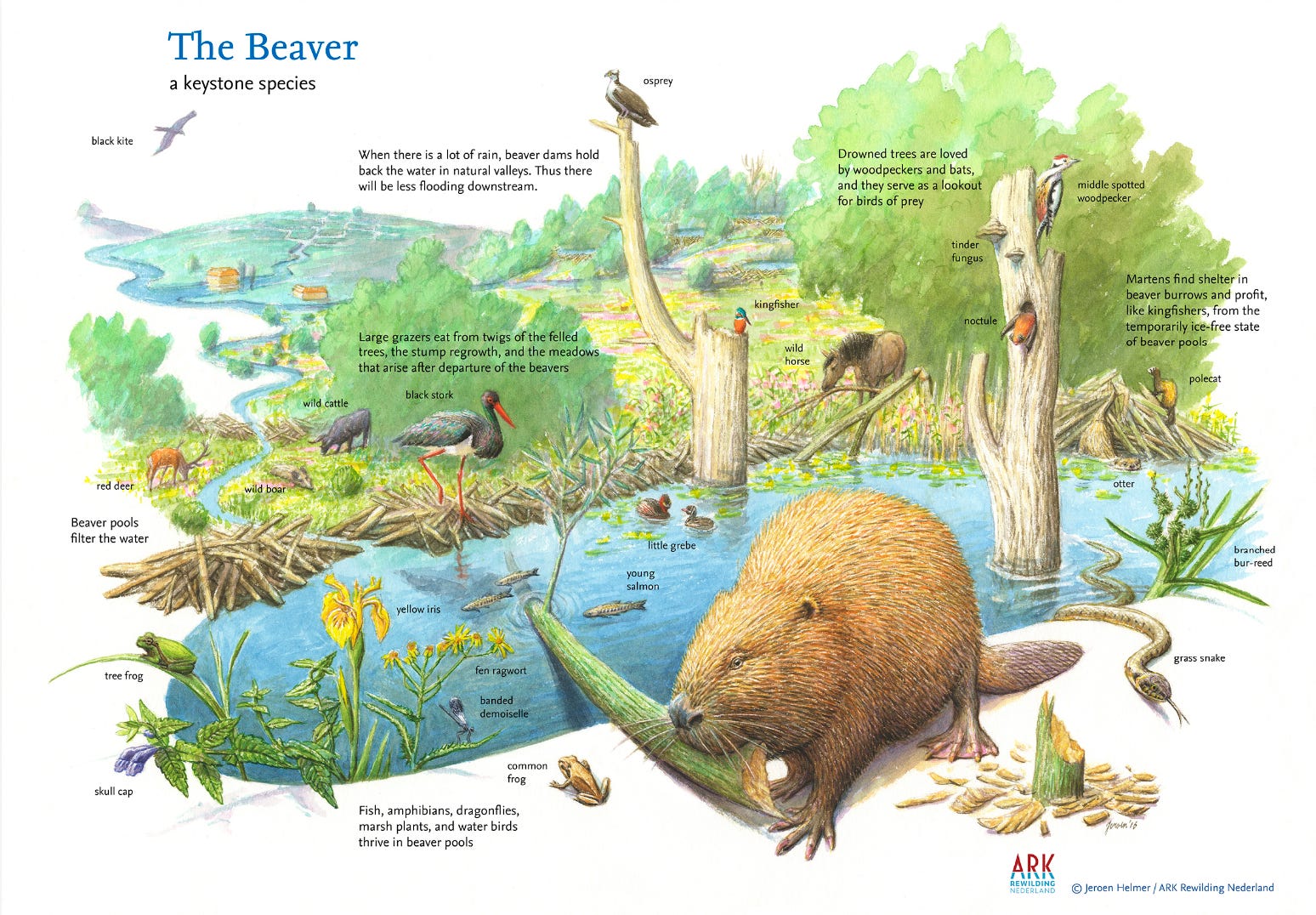
👉 Rewilding Europe lays out the natural solutions of free-roaming grazers as “fire brigades”.

Get a sense of how three ecosystem-engineering species - the European bison, the wild horse and the beaver - create healthy, biodiversity-rich landscapes that are long-term resilient. The below illustrations are by Jeroen Helmer and are available for free at ARK Rewilding.
Glad you’re here, reading the Rewilder Weekly. Share the stories, write your own (and let me know about it), engage with others. Let’s continue to reach out, inspire and activate ever more people around the world. The rewilding movement is growing, and with all of us pitching in, it’ll grow a great deal more!
That’s it for this week’s edition. Eager for more rewilding insights?
get inspired by the lives, decisions, challenges, beliefs and hopes of passionate rewilders with the Meet the Rewilders portraits;
connect with these organizations - sign up for newsletters and support them in any way you can;
join these events - conferences, online seminars, rewilding days and weeks to immerse yourself and learn from the experts;
read these books - a selection from Foreman to Macdonald, and from Tree to Daltun, Hetherington and Bowser;
listen to these podcasts - it’s inevitably inspiring when the likes of Peter Cairns, James Shooter, Ben Goldsmith and Brooke Mitchell talk to the pros in the field;
and check out these resources - explore the principles, ways of funding, research publications and personal ways to start rewilding.
And, of course, connect with and follow the many passionately engaged rewilders. Let’s keep growing the movement! 🦬🌳🐺🌞🌍
Go ahead, do it! 😊 I love comments and you can ask me anything (literally). You can also let me know about projects you come across, article you think I should share - and feel free to throw in tough questions, too - spice of life!
Oh, and please do click the ❤️ (like) button, too. The more ❤️, the more these posts rise in Substack’s algorithm - which means more and more people will discover rewilding, will learn about it, will engage around it, and hopefully will become active rewilders before long. Thanks!
Great article, thanks, Daniel! Love the compilation of posts from experts!